Find ATEX, IECEx, Explosion Protection & Hazardous Area Content...

News

MAN Commercial Vehicles in Romania Drives Reduction in Vehicle Downtime with RealWear Assisted Reality Wearables, Expects to Save 2700

MHS Truck & Bus, sole distributor of MAN Truck & Bus in Romania, estimates the time to fix the commercial vehicles was slashed by 75% with a 50% travel reduction

Demand for commercial vehicles such as trucks, buses and vans is high in south-eastern Europe, as there are many regionally based logistics companies responsible for transporting merchandise from Black Sea ports to central Europe. RealWear, the world’s leading provider of assisted reality solutions for frontline industrial workers, today announced that MHS Truck & Bus, the sole distributor of MAN Commercial Vehicles in Romania, has deployed RealWear assisted reality devices across its service network in the region to support the supply chain. Since the deployment, MHS Truck & Bus estimates that the diagnosis time of vehicle repairs has been reduced by 75% and with a 50% reduction of travel. The company estimates future savings of 2700 litres of fuel per month (based on 9 experts and 300 litres/worker).

MHS Truck & Bus has a commercial vehicle service network that comprises nine workshops and five service partners across Romania to service MAN commercial vehicles. It has 150 technicians throughout the region but only a few experts. In Romania, technician training is mandatory and required twice per year, driven in part by the broadening knowledge gap between the technician’s knowledge and the complexity of the vehicles being manufactured and serviced. Historically, this training was conducted in-person, requiring the expert trainers to travel up to 12 hours across Romania. In addition to the training, for complex vehicle repairs, experts are also required to travel again to assist the technician in resolving the issue. All of these requirements lead to fatigue for the expert and costly downtime for the customer, which grew to be a tricky problem for the company.

MHS Truck & Bus originally envisioned a remote training and remote diagnostics strategy using mobile devices and rugged laptops. However, after in-depth research, it saw that handheld devices and laptops did not allow the technician to use both hands and also forced the technician to look down at the screen rather than at the vehicle. RealWear’s partner SETH, who was consulting with MHS, recommended RealWear assisted reality solutions. The RealWear device was both rugged, voice-enabled for simple commands and for voice-optimised Android apps and functioned perfectly in noisy environments due to its noise cancellation technology. The expert can immediately see exactly what the technician sees through the device’s head-mounted camera, making the solution perfectly suited for remote training and diagnosis.

Using RealWear Beyond Training at MAN

Beyond training, MHS Truck & Bus Technicians are frequently required to perform work on the side of the road alongside an immobilised vehicle, sometimes in high traffic or low visibility areas, which is not ideal to safely make repairs. Its experts are also required to drive around 2,000 kilometres per month, which can equate to roughly 40 hours of travel time.   

To solve both diagnostic and training challenges, the firm invested in a physical video conferencing and multimedia room, where experts can be stationed and connected with technicians across all of its service locations using Cisco Webex Expert on Demand on RealWear’s flagship HMT-1 model. During the diagnosis process, when technicians cannot resolve the issue, technicians initiate a call to an expert and use RealWear to undertake remote diagnostics. The RealWear devices are capable of providing high quality video recordings and photos during vehicle repairs, which facilitates rapid problem resolution. Experts who can be based at MHS’s headquarters or at any of the MAN locations in the region can use Webex annotations to mark items of interest.

Competitive Advantage 

“At the end of the day, the benefits of this technology are to our customers,” commented Marius Scutaru, Customer Service Director at MHS Truck & Bus. “Since our deployment of RealWear we can solve difficult problems far quicker and reduce the downtime of vehicles out on the road. As a result, customer satisfaction has increased.”

“This technology is also very much appreciated by our own technicians who can clearly see the advantages of it,” added Marius Scutaru, MHS Truck & Bus. “We’re using assisted reality as a communications system but also to display various documents, which the wearer has real-time access to via simple voice commands.”

Exploring new use cases for assisted reality wearables in automotive

Working with SETH, MHS Truck & Bus is actively looking to expand the use cases for RealWear’s technology. Potential use cases in the future may include extracting data directly from the vehicle computer onto the RealWear device and using the technology to assist in putting orders through for new parts. 

“Assisted reality wearables enable MHS Truck & Bus to repair vehicles faster and ultimately get the customer on the road more quickly. It was an easy choice to recommend RealWear to MHS Truck & Bus as it’s a hands-free solution that is far superior to other wearables such as smart glasses or other headworn devices. Solutions that require the use of hands are also problematic when frontline workers are using protective equipment such as gloves, where it’s cumbersome to use a touchscreen,” said Mihai Danila, CEO at SETH.

“As pressure is mounting to increase efficiency across the automotive value chain, we’re seeing more and more automotive companies like MHS (MAN Distributor) seeing RealWear as the new worker productivity platform,” said Jon Arnold, Vice President of EMEA at RealWear. “We look forward to taking MHS’s vision of connecting the machine data to the wearables as the next logical step.”

www.realwear.com

EEMUA’s resources for Industrial Engineering are developed ‘by industry, for industry’ as practical aids for engineers in their work, as they work. The portfolio of good practice resources is shared through publications, training and events, including….

EEMUA_bluethickenedslogan.jpg 


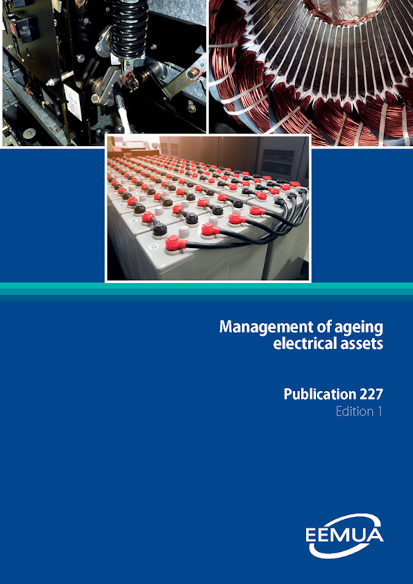
227_1.jpgEEMUA Publication 227

Management of ageing electrical assets

 
EEMUA Publication 227: provides a coherent, proactive system for managing ageing electrical assets; focuses on types of equipment that lack other guidance or suffer incidents related to ageing; and offers general guidance on managing ageing electrical assets.

Guidance includes: identifying potential failure mechanisms on ageing electrical assets; methods of detecting early signs of failure mechanisms; ways of calculating remaining expected life of assets; maintenance methods to extend asset life; demonstrating benefits of replacing equipment before failures occur.

EEMUA 227

191_from_Portal_v1_2.jpg

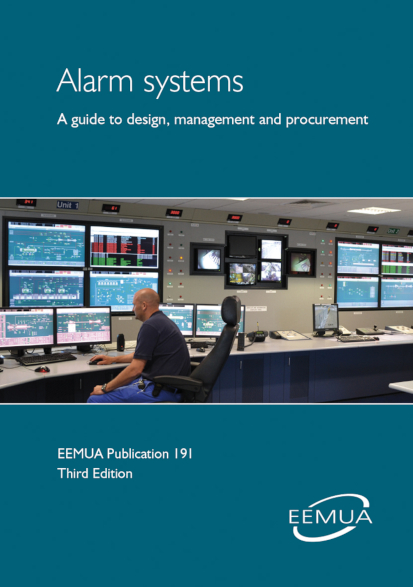
EEMUA Publication 191

Alarm systems a guide to design management and procurement

EEMUA 191 gives comprehensive guidance on designing, managing and procuring new alarm systems and improving existing installations for plant safety, efficiency and compliance. 

Developed by alarm systems experts and users working on high hazard sites, and with GB Health and Safety Executive input, EEMUA 191 is: informed by real-world process safety experiences; acknowledged as good practice by regulators; applies to alarm systems for industrial processes in chemical manufacture, power generation, oil and gas extraction, refining, nuclear and other sectors; aligned with international standards ISA 18.2 and IEC 62682: 2015.

EEMUA 191

1863.jpg
  

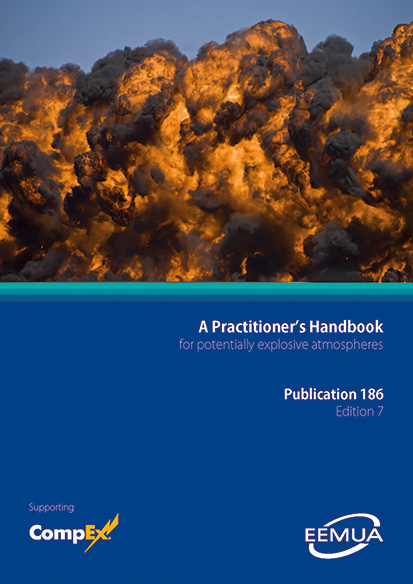
 EEMUA Publication 186 A Practitioner's Handbook for potentially explosive atmospheres 

EEMUA 186 offers guidance for safe installation, inspection and maintenance work in potentially explosive atmospheres where failure to adopt safe working practices could result in electrical and mechanical sources igniting flammable gases or combustible dusts.

The guide interprets relevant parts of standards (particularly fifth (2013) editions of IEC 60079-14 and 60079-17), bringing them together in a clear, understandable and easily navigable resource.

EEMUA 186

Energy_Transitions_Seminar_June_2022_v2.png

EEMUA Seminar: Engineering the Energy Transition Seminar - Rotterdam, NL - 

23 June 2022 (09:50-16:15 local Amsterdam time) Register today


 EEMUA has numerous other resources for industrial engineering specialists from: Alarm Systems to Subsea Materials, Storage Tanks to Pressure Systems and Mechanical Integrity, Energy Transitions to Cyber Security, and more. This email address is being protected from spambots. You need JavaScript enabled to view it. to make EEMUA’s resources work best for you and your team. 


EEMUA_bluethickenedslogan.jpg


www.eemua.org

e: ask@eemua.org

t: +44 (0)20 7488 0801

Monitoring Benzene exposure: Choosing the right solution for safety and health

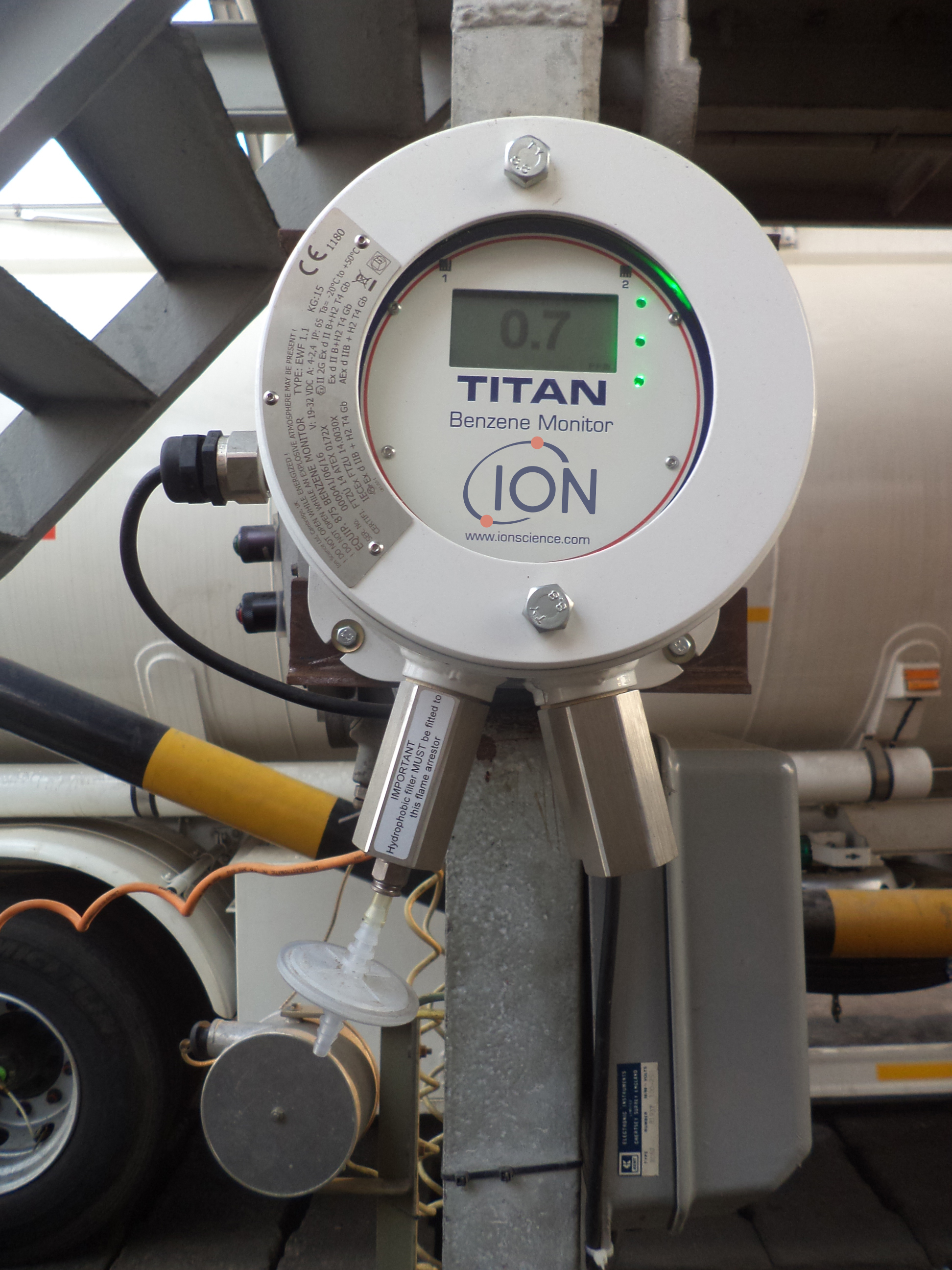
As a common carcinogen found in many industrial applications, there is a need to protect against benzene exposure for workers, the public and the environment. It is essential to choose detection instrumentation that is designed specifically to monitor benzene. Due to its hazardous nature, it is not something that should be underestimated, and it must be carefully monitored to mitigate the risk of exposure. ION Science offer world-leading technology for the improvement of air quality and protection of worker health with its benzene specific gas monitor, the Titan.

Businesses that utilise benzene in their production or handle it as a by-product of their activity must assess and manage the risk of exposure in the workplace. It is a legal requirement as set out in directives specifically introduced by the European Agency for Safety and Health at Work for the management of carcinogens (such as benzene) at work. There are several ways to adhere to regulations, such as limiting the quantity of carcinogens present, keeping exposure levels low through regular and accurate measurement, and using individual or collective protection methods, such as personal protective equipment (PPE), and gas detection instrumentation like the Titan.

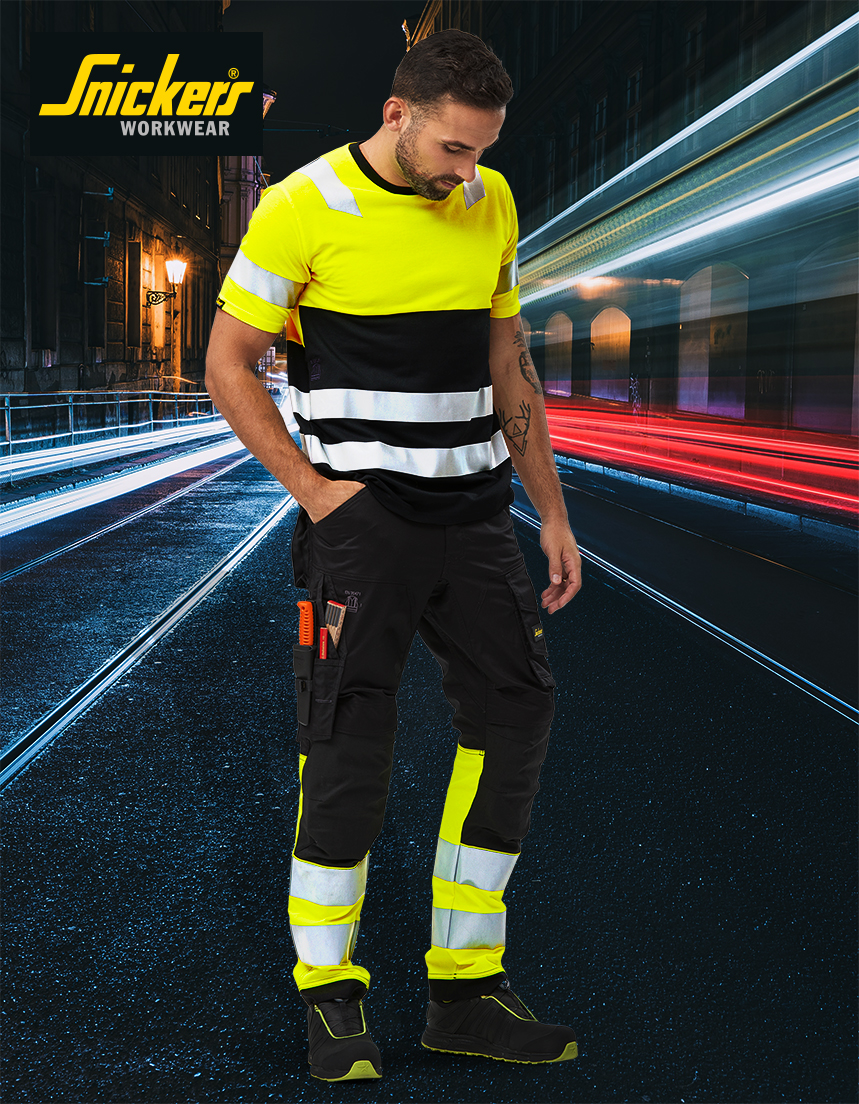
Snickers Workwear – SUSTAINABLE Hi-Vis Protective Wear.

Class 1 and 2 Hi-Vis Stretch Work Trousers with Sorona® sustainable performance fibres.

Whether its dusk, dawn or dark, Snickers Workwear has a superior range of Hi-Vis protective wear for both men and women to ensure comfort, safety and certified protection.

The latest additions to the Hi-Vis range are the new Stretch Work Trousers made from the innovative Sorona® sustainable performance fibre.

Sorona® delivers both environmental benefits and great performance. This recyclable, bio-based fibre offers exceptional softness for maximum comfort as well as excellent durability to help extend the lifetime of a garment.

The new Hi-Vis Work Trousers with Sorona® also offer long-lasting elasticity for ease of movement. Sorona® is also quick-drying, breathable and soft to the touch for optimal comfort and workday performance.

With advanced designs, high-tech fabrics and performance reflection features, all Snickers Workwear Hi-Vis protective wear has durable colour-fast protection that will last through wash after wash, retaining shape, comfort and protection levels throughout the life of the garments.

Added to which, Snickers Workwear High-Vis garments can be custom-profiled to ensure 'stand out' coverage for your corporate brand.

For more information on the Snickers Workwear range of Hi-Vis Protective Wear, call the Hultafors Group UK Helpline on 01484 854788, checkout the website at www.snickersworkwear.co.uk or email This email address is being protected from spambots. You need JavaScript enabled to view it.

ELIS PROVIDES SUSTAINABLE ALTERNATIVE FOR PROTECTIVE WORKWEAR AND LAUNDRY

With businesses looking for ways to improve their sustainability, protective workwear and laundry services provider, Elis UK, explains how its circular economy approach can help.

Elis was the first company in its sector to announce its target of net zero emissions by 2045 and is one of only twelve companies selected to join the NHS Net Zero International Leadership Group. It uses a circular economy model to provide its customers with a more sustainable solution.

Elis supplies protective workwear on a rental basis, collecting used items and delivering laundered garments on a schedule to meet the needs of the customer. In its circular economy approach, customers’ items are maintained, repaired, reused and redeployed in order to optimise their lifespan. Elis’s expertise and processes in its highly efficient industrial laundries help to minimize water, energy and cleaning product consumption to reduce the impact on the environment.


The use of workwear maintained by Elis, rather than at home or using a traditional laundry, reduces CO2 emissions by up to 37% and water consumption by 48% (Source: EY). Based on the circular economy, Elis’s services increasingly enable customers to reduce their emissions.

Comments Elis UK marketing and customer experience manager, Paul Swift: “The circular economy is specifically designed to eliminate waste and pollution, circulating and sharing products and materials and regenerating nature. The Elis circular economy model, primarily through reducing the consumption of natural resources and keeping products in use, is a sustainable solution that addresses environmental issues. In 2021, the Group’s CO2 emissions per kg of delivered, laundered textiles were 19% lower than in 2010, which is testament to the efforts made over many years. Our mission is to make our customers’ lives easier and contribute to their success through a sustainable, responsible process.”

As part of its commitment to net zero carbon emissions, Elis is undertaking a number of major initiatives, which will help to ensure that its customers receive services that leave an ever-smaller environmental footprint. These include continuing to improve the energy efficiency in its operations; constantly improving the vehicle fleet and delivery routes; optimising the product lifespan, optimising the choice of materials and expanding reuse and recycling of textiles. In three years, Elis UK has already reduced its CO2 emissions by 33% and its consumption of water per kilo of laundered linen by 23%. Elis UK has been certified over many years by the Carbon Trust for reductions in CO2 emissions and water usage.”

For further information see uk.Elis.com or call free on 0808 1698265.

Glyphosate: no change proposed to hazard classification

Coverage Briefing


 RAC has concluded that the existing classifications for glyphosate as a substance that causes serious eye damage and is toxic to aquatic life with long lasting effects should be retained. The committee found that the available scientific evidence did not meet the criteria to classify glyphosate for specific target organ toxicity, or as a carcinogenic, mutagenic or reprotoxic substance.

The committee assessed glyphosate’s hazardous properties against criteria in the Classification, Labelling and Packaging (CLP) Regulation. They considered an extensive volume of scientific data and many hundreds of comments received during consultations when forming their opinion.

The new RAC opinion is consistent with the proposal of the four Member States currently assessing glyphosate: Sweden, France, Hungary and The Netherlands as well as with RAC’s 2017 opinion.

The adopted opinion will be published on ECHA’s website and sent to the European Commission and European Food Safety Authority (EFSA) by mid-August. EFSA will carry out its risk assessment of glyphosate, with this expected to be ready in July 2023.

The European Commission will analyse EFSA’s conclusions and the renewal assessment report that was prepared by Sweden, France, Hungary and The Netherlands. The Commission will then put forward a renewal report and a draft regulation to Member States on whether the approval of glyphosate can be renewed or not.

Background

Harmonised classification and labelling

Together with the Commission and the Member States, ECHA implements the harmonised classification and labelling (CLH) process for hazardous substances. The aim is to protect people’s health and the environment from those hazards that matter the most.

Harmonised classification and labelling focuses only on the hazardous properties of the substance: its potential to cause harm. It does not assess the exposure of people or the environment to glyphosate. This will be part of the peer review of the risk assessment done by EFSA.

Committee for Risk Assessment, RAC

The Committee for Risk Assessment is made up of scientists nominated by EU Member States and appointed by ECHA’s Management Board in their personal capacity. The committee has observers from different EU organisations representing civil society, academia and industry. Together, they are responsible for making scientific opinions that are then used by the European Commission and EU Member States when deciding how chemical risks need to be controlled.

Questions and answers: glyphosate

European Commission – status of glyphosate in the EU

EFSA’s assessment

Glyphosate - Hot topics

Harmonised classification and labelling report

ECHA's Committee for Risk Assessment (RAC) agrees to keep glyphosate’s current classification as causing serious eye damage and being toxic to aquatic life. Based on a wide-ranging review of scientific evidence, the committee again concludes that classifying glyphosate as a carcinogen is not justified.

The European Chemicals Agency (ECHA) is an Agency of the European Union implementing EU chemical regulations. We, together with our partners, work for the safe use of chemicals.

https://echa.europa.eu/

ATEX Explosion Protection for IIC Hydrogen Exhaust

Explosion Protection: Hydrogen IIC T1

Gas Group IIC contains 3 gases: Hydrogen, Acetylene and Carbon Disulphide

Hydrogen is a group IIC gas and belongs to the T1 temperature class making it one of the hottest, most dangerous gases. When mixed with oxygen, Hydrogen is a highly explosive substance that is odourless, colourless and lighter than air. The lightweight element accumulates above the oxygen, and where effective ventilation is not in place, a build-up can occur. In extreme circumstances there have been cases of battery room explosions as a result of ineffective battery room ventilation. A small smoulder can create a huge explosion when hydrogen is in the presence of oxygen, and besides this, hydrogen is hazardous to health, causing skin burns and eye issues.

A typical industrial application where high levels of hydrogen are prone to exist is within large battery rooms where energy storage cells are contained that power different parts of a building, vehicle, ship, system or component. Everyone knows the function of a battery; to store electricity in the form of chemical energy and to convert to electrical energy when required. Vented lead-acid batteries or flooded batteries as they are also commonly known, consist of plates that are flooded with an acid electrolyte. When charging, the electrolyte emits hydrogen through the vents in the battery. Under normal operations, the release of hydrogen is relatively small, but this is elevated during heavy recharge periods, especially for large industrial batteries and hydrogen cells. For battery room ventilation and in more current renewable energy storage cells and carrier technologies, hydrogen will be a key factor in ensuring a reliable, safe, and stable energy source in the post fossil fuel period. Therefore, the safety of hydrogen ventilation and a correct hazardous area classification should always be undertaken when handling applications that have this explosive high temperature class (T1), IIC group gas.

CICV calls on Scottish Government to intervene on timing of planned UK Conformity Assessed (UKCA) mark

The Construction Industry Collective Voice (CICV) is calling on the Scottish Government to intervene and help address concerns raised by Scottish construction businesses over the introduction of the new UK Conformity Assessed (UKCA) mark.

The unique trades organisation’s Post-Brexit and Trade Group has written to Business Minister Ivan McKee requesting assistance as CICV businesses grapple with new UKCA conformity assessment and certification arrangements that replace CE Marking after 31 December this year.

The UK Government is introducing a new “UK Conformity Assessed” mark for goods placed on the market in Great Britain from 1 January 2023. Ministers seek new powers to end the recognition of CE Marking in favour of UKCA Marking in the recently passed Building Safety Act.

CICV has highlighted the deep frustration among manufacturers and importers that there is at present no route to accept historic test data and reports from EU Notified Bodies for use in complying with UKCA Marking.

This poses a particular problem, it says, for goods in relation to the Assessment and Verification of Performance (AVCP) System 3. If manufacturers and distributors want to continue selling their goods in Great Britain, they have to be re-tested and certified by an accredited UK Approved Body.

The CICV is concerned at the lack of progress between the UK Government and individual companies, trade associations and certification and testing bodies to prepare properly.

It argues that there is insufficient testing capacity and capability for manufacturers to have their goods assessed and certified for the British market, using UK-based Approved Bodies, by the end of this calendar year.

The letter says: “There are simply not enough approved companies or qualified people to conduct the huge number of assessments and certifications required to gain UKCA Marking in time.

“For example: there are no UK Approved Bodies able to test:

  • insulation: most types of pipe insulation and duct insulation;
  • trench heating: most types for residential, commercial & municipal buildings;
  • renders: several types of synthetic renders and render-based brick slips;
  • glass: several types of coated and laminated glass inc. mirrors;
  • plastic pipes: several types of thermoplastic pipes for underground drainage.

For other goods, there are scant few UK Approved Bodies available:

  • radiators: only one approved company whose entire annual capacity is fully booked;
  • fire doors: only two approved companies for smoke leakage tests;
  • sealants: only one approved company - most tests take up to 3 months to allow for curing.”

The CICV says that with continued uncertainty about as-yet-unknown future regulations, large capital costs for SMEs to invest in more or new equipment and facilities and next-to-no time available to find and train specialist staff, there is little appetite for businesses to take the plunge.

The letter says: “Whitehall has told businesses to prepare for the end of CE Marking on 31 December 2022. Legislation is required but the Department for Levelling Up, Housing and Communities (DLUHC) cannot give a firm date for this.

“The risk is that faced with ongoing difficulties - like higher raw material, energy, labour and transport costs and other inflationary pressures - businesses do not bother, hoping somebody will come up with answers in time.”

It continues: “CICV says the situation is fast becoming serious for British manufacturers who are already spending hundreds of thousands of pounds on testing to both UK and EU standards. With eight months to go, there are too many unresolved questions about post-2023 arrangements.

“The preferred solution is for ministers to pause now that the Building Safety Act is on the statute book and take heed of what industry is telling them. The CICV view is that deferring the 31 December 2022 date is obvious and necessary and UK ministers should move quickly to say so and dispel uncertainty.

“Drafting the statutory instruments to bring in new provisions is critical and must be done correctly to avoid unintended consequences that harm British businesses. It is sensible and pragmatic to delay the secondary legislation to allow business to prepare properly.

“If the situation described is not resolved (and soon), the logical conclusion is that goods cannot be sold after 1 January – and construction, housebuilding and property RMI will slow down or stop.”

The letter concludes with the CICV asking the Scottish Government to recognise the concerns expressed and to see if there is scope within devolved powers to assist. “Any representations you can make to the UK Government on our behalf would be gratefully appreciated”, it adds.

Alan Wilson, MD of SELECT, the representative trade body of Scotland’s electro-mechanical sector and who chairs CICV, said: “With this submission to Mr McKee we are hopeful that that the Scottish Government can bring its influence to bear on this matter and allay the well-founded fears of CICV members.”

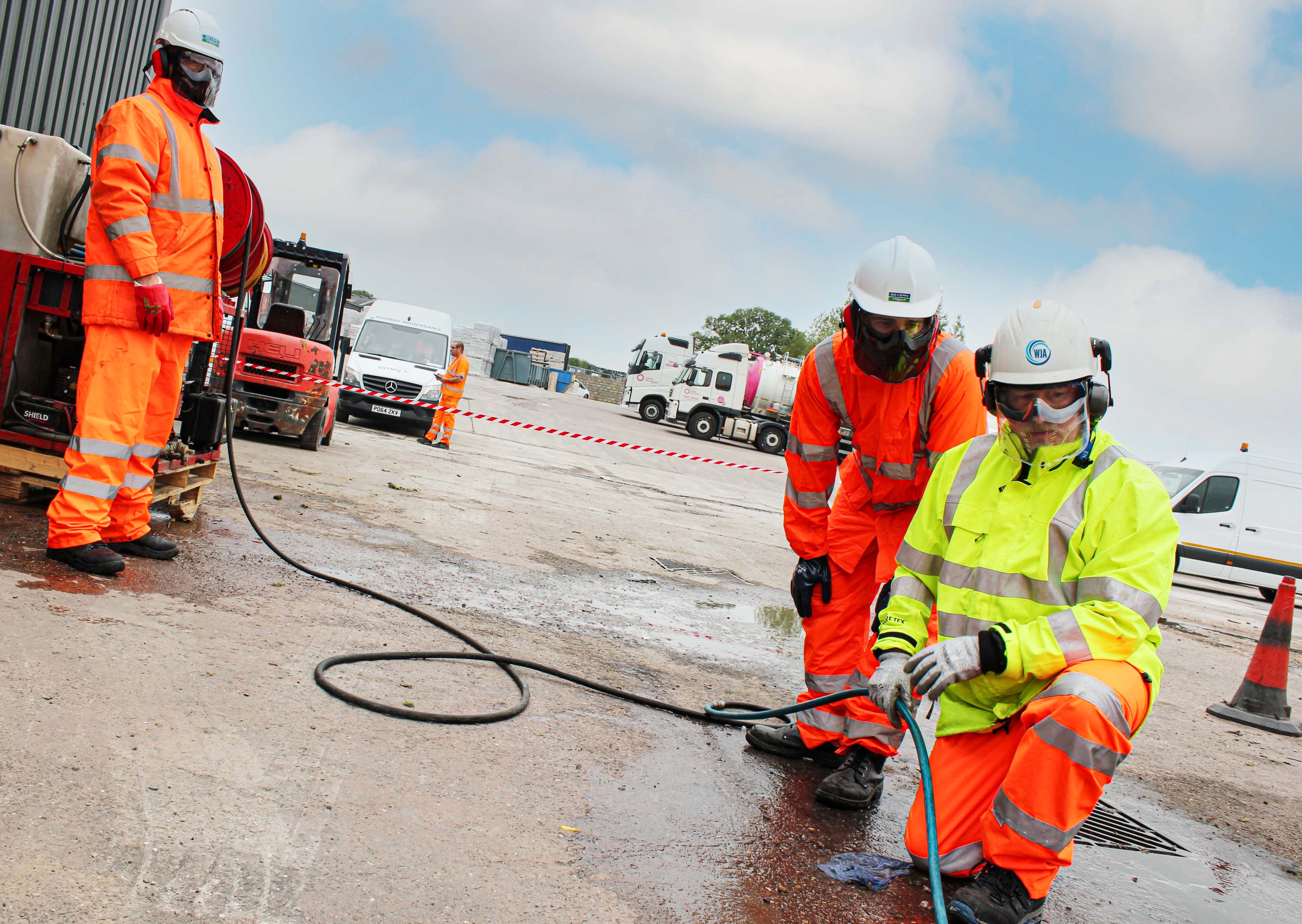
Water jetting training boost aids safety and quality

Improvements to the way training is delivered promise to enhance the quality and safety of water jetting services across all industrial sectors in the United Kingdom.

The Water Jetting Association (WJA) is strengthening its mandatory refresher training by introducing a significant element of practical tuition.

It is also upgrading the way delegates attending the City & Guilds accredited courses are examined, with digital click pads that will ensure leaning can be more rigorously tested.

The WJA is also introducing a new workbook for its Safety Awareness course that improves engagement and provides delegates with a reference guide.

WJA Training and Safety Committee Chairman Darren Hamilton said: “We’re always looking to improve our training. These changes reflect the vision of our committee has to improve outcomes for delegates, contractors and their customers.

“Ultimately, by upgrading our courses in this way, making them as up-to-date as possible, with the most relevant content and learning techniques, we will improve the quality and safety of water jetting, which is our ultimate aim.”

The WJA is the membership organisation for the water jetting industry in the UK and is the largest provider of water jetting training. Courses are also delivered around the world, notably in the Middle East.

High and ultra-high pressure water jetting is a critical process for pipe and tank cleaning in the oil, gas and petrochemical industries.

It is also used for concrete hydrodemolition, surface preparation, drain and sewer cleaning, industrial cleaning, and material cutting.

To obtain their WJA cards and certificates, operatives must complete a two-stage training process.

First, they must pass the class-based one-day WJA Safety Awareness course. Then, they must complete at least one of four practical modules – Surface Preparation, Tube and Pipe Cleaning, Drain and Sewer, and Hydrodemolition.

Previously, refresher training involved passing the Safety Awareness course every three years. Now, a new refresher course has been created which is focused on practical training as well as health and safety.

Darren Hamilton said: “The new refresher process allows us to check that operatives are using the correct water jetting techniques and their skills are developing as we’d expect. We’ll also include regulation updates and technical changes introduced by the WJA.

“This is a more rounded approach designed to provide advantages for operatives, the companies they work for and their clients.”

The WJA is also improving learning testing by incorporating the CLiKAPAD digital audience response system within each course.

Instead of delegates being tested at the end of the course, they will use digital click pads to answer questions at set stages throughout the training. The responses are locked and the WJA instructor finds out who has passed or failed at the touch of a button at the end of the course.

“The system allows trainers to read out questions shown on screen, overcoming any potential reading difficulties operatives may have. And it provides for a more intensive and engaging learning process,” said Darren Hamilton.

The new Safety Awareness workbook, developed over two years, uses graphics and photographs to explained water jetting concepts, with sections delegates complete themselves during the course.

Once completed, operatives keep the workbook for future reference, allowing them to check what they have learned and see the progress they have made in their technical understanding.

In another development, the WJA is strengthening the verification process for those wanting to become WJA-approved training instructors.

In a new step, as well as completing a detailed form and being interviewed, they must agree to be audited as they give at least one of their first courses. As is currently the case, they must then be audited every three years.

www.waterjetting.org.uk

Digitalisation in hazardous industries

How digital solutions can reduce downtime and improve safety in hazardous environments ~

 Industries operating in hazardous areas must consider standard safety practices and ensure all equipment meets the requirements for flammable or explosive atmospheres. Effective monitoring, predictive maintenance and rapid response to failure is crucial for engineers managing these assets. Here, Marek Lukaszczyk, European and Middle East marketing manager at global motor manufacturer WEG, discusses how digitalisation can reduce risk and improve efficiency in hazardous industries.


A hazardous area is any area with an atmosphere containing, or potentially containing, gases, vapours or dust which are flammable or explosive. Industries such as oil and gas, chemical production, fuel storage and even paper production are all classed as hazardous. These areas are rigorously analysed when installing equipment to minimise the risk to individuals and assets.

It’s crucial that equipment operating in these conditions are effectively monitored to pre-empt any issues before they occur. Unlike most industries, these issues not only result in downtime, but present a significant safety risk.