News

  Dual Hazardous Location Cabinet Cooler Systems Protect Large Electrical Enclosures in Classified Areas

 EXAIR's Dual Hazardous Location Cabinet Cooler® Systems provide a powerful, maintenance-free solution for protecting large electrical enclosures in hazardous environments. Designed for classified areas, including Class I Div 1, Groups A, B, C, and D; Class II Div 1, Groups E, F, and G; and Class III, these high-capacity cooling systems prevent overheating of sensitive electronics while eliminating the need for costly air conditioners or vortex fans. With cooling capacities up to 5,600 Btu/Hr, Dual Hazardous Location Cabinet Coolers are ideal for oversized control panels, motor control centers, and other electrical enclosures exposed to explosive gas or combustible dust atmospheres.

Dual Hazardous Location Cabinet Cooler Systems use two engineered Cabinet Coolers working together to evenly distribute cold air throughout large enclosures, maintaining safe operating temperatures for critical electrical components. The systems are UL tested for hazardous locations and preserve the enclosure's integrity by mounting through standard electrical knockouts. Each system includes an automatic drain filter separator to prevent moisture from entering the enclosure, while optional electronic temperature controls are also available. With no moving parts to wear out and no refrigerants to maintain, the systems provide long-lasting, reliable protection in the harshest industrial environments.

Dual Hazardous Location Cabinet Cooler Systems are part of EXAIR's complete family of Cabinet Cooler® Systems, offering solutions for NEMA 12, 4, 4X, and ATEX-rated enclosures ranging from 1,000 to 5,600 Btu/Hr. Whether cooling a small control panel or a large electrical enclosure in a classified area, EXAIR provides engineered cooling solutions for virtually any enclosure cooling challenge. https://exair.co/190-hazdual

IECEx Updates Its Certified Equipment Scheme: What Manufacturers Need to Know in 2026

IECEX

Updated: June 2026
This article reflects the publication of IECEx 02 Edition 9.0, released on 25 March 2026.

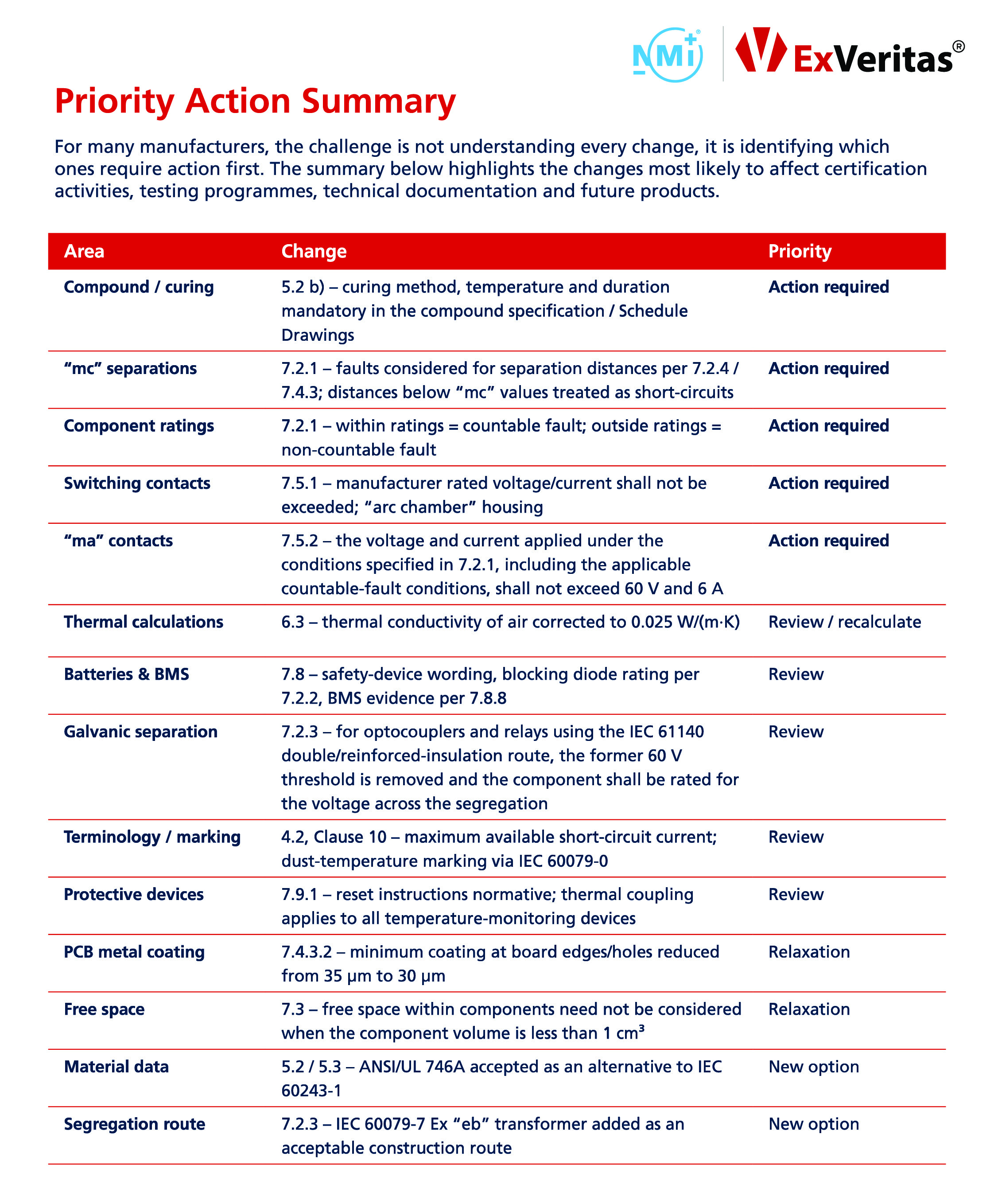
The IECEx System has introduced Edition 9.0 of its Certified Equipment Scheme Rules of Procedure, bringing several important updates for manufacturers, certification bodies and organisations involved in the design and supply of equipment for explosive atmospheres. While the fundamental principles of IECEx certification remain unchanged, the latest edition reflects the continued evolution of international standards and certification processes.

As industries such as hydrogen, battery energy storage, oil & gas, chemicals and pharmaceuticals continue to expand, demand for internationally recognised hazardous area certification continues to grow. The publication of IECEx 02 Edition 9.0 demonstrates the scheme's ongoing commitment to maintaining globally harmonised certification procedures while supporting technological advances and regulatory developments.

What is IECEx?

The IECEx System is the International Electrotechnical Commission's conformity assessment system for equipment and services used in explosive atmospheres.

Unlike ATEX, which is a legal requirement within the European Union, IECEx is an international certification scheme recognised by many countries around the world. It provides confidence that equipment has been independently assessed against the internationally accepted IEC 60079 standards.

Today, IECEx certification is widely used throughout:

  • Oil & Gas
  • Chemical Processing
  • Hydrogen Production
  • LNG Facilities
  • Mining
  • Pharmaceutical Manufacturing
  • Offshore Installations
  • Energy Generation
  • Industrial Manufacturing

For companies exporting equipment internationally, IECEx certification can significantly simplify market access.

What's New in Edition 9.0?

The publication of IECEx 02 Edition 9.0 represents the latest revision of the Rules of Procedure governing the IECEx Certified Equipment Scheme.

The updated edition introduces refinements aimed at improving consistency across certification bodies, strengthening governance arrangements and reflecting changes introduced through revised IEC standards.

Among the key areas addressed are:

  • Improved certification procedures
  • Updated administrative requirements
  • Enhanced document management
  • Greater harmonisation between participating certification bodies
  • Clarification of responsibilities throughout the certification process

Although many of the changes are procedural rather than technical, they help maintain the credibility and international recognition of IECEx certification.

Why Does It Matter?

For manufacturers, compliance with the latest IECEx procedures helps ensure certification remains recognised throughout global markets.

Certification bodies also benefit from clearer procedures that improve consistency when assessing products against the IEC 60079 standards.

Ultimately, end users gain increased confidence that certified equipment has been assessed using harmonised international processes.

Growing Demand from Emerging Industries

One of the biggest drivers behind continued IECEx development is the rapid growth of emerging technologies.

Hydrogen infrastructure, battery energy storage systems, carbon capture facilities and renewable energy projects all present new hazardous area challenges.

As these industries expand, manufacturers increasingly require certification that is recognised internationally rather than being limited to one geographical region.

IECEx continues to play a central role in supporting these developments.

The Importance of the IEC 60079 Series

The IECEx Scheme is built around the internationally recognised IEC 60079 series of standards.

These standards cover every aspect of explosion protection, including:

  • General equipment requirements
  • Flameproof enclosures (Ex d)
  • Increased safety (Ex e)
  • Intrinsic Safety (Ex i)
  • Pressurised equipment (Ex p)
  • Equipment installation
  • Inspection and maintenance
  • Hazardous area classification

As these standards evolve, the IECEx Scheme is updated to ensure certification processes remain aligned with current technical requirements.

What Should Manufacturers Do?

Companies manufacturing equipment for explosive atmospheres should review the latest IECEx documentation and ensure internal certification processes remain aligned with current requirements.

Although existing certificates remain valid where appropriate, organisations planning new product approvals should work closely with their certification body to understand any procedural changes introduced through Edition 9.0.

Maintaining awareness of evolving IEC standards will also help reduce delays during future certification projects.

Looking Ahead

International demand for explosion-protected equipment continues to increase, particularly within hydrogen, renewable energy and advanced manufacturing sectors.

The publication of IECEx 02 Edition 9.0 reinforces the scheme's position as one of the world's leading certification systems for equipment used in explosive atmospheres.

For manufacturers seeking global market access, staying informed about these developments will remain an important part of successful product certification strategies.


Key Takeaways

  • IECEx 02 Edition 9.0 was published in 2026.
  • The update refines the Rules of Procedure for the IECEx Certified Equipment Scheme.
  • Changes focus on certification processes, governance and harmonisation.
  • IECEx continues to support international trade through globally recognised certification.
  • Emerging sectors such as hydrogen and battery energy storage are driving increased demand for IECEx-certified equipment.

Editorial Note: This article provides an overview of recent IECEx developments. Organisations should consult the latest official IECEx Rules of Procedure and work with their chosen Certification Body before making certification or compliance decisions.

The HP1000H: High-Pressure Measurement for Hydrogen Applications

As hydrogen technologies continue to grow, so does the need for pressure measurement equipment that can operate safely and reliably in demanding hydrogen environments. From production and storage to transportation and refuelling, hydrogen systems often involve high pressures and challenging operating conditions.

The HP1000H from ESI Technology has been specifically developed to meet these requirements. Based on the proven HP1000 platform, the HP1000H combines high-pressure capability, hydrogen-compatible materials, and robust sensor technology to provide accurate and dependable pressure measurement across the hydrogen value chain.

Designed for pressures up to 5,000 bar (72,500 psi), the HP1000H offers engineers a trusted solution for critical hydrogen applications.

Engineered for Hydrogen Service

Hydrogen presents unique challenges for pressure measurement equipment. Its small molecular size can affect materials differently from many other gases, making material selection a critical part of transmitter design.

To address these challenges, ESI developed the HP1000H using hydrogen-compatible titanium wetted parts. Each unit undergoes testing in accordance with ISO 11114 standards, which assess the suitability of metallic materials for hydrogen service.

ESI also supplies hydrogen-approved versions with certification confirming their compatibility with hydrogen applications. This gives engineers confidence that the transmitter has been specifically designed and tested for use within hydrogen systems.

Supporting the Hydrogen Economy

As investment in hydrogen infrastructure accelerates worldwide, reliable pressure monitoring plays a key role in ensuring efficiency, safety, and system performance.

The HP1000H is suitable for a wide range of hydrogen applications, including:

  • Hydrogen production systems
  • Electrolysers
  • Hydrogen storage vessels
  • Hydrogen distribution networks
  • Hydrogen refuelling stations
  • Fuel cell development and testing
  • Research and development facilities
  • High-pressure gas compression systems

In many of these applications, pressure measurement is critical for process control, equipment protection, and regulatory compliance.

Built for Extreme Pressures

Hydrogen systems frequently operate at very high pressures, particularly in storage and refuelling applications. As a result, pressure transmitters must be able to withstand demanding operating conditions while maintaining measurement accuracy.

The HP1000H uses a unique one-piece titanium sensing assembly. Unlike conventional pressure transmitters that rely on welded components, the diaphragm and pressure housing are machined from a single piece of titanium alloy.

This design removes welds from the pressure boundary, improving structural integrity and reducing potential points of failure. It also provides excellent resistance to pressure spikes, fatigue, and cyclic loading.

Combined with the natural corrosion resistance of titanium, this robust construction helps ensure long-term reliability in demanding hydrogen environments.

Proven Silicon-on-Sapphire Sensor Technology

At the heart of the HP1000H is ESI Technology's Silicon-on-Sapphire (SOS) sensor technology.

SOS technology offers exceptional long-term stability, excellent accuracy, and reliable performance across wide temperature ranges. These characteristics are particularly important in hydrogen applications, where operating conditions can vary significantly.

The sapphire substrate provides outstanding electrical insulation and contributes to the sensor's durability and measurement stability over time.

As a result, the HP1000H delivers dependable pressure measurement with minimal drift, helping to reduce maintenance requirements and improve long-term system performance.

ATEX Certification for Hazardous Areas

Many hydrogen applications operate in potentially explosive atmospheres, making hazardous area certification an important consideration.

To support these environments, the HP1000H is available with ATEX Intrinsically Safe approval on 4-20 mA versions. This certification enables installation within designated hazardous areas when used as part of an approved intrinsically safe system.

By combining hydrogen compatibility with hazardous area certification, the HP1000H provides a practical solution for applications where both safety and performance are critical.

A Pressure Transmitter Designed for the Future of Hydrogen

The transition towards cleaner energy continues to drive investment in hydrogen technologies. As systems become more advanced and operating pressures increase, dependable pressure measurement becomes increasingly important.

The HP1000H combines hydrogen-compatible materials, high-pressure capability up to 5,000 bar, proven Silicon-on-Sapphire technology, and optional ATEX certification in a single robust transmitter.

Whether monitoring hydrogen production, storage, transportation, or refuelling systems, the HP1000H delivers the accuracy, durability, and reliability engineers need to support the next generation of hydrogen infrastructure.

For more information or to discuss your application requirements, contact the ESI Technology sales team at This email address is being protected from spambots. You need JavaScript enabled to view it. or call +44 (0)1978 262255.

The Hidden Dangers of Process Dust and How to Reduce Exposure On-Site

 By Gavin Brute, Technical Sales Engineer at Pennaire Filtration

Dust is one of the most common hazards across manufacturing and chemical processing sites, yet it remains one of the most underestimated. Long-term exposure is linked to occupational asthma, COPD and other irreversible lung conditions, while numerous dusts also carry a combustible risk if allowed to accumulate. Because symptoms of dust-related illness are rarely immediate, the consequences of inadequate control are often only seen years later, making prevention far more valuable than any later remedy.

Effective dust control depends on understanding where dust is generated, not just how it is filtered afterwards. A facility audit, ideally carried out by qualified personnel, can determine average and peak airborne concentrations at key points across a site. This is typically when previously unmonitored dust sources are identified, such as transfer points, mixing operations or material handling areas where extraction either doesn't exist or is poorly positioned relative to the source.

Vale Bagfilter

Local exhaust ventilation (LEV) is one of the most effective controls available, but only when correctly designed and located close to the point of dust generation. Hoods positioned too far from the source, or sized incorrectly for the airflow required, or poorly designed are often the main factors where inadequate dust extraction exists. Reviewing existing hood placement against actual dust-generation points is one of the simplest ways to identify gaps in an otherwise established system.

Once exposure points have been addressed, attention should turn to the dust collection technology itself. A dust collector needs to deliver consistent, predictable performance, removing contaminants effectively while maintaining stable airflow. Filter unit type and media selection are central to this. Each application has its own challenges and more efficient choices, with many factors considered when choosing the correct equipment. Dust load, particle size, bulk density, dust properties, operating processes, and many more considerations should be taken into account when designing an effective LEV system.

A competent dust extraction and filtration engineer can specify a system matched to actual dust loads, effective airflows throughout the system, and compliance requirements rather than over- or under-specifying equipment based on assumptions.

The benefits of getting this right extend well beyond compliance. Effective dust control reduces airborne contamination risk during production, supports consistent product quality, and limits downtime caused by system failure or contamination issues. It also protects machinery, contributing to longer equipment life and more stable system performance, while extended filter life supports lower running costs over time.

Approaching dust control as a combination of exposure, filtration efficiency and system longevity gives facilities a far more complete picture of how well their systems are performing and ensures worker health is always at the forefront of their business.

Website: https://www.pennairefiltration.com/

Email: This email address is being protected from spambots. You need JavaScript enabled to view it.

Why ownership and integration matter

Connected safety: Why ownership and integration matter

In high-risk industrial environments, safety depends on visibility. Knowing where workers are, understanding the conditions they are operating in, and responding quickly when something goes wrong are fundamental to protecting people and maintaining operational integrity.

Today, connected technologies are transforming how organisations achieve this visibility. Gas detectors, wearable devices and monitoring platforms can provide real-time insights into worker safety, enabling faster decision-making and more proactive risk management.

As connected safety becomes more widely adopted, organisations are increasingly considering how these systems fit within their existing operations. Connected safety solutions can be broadly understood through two approaches: outsourced monitoring services and integrated safety ecosystems.

Two approaches to connected safety

Connected safety solutions typically follow one of two approaches.

The first relies on outsourced monitoring services. In this model, alerts and worker status updates are routed to an external monitoring centre that operates around the clock. When an incident occurs, third-party agents review the alert and escalate the issue if necessary.

The second approach centres on integrated safety ecosystems. Here, connected devices feed data directly into a unified platform used by the organisation’s own safety team. Alerts, reporting and insights remain within the company’s operational structure, supporting alignment with existing processes.

Both approaches aim to improve worker protection, but they are suited to different operational needs. For example, outsourced monitoring can support organisations without dedicated in-house safety teams to manage alerts at all hours or, equally, those with in-house teams working standard business hours. While integrated approaches enable organisations that have round-the-clock safety teams to handle alerts internally within their existing workflows.

Why integration and access matter

Safety teams not only respond to incidents, but also work to understand why they occur and how they can be prevented. This understanding can improve significantly with access to accurate, comprehensive data and the ability to analyse it within the context of daily operations, regardless of how alerts are managed.

It is important to consider where safety data is stored, how it is accessed, and who should act on it. Different models support different organisational needs. For example, outsourced monitoring can provide reassurance for smaller teams, while integrated approaches may suit larger organisations that can manage safety processes in-house at all hours.

An integrated approach enables safety teams to maintain direct access to the information that matters most. By connecting detection devices with safety management platforms, organisations can  help keep alerts, worker data and operational insights are readily available within their existing workflows.

Each approach offers different advantages depending on how safety is managed within the organisation. Where integrated systems are in place, safety teams can access and use data within their existing workflows, supporting a more proactive approach to safety management. This enables organisations to 

analyse patterns in exposure, identify emerging risks and refine safety procedures before problems escalate.

From monitoring to safety leadership

As industrial environments become more complex, the role of safety leaders is evolving. Today’s safety teams are expected not only to respond to alarms but also to shape strategies that prevent incidents altogether.

Systems that provide a complete view of safety performance across sites and operations can help safety leaders achieve these goals. Detection technologies, monitoring platforms and reporting tools can work together to create a single source of truth that supports faster, better-informed decisions.

For this reason, many organisations are moving towards integrated safety ecosystems rather than relying solely on standalone devices or external monitoring services. When detection technologies are designed to work within a broader safety platform, they become part of a connected system that supports both immediate protection and long-term safety improvement.

Supporting the next generation of Gas Detection

For industries operating in high-risk environments, such as entering confined spaces, gas detection remains a key component of this ecosystem. Workers need reliable instruments capable of identifying hazards while also feeding data into the wider safety strategy.

Modern gas detection technologies are increasingly designed with this integration in mind. By connecting detection devices with safety management platforms, organisations can gain real-time visibility into worker status and environmental conditions while also capturing valuable data for reporting and continuous improvement.

Solutions such as the ALTAIR io™ 6 Multigas Detector from MSA Safety are designed to support this ecosystem-led approach. By combining advanced multi-gas detection with seamless integration into connected safety platforms, organisations can enhance worker protection while maintaining control of their data and supporting compliance within existing safety processes.

Looking ahead

Connected safety is not simply about adding new technology to the workplace. It is about building systems that give organisations the insight and flexibility needed to protect workers effectively.

As connected technologies continue to evolve, organisations will gain the greatest value from solutions that integrate easily into their operations, support streamlined compliance processes and accountability, and provide clear, actionable insights to the teams who help keep people safe.

To explore how integrated gas detection can support a connected safety ecosystem, discover more about the ALTAIR io™ 6 Multigas Detector and the wider connected safety solutions from MSA.

Intrinsically Safe High-Pressure Measurement with the HP1000 Series

In hazardous environments, pressure measurement equipment must do more than deliver accurate readings. It must also operate safely in potentially explosive atmospheres while maintaining reliable performance under extreme pressure conditions.

The HP1000 Series from ESI Technology combines both requirements in a single solution. Designed for pressures up to 5,000 bar (72,500 psi), the Intrinsically Safe HP1000 provides dependable pressure measurement for demanding applications in hazardous gas, dust, and mining environments. With ATEX and IECEx certification available on 4-20 mA versions, engineers can confidently specify the HP1000 for use in some of the world's most challenging industrial locations.

Designed for Hazardous Areas

Many industries operate in environments where explosive gases, vapours, dust, or combustible particles may be present. In these areas, safety is a critical consideration when selecting instrumentation.

The Intrinsically Safe HP1000 has been designed to minimise the risk of ignition by limiting the electrical energy available within the device. This allows the transmitter to operate safely within designated hazardous areas when installed as part of an approved intrinsically safe system.

With both ATEX and IECEx certification options available, the HP1000 offers a globally recognised solution for hazardous area pressure measurement. These approvals help simplify specification and installation for projects operating across international markets and industry sectors.

As a result, engineers can select the HP1000 with confidence for applications where safety, compliance, and reliability are essential.

ATEX and IECEx Certified

The HP1000 Series is available with Intrinsically Safe approval to both ATEX and IECEx standards on 4-20 mA output versions.

ATEX certification supports compliance with European hazardous area requirements, while IECEx certification provides international recognition for equipment used in explosive atmospheres. Together, these approvals make the HP1000 suitable for a wide range of industrial applications around the world.

Industries that commonly benefit from Intrinsically Safe pressure measurement include:

  • Oil and gas production
  • Chemical processing
  • Hydrogen production and storage
  • Industrial gas systems
  • Offshore platforms
  • Fuel handling facilities
  • Mining operations
  • Energy generation plants
  • Test and research facilities

In these environments, reliable pressure monitoring plays a vital role in maintaining both operational efficiency and safety.

Built for Extreme Pressure Applications

While hazardous area approval is essential, many applications also require pressure measurement at exceptionally high pressures.

The HP1000 Series uses a unique one-piece titanium sensing assembly. Unlike conventional designs that rely on welded diaphragms, the HP1000 machines both the diaphragm and pressure housing from a single piece of titanium alloy.

This design eliminates welds within the pressure boundary, increasing strength and improving long-term reliability. It also provides excellent resistance to pressure spikes, shock loading, and cyclic pressure conditions.

Furthermore, titanium offers outstanding corrosion resistance, helping the transmitter perform reliably in aggressive industrial environments.

Proven Silicon-on-Sapphire Technology

At the heart of the HP1000 is ESI Technology's proven Silicon-on-Sapphire (SOS) sensor technology.

SOS technology delivers excellent accuracy, long-term stability, and repeatability. It also performs reliably across wide temperature ranges, making it particularly well suited to demanding industrial applications.

The sapphire substrate provides exceptional electrical insulation, helping to maintain stable performance even in harsh operating conditions. This allows engineers to achieve accurate pressure measurement throughout the transmitter's service life while reducing maintenance requirements.

Supporting Hydrogen Applications


As the hydrogen sector continues to expand, pressure measurement equipment must withstand both high pressures and the unique challenges associated with hydrogen.

For these applications, ESI offers the HP1000H, a hydrogen-compatible version of the HP1000 Series. The HP1000H uses hydrogen-compatible titanium wetted parts and undergoes testing in accordance with ISO 11114 standards.

Each hydrogen-approved transmitter is supplied with certification confirming its suitability for hydrogen service.

Combined with Intrinsically Safe ATEX and IECEx approvals, the HP1000H is particularly well suited to hazardous hydrogen applications, including:

  • Hydrogen refuelling stations
  • Hydrogen storage systems
  • Electrolysers
  • Hydrogen distribution networks
  • Research and development facilities
  • Fuel cell testing systems

A Trusted Solution for Critical Applications

The Intrinsically Safe HP1000 Series combines high-pressure capability, robust titanium construction, Silicon-on-Sapphire sensor technology, and internationally recognised hazardous area approvals in a single pressure transmitter.

Whether installed on offshore platforms, within chemical processing plants, in hydrogen infrastructure, or at industrial test facilities, the HP1000 delivers the performance, reliability, and safety engineers depend on.

For organisations operating in hazardous environments, the HP1000 provides a proven solution for accurate high-pressure measurement without compromising safety or performance.

For more information or to discuss your application, contact the ESI Technology sales team at This email address is being protected from spambots. You need JavaScript enabled to view it. or call +44 (0)1978 262255.

The HP1000H: High-Pressure Measurement for Hydrogen Applications

HYDROGEN_ESI.jpeg

As hydrogen technologies continue to grow, so does the need for pressure measurement equipment that can operate safely and reliably in demanding hydrogen environments. From production and storage to transportation and refuelling, hydrogen systems often involve high pressures and challenging operating conditions.

The HP1000H from ESI Technology has been specifically developed to meet these requirements. Based on the proven HP1000 platform, the HP1000H combines high-pressure capability, hydrogen-compatible materials, and robust sensor technology to provide accurate and dependable pressure measurement across the hydrogen value chain.

Designed for pressures up to 5,000 bar (72,500 psi), the HP1000H offers engineers a trusted solution for critical hydrogen applications.

Engineered for Hydrogen Service

Hydrogen presents unique challenges for pressure measurement equipment. Its small molecular size can affect materials differently from many other gases, making material selection a critical part of transmitter design.

To address these challenges, ESI developed the HP1000H using hydrogen-compatible titanium wetted parts. Each unit undergoes testing in accordance with ISO 11114 standards, which assess the suitability of metallic materials for hydrogen service.

ESI also supplies hydrogen-approved versions with certification confirming their compatibility with hydrogen applications. This gives engineers confidence that the transmitter has been specifically designed and tested for use within hydrogen systems.

Supporting the Hydrogen Economy

As investment in hydrogen infrastructure accelerates worldwide, reliable pressure monitoring plays a key role in ensuring efficiency, safety, and system performance.

The HP1000H is suitable for a wide range of hydrogen applications, including:

  • Hydrogen production systems
  • Electrolysers
  • Hydrogen storage vessels
  • Hydrogen distribution networks
  • Hydrogen refuelling stations
  • Fuel cell development and testing
  • Research and development facilities
  • High-pressure gas compression systems

In many of these applications, pressure measurement is critical for process control, equipment protection, and regulatory compliance.

Built for Extreme Pressures

Hydrogen systems frequently operate at very high pressures, particularly in storage and refuelling applications. As a result, pressure transmitters must be able to withstand demanding operating conditions while maintaining measurement accuracy.

The HP1000H uses a unique one-piece titanium sensing assembly. Unlike conventional pressure transmitters that rely on welded components, the diaphragm and pressure housing are machined from a single piece of titanium alloy.

This design removes welds from the pressure boundary, improving structural integrity and reducing potential points of failure. It also provides excellent resistance to pressure spikes, fatigue, and cyclic loading.

Combined with the natural corrosion resistance of titanium, this robust construction helps ensure long-term reliability in demanding hydrogen environments.

Proven Silicon-on-Sapphire Sensor Technology

At the heart of the HP1000H is ESI Technology's Silicon-on-Sapphire (SOS) sensor technology.

SOS technology offers exceptional long-term stability, excellent accuracy, and reliable performance across wide temperature ranges. These characteristics are particularly important in hydrogen applications, where operating conditions can vary significantly.

The sapphire substrate provides outstanding electrical insulation and contributes to the sensor's durability and measurement stability over time.

As a result, the HP1000H delivers dependable pressure measurement with minimal drift, helping to reduce maintenance requirements and improve long-term system performance.

ATEX Certification for Hazardous Areas

Many hydrogen applications operate in potentially explosive atmospheres, making hazardous area certification an important consideration.

To support these environments, the HP1000H is available with ATEX Intrinsically Safe approval on 4-20 mA versions. This certification enables installation within designated hazardous areas when used as part of an approved intrinsically safe system.

By combining hydrogen compatibility with hazardous area certification, the HP1000H provides a practical solution for applications where both safety and performance are critical.

A Pressure Transmitter Designed for the Future of Hydrogen

The transition towards cleaner energy continues to drive investment in hydrogen technologies. As systems become more advanced and operating pressures increase, dependable pressure measurement becomes increasingly important.

The HP1000H combines hydrogen-compatible materials, high-pressure capability up to 5,000 bar, proven Silicon-on-Sapphire technology, and optional ATEX certification in a single robust transmitter.

Whether monitoring hydrogen production, storage, transportation, or refuelling systems, the HP1000H delivers the accuracy, durability, and reliability engineers need to support the next generation of hydrogen infrastructure.

For more information or to discuss your application requirements, contact the ESI Technology sales team at This email address is being protected from spambots. You need JavaScript enabled to view it. or call +44 (0)1978 262255.

The Heat is on says Hart

The high-speed door is associated with protecting buildings and the manufacturing/storage activities within, says Doug Hart, chairman, Hart Door Systems. However, this mega climate event, which, at the time of writing, is delivering very high temperatures across Europe, is causing unheard of challenges for industry, the main one being high temperatures in manufacturing and storage areas.

Our highspeed door brand, Speedor, is in daily use across significant areas of industry. As Speedors help to maintain temperatures within a building so can Speedors be used to protect buildings from the inflow of very warm air.

Maintaining temperatures within a building is essential even if faced by external weather issues be they extreme cold or heat challenges. The key is to reduce the inflow of very warm air and it’s the speed of Speedor which helps to reduce that.

www.hart.com

Author: Chris Dobson, Fellow of the Royal Geographical Society

Enerpac announces Remote-Operated Toe Jack - High-Capacity Lifting with a Compact Footprint

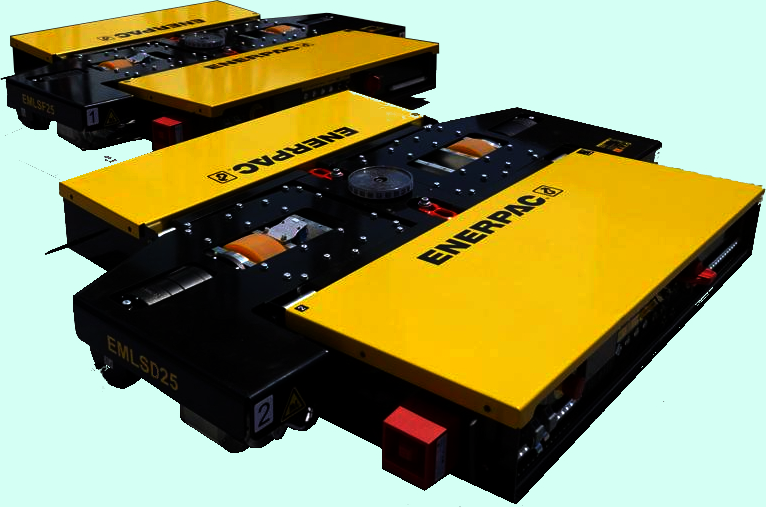
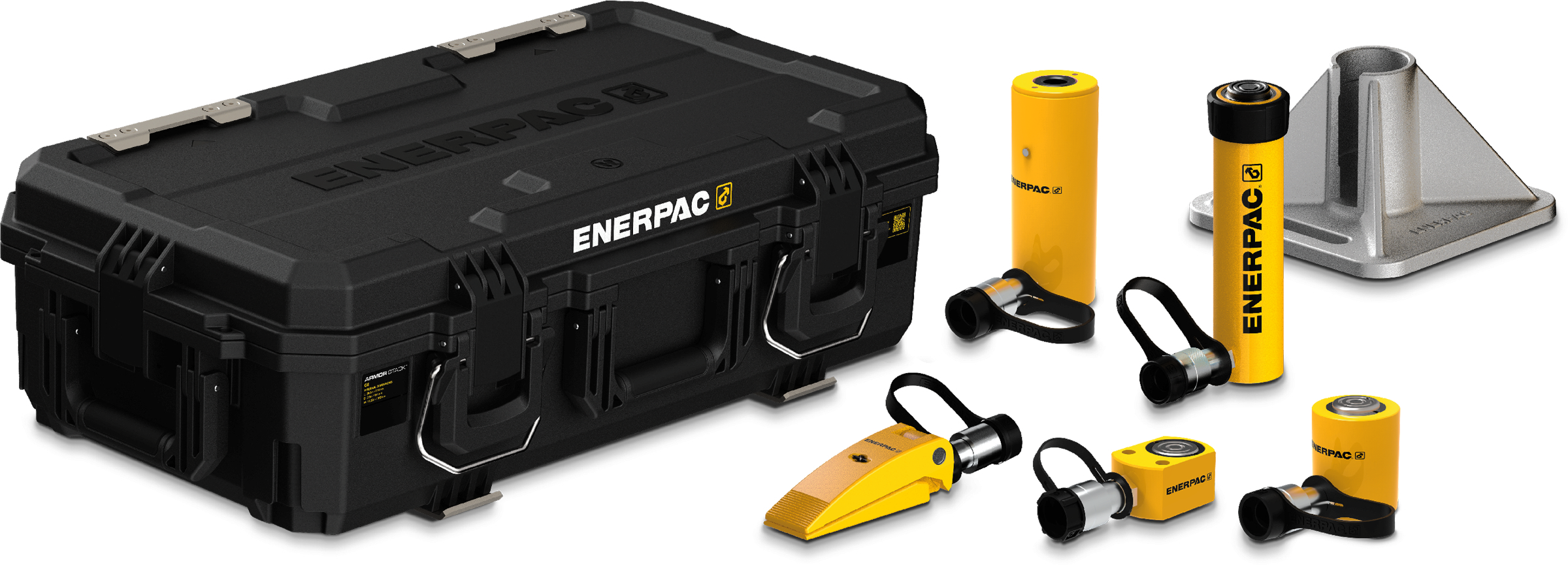
Industrial tools and heavy lift specialist, Enerpac, announces the new TJP308 Remote-Operated Hydraulic Toe Jack. Engineered specifically for professional machinery movers and heavy equipment installers, the Enerpac TJP308 combines a 33-ton lifting capacity with a lightweight, highly manoeuvrable design to optimise safety and precision in space restricted industrial environments.
Extended Stroke and Multi-Point Synchronisation
Featuring a 200 mm stroke, among the highest available for a lightweight toe jack, the Enerpac TJP308 allows operators to lift machinery higher in a single cycle. This extended stroke reduces the need for repetitive repositioning or packing blocks, enabling faster placement of machine skates and supports.
For complex industrial moves, the TJP308 is fully compatible with Enerpac Split-Flow Pump systems. While traditional configurations rely on multiple single jacks paired with individual hand or battery pumps, the TJP308’s design allows for the simultaneous control of up to four jacks. This enables synchronised, multi-point lifting and real-time load monitoring from a single control panel, enabling shorter setup and lift times.
To ensure maximum versatility and stability when handling irregular loads, the TJP308 jack features an adjustable 3-Position Tilting Toe allowing precise lifting from tight access points and varying load angles up to 5°.
“By utilising hydraulic power supplied from a remote pump, the Enerpac TJP308 allows operators to control lifts from a safe, ergonomic distance, says Carsten Daft, Senior Product Manager at Enerpac Heavy Lifting Technology. “This remote capability eliminates the need to work in close proximity to unstable loads or tight-clearance areas, significantly minimising exposure to pinch points and reducing physical strain.”
Engineered for Crowded Factory Floors
Built with a robust yet lightweight aluminium construction and integral solid rubber wheels, the Enerpac TJP308 weighs just 80 kg, offering a highly portable alternative to bulky steel jacks. It is purpose-built for crowded factory floors where machinery is tightly spaced or installed close to walls.
The Enerpac TJP308 is equipped with foldable side legs, a long removable driving handle, integrated lifting eyes, and optional side handles for rapid positioning. Lastly, the TJP308 includes a single-acting RAC308 cylinder and a CR400 female coupler for seamless integration into existing fleets.
For more information on the Enerpac TJP308 Toe Jack visit www.hazeng.com
 

Industry and government set new bar for workplace health


A new framework has been launched to raise the standards of physical and mental health at work, within the chemicals and major hazards industries. 

The new Principles of Workplace Health and Wellbeing Leadership have been officially launched today (24 June) at the House of Lords at an event hosted by Lord Ian McNicol and sponsored by Baroness Brenda Dacres OBE. The launch event featured an address by the Minister for Social Security and Disability, Sir Stephen Timms, who spoke on the importance of preventing work-related ill health, keeping people in work and growing the economy.    

The principles were developed by the onshore Chemicals and Major Hazards working group, as a response to Health and Safety Executive’s (HSE) Prevention Programme, to place clear accountability on senior leaders, building on the model established for process safety leadership following the 2005 Buncefield tragedy.  

The working group involved HSE alongside trade associations, unions and employers, including the Chemical Business Association, Chemical Industries Association, GMB Union, Grain LNG, National Gas, Tank Storage Association, Unite the Union and Yorkshire Water.  

The launch of the principles reflects a shared commitment to preventing work-related ill health through the sharing of best practice and key learnings to drive continuous improvement. The Principles were built on a proven model following the Buncefield incident in 2005. Industry developed the Process Safety Leadership Principles, which have since become a foundational standard across onshore and offshore major hazard sites. The same rigour is now being applied to occupational health.  

The initiative also aligns with Sir Charlie Mayfield's Keep Britain Working review, reinforcing a cross-government approach to reducing the economic and human cost of preventable work-related ill health. 

Minister for Social Security and Disability, Sir Stephen Timms, said: “The launch of the Principles of Workplace Health and Wellbeing Leadership marks an important step towards improving health and wellbeing in the onshore chemicals and major hazards industry. I welcome its clear focus on preventing work-related ill health. Working together, we can create healthier workplaces, support economic growth and raise living standards.” 

Ken Rivers, Non-Executive Board Member for the Health and Safety Executive, said: “These Principles of Workplace Health and Wellbeing Leadership represent a significant step forward in how we approach occupational health across the major hazard industries. By bringing together regulators, industry leaders and trade unions, we have created a framework that builds on the sector’s proven track record in process safety leadership. I am pleased to have contributed to this collaborative effort, which I believe will help businesses protect their most valuable asset; their people.” 

Peter Davidson, CEO of the Tank Storage Association, said: “The Tank Storage Association has played an active role in the Working Group since its inception. These principles reflect our firm commitment to workforce wellbeing and cross-industry collaboration. I am proud to support this important initiative on behalf of the bulk storage and energy infrastructure sector.” 

Luke Collins, National Health and Safety Advisor, Unite Central Office, said: “Work-related ill health remains one of the greatest challenges facing workplaces across Great Britain. These Principles rightly recognise that protecting workers' health and wellbeing requires visible leadership, meaningful worker engagement, competent management, and a relentless focus on prevention. Unite strongly supports the principle that workplace health must be given the same priority as safety, with board-level accountability and effective trade union and workforce involvement at its heart. By working collaboratively, sharing learning, and focusing on both leading and lagging indicators, employers, workers, and trade unions can help prevent harm, improve wellbeing, and create healthier, more productive workplaces for all. From a personal perspective, it is great to be involved with an initiative that is driven by likeminded, supportive professionals aiming towards the same goal; healthier workplaces!” 

Clare Middleton, Head of Safety, Health & Wellbeing, National Gas, said: “This document is a really strong step forward in helping organisations take a more thoughtful and proactive approach to health and wellbeing. It clearly reinforces that looking after people isn’t just the right thing to do - but it also drives better performance and resilience across the business. I particularly value the emphasis on visible leadership, early intervention, and genuine workforce involvement, as these are the areas that truly make a difference in practice. Overall, it provides a practical and encouraging framework that supports organisations in creating healthier, more engaged workplaces while reducing risk and improving long-term outcomes.  

Simon Culkin, Managing Director, Grain LNG, said: “The Workplace Health and Wellbeing Leadership Principles provide businesses with a structured approach on how to both manage and measure the health and wellbeing of their employees.  Grain LNG are proud to have been involved in helping to develop these principles and help close the gap between safety and health in industry, and in doing so, raise the standard of this important area.  

Stephen Elliott, Chief Executive of the Chemical Industries Association, said: “The future of our industry is built on people - their energy, creativity, and resilience. These Workplace Health & Wellbeing Principles are a call to action in shaping workplaces where every individual can flourish. By embracing wellbeing as a shared commitment, we unlock potential, spark innovation, and create a culture that inspires pride and purpose. Together, we can lead the way in setting a new standard - one where thriving people drive thriving businesses,”   

Susan Gee, Head of Occupational Health & Wellbeing, Yorkshire Water, said: “At Yorkshire Water, protecting the health and wellbeing of our people is a core business priority, not an optional extra. We recognise the significant impact that work‑related ill health can have on individuals, their families and the wider economy, and we are committed to acting early to prevent harm wherever possible. Through ongoing investment in workplace health, open reporting of concerns and a strong focus on understanding and managing health risks, we aim to create a working environment where every colleague has the best possible opportunity to stay well and thrive at work.”      

Tim Doggett, Chief Executive, Chemical Business Association, said: “People are our greatest asset, and health and safety has always been at the heart of what we do. We were pleased to play an active role in the development of these Principles of Workplace Health & Wellbeing Leadership, which provide a practical framework for creating workplaces where people feel supported, listened to and valued. The Principles reinforce the vital role that leadership, culture and workforce engagement play in promoting positive wellbeing and building stronger organisations. Investing in the health and wellbeing of our workforce is not simply the right thing to do; it is a shared responsibility that helps create safer, more inclusive and supportive workplaces for everyone.”    

Lynsey Mann, National Health, Safety and Environment Officer, GMB, said: “GMB are pleased to have played a part in the development of these Principles and strongly welcome their introduction. They mark an important step forward in strengthening leadership and raising standards for workplace health and wellbeing across the onshore chemicals and major hazards sectors, helping to ensure that workers in these industries are protected.  We hope representatives from other industries will replicate this work in their sector working groups too.” 

MSA Safety Launches Latest FieldServer Modbus Gateway Helps strengthen security and connectivity across leading cloud platforms

MSA Safety, Inc. (NYSE: MSA), a global leader in the development of advanced safety products and solutions that protect people and facility infrastructures, today announced the launch of its latest industrial connectivity solution, the FieldServer Modbus IoT Gateway.

A versatile, secure solution that bridges legacy Modbus devices with today’s Industrial Internet of Things (IIoT) infrastructure, this new Modbus IoT Gateway is the latest in MSA Safety's suite of FieldServer Protocol Gateways. FieldServer Gateways are secure, easy-to-configure devices that serve as entry points for data communication and processing between internet-connected products and network protocols to the cloud.

Designed for original equipment manufacturers (OEMs), system integrators, and automation professionals, the Modbus IoT Gateway supports Modbus RTU (serial) and Modbus TCP (Ethernet) protocols and enables seamless conversion to OPC UA and MQTT protocols. The conversion allows for cloud-based integration and remote access, helping make it easier for users to communicate with their devices, platforms, data, and streamline workflows.

“We know facilities utilize Modbus for their core operations, and we want to help make it easier for them to bring their systems into the connected era safely and efficiently,” said Gustavo Lopez, MSA Safety Vice President, Product Strategy and Development. “The new Modbus IoT Gateway is ideal for organizations looking to upgrade legacy infrastructure, enable remote monitoring, or meet evolving digitalization standards without replacing existing equipment by enabling edge-to-cloud communication and modern protocol compatibility.”

Key features of the Modbus IoT Gateway include:

  • Multi-protocol support for Modbus RTU and TCP to OPC UA and MQTT
  • Secure cloud connectivity with X.509 certificate support through MQTT and OPC UA for leading cloud platforms including AWS IoT Core, Azure IoT Hub and Ignition
  • Web-based interface for simplified setup, configuration, and diagnostics
  • Scalable deployment for both device retrofit and new installations
  • Industrial-grade security designed for modern Operational Technology/Information Technology (OT/IT) convergence

The FieldServer Modbus IoT Gateway is available now through MSA Safety and authorized channel partners. To learn more about the new Gateway and other FieldServer solutions, click here.