Find ATEX, IECEx, Explosion Protection & Hazardous Area Content...

News

Remote I/O valve terminal for Zone 1/21 areas – Make room for your standard

Why are so many isolating switching amplifiers and pneumatic valve terminals still installed in large control cabinets to send intrinsically safe signals and pneumatic drives from Ex zoned areas?

There are numerous concepts for planning of potentially explosive systems, such as the optimization of the zoning, the reduction in size of zoned areas or the wish to run everything out of hazardous areas into a central cabinet via cable routes.

The crux of the issue is that the calculation of the cabling is often not within the scope of the plant or- machine builder. Logically speaking, the effort and costs arise elsewhere, but they do not vanish into thin air. An innovative solution while considering the potential trade-offs must be carefully considered.

It is clear that many plants, especially in the chemical industry, have long been equipped with Ex Remote IO systems. Large and modular Remote IO cabinets are widely established in this industry. In this article I would like to draw the attention of plant and machine builders to a new concept.

What is new about it and what are the benefits?

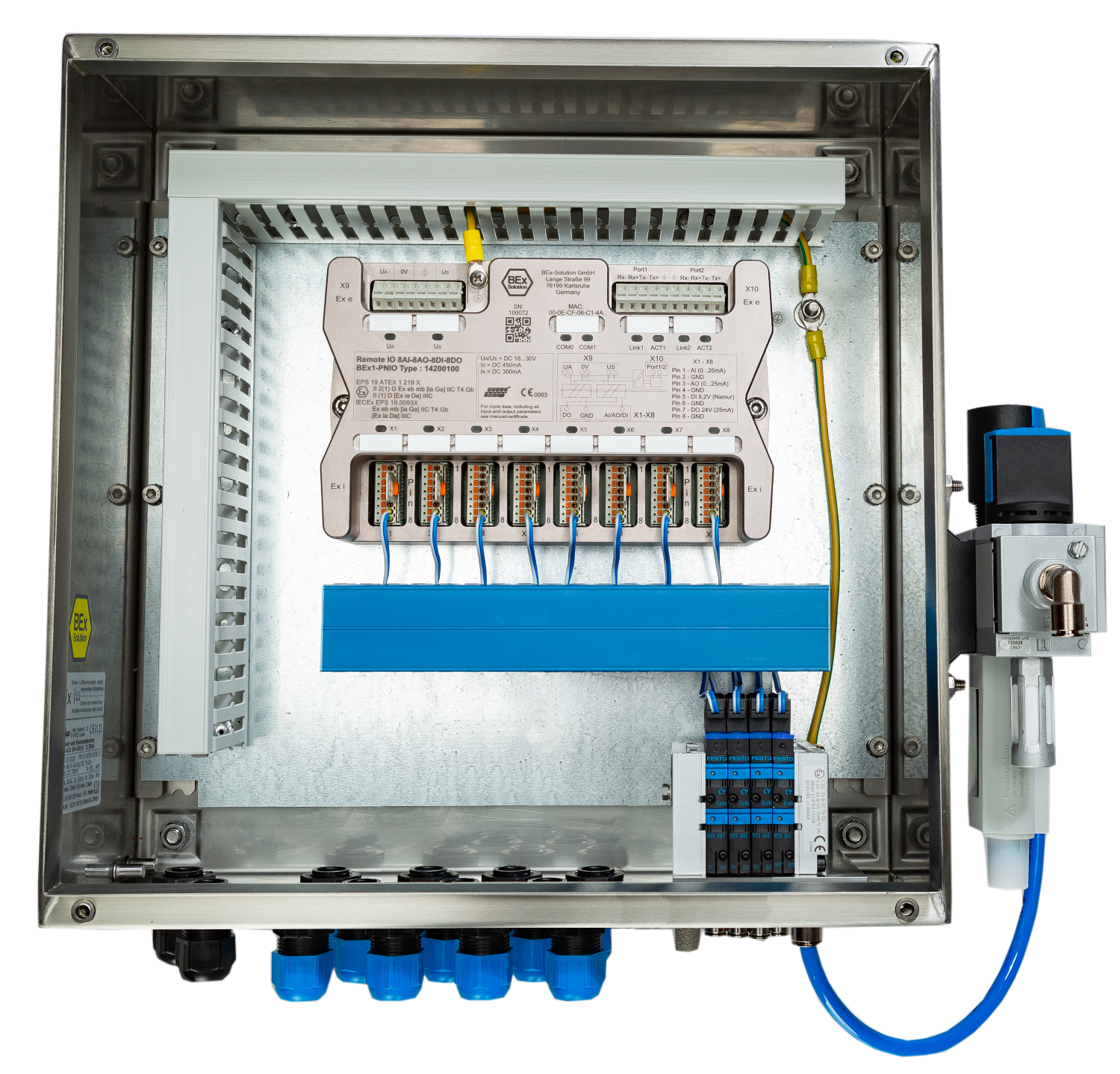
The new concept for zoned areas is: Place small Remote IO valve terminals distributed within a system instead of building central or large decentralized solutions. The aim is to collect the intrinsically safe signals on-site and to supply the pneumatic drives decentrally via short pneumatic lines. From there, communication takes place directly via PROFINET to the controller.

Newly developed technologies from non-hazardous areas are usually upgraded and certified for zoned areas with a time delay. In the case of products for Zone 2/22, this may happen very quickly. However, for devices for Zone 1/21, which also supply sensors from Zone 0/20, new and innovative products can usually only be implemented with considerable effort by the manufacturer.

Through the successful partnership between BEx Solution, FESTO and Exepd, the 3 in 1 solution was created, which as a result provides an innovative, tried-and-tested and certified compact Remote IO valve terminal for potentially explosive areas in zone 1/21.

What added value results from this solution? You gain space, time and money! The small boxes combine bus nodes, isolating switching amplifiers, intrinsically safe IO channels and the valve terminal, guaranteeing short distances to the sensors and the pneumatic actuators. Connect compressed air, power supply and PROFINET, quickly and easily!

Now many will say yes, but what about the software effort? Those who already have experience know that it does work but costs a lot of time and money. We are back on the big topic of resources. When developing the new concept, particular care was taken to ensure that the Remote IO module itself does not have to be configured. Communication and I/O settings take place via 64 I/O bytes.

Areas of application: Painting plants, pharmaceutical and chemical industry, bulk goods plants, mixing / grinding plants, industrial heating / cooling systems, sewage plants, and much more.

Functions: The connection is possible via PROFINET or Modbus TCP / IP. Up to 16 pcs 3/2-way valves or up to 8 pcs 5/2-way valves can be configured, or combinations thereof. 16 Namur inputs are available for the position indicators. The module is also equipped with analogue 4 to 20mA Ex i signals

One final point: Many customers like the compact concept very much, but they have decided on existing solutions based on long-term specifications by their end customers or company-specific specifications. That is certainly the reality, especially in explosion-prone systems, where technology should last for several decades. With existing and well performing systems, you have to think twice about a change. But when it comes to modernising old systems or planning new systems, we recommend that you take a closer look at this solution which will enable more flexibility in the future.

“Not yet convinced , simply request a test device”

More information at: https://exloc.co.uk/bex-remote-io-valve-terminal/

Contact: This email address is being protected from spambots. You need JavaScript enabled to view it.

Contribution by Karl Vogel CMO - BEx-Solution GmbH & Andrew Tither Exloc Instruments UK Ltd
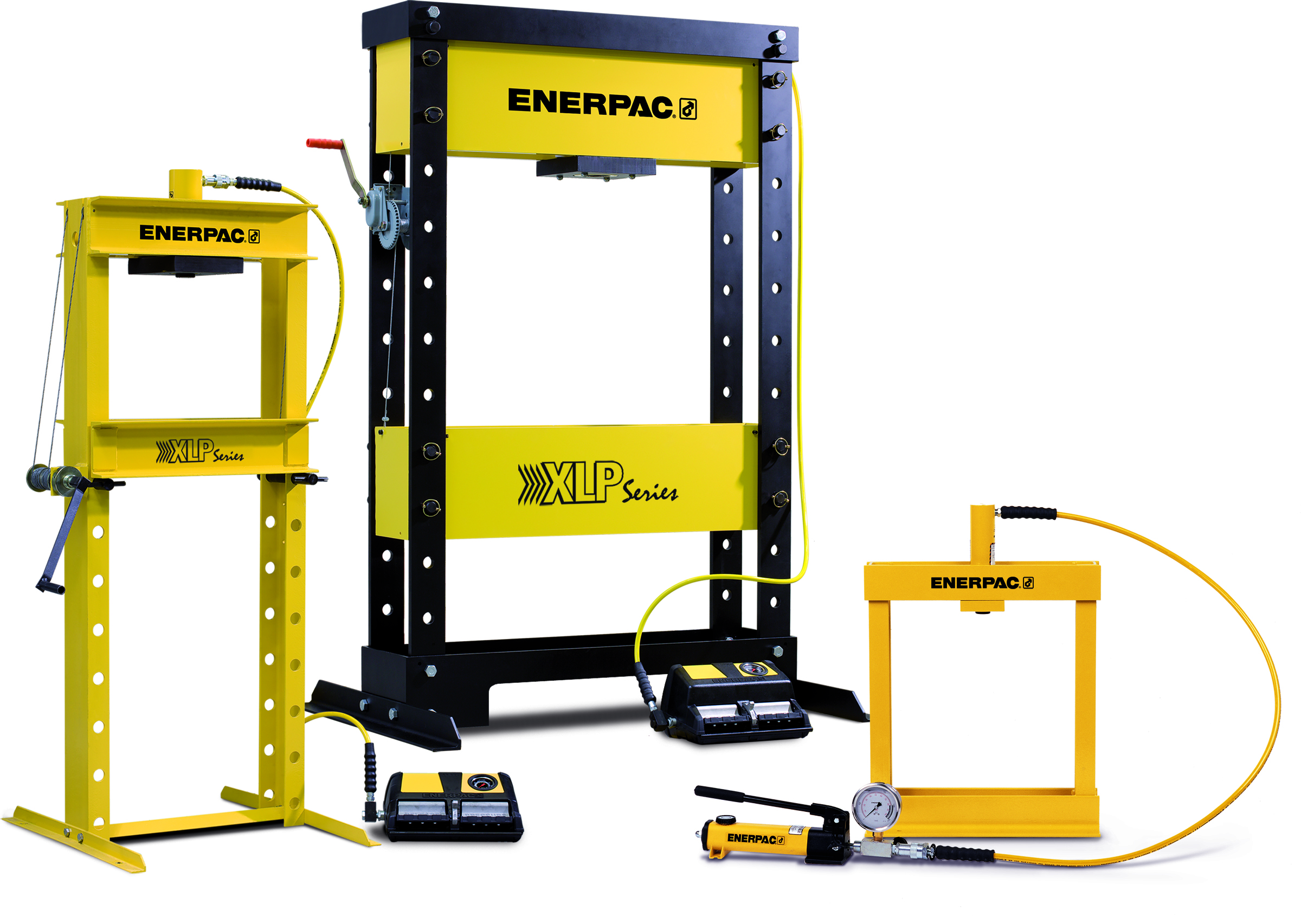
Enerpac VLP and XLP Presses Offer Superior Performance

Enerpac announces two new series of workshop presses—the XLP-Series H-Frame Workshop Presses and VLP-Series Benchtop Presses. Whether for differential assembly in the automotive industry, gear components assembly in the aerospace industry, or bearing maintenance in the mining industry, the new Enerpac VLP and XLP presses offer superior performance.

New XLP-Series Workshop Presses

Available in 25-, 50-, and 75-ton models, the XLP-Series Workshop Presses feature adjustable side-to-side cylinder movement, a locking winch for easy height adjustment of the press bed, and high-performance manual, pneumatic or electric pump options with remote valve operation. The 25-ton press has a simple, welded design and the 50- and 75-ton presses have an open frame and bolted design. The 50-and 75-ton models come standard as unassembled kits, and include complete press frame, winch, cylinder, pump with gauge, couplers and hose.

New VLP-Series Benchtop Presses

Enerpac VLP-Series Benchtop Presses work with manual or air pumps. They feature a welded frame and are available in 10-ton models.

To learn more about the Enerpac VLP and XLP Presses, visit www.enerpac.com.

Hart’s largest Speedor Storms’ order

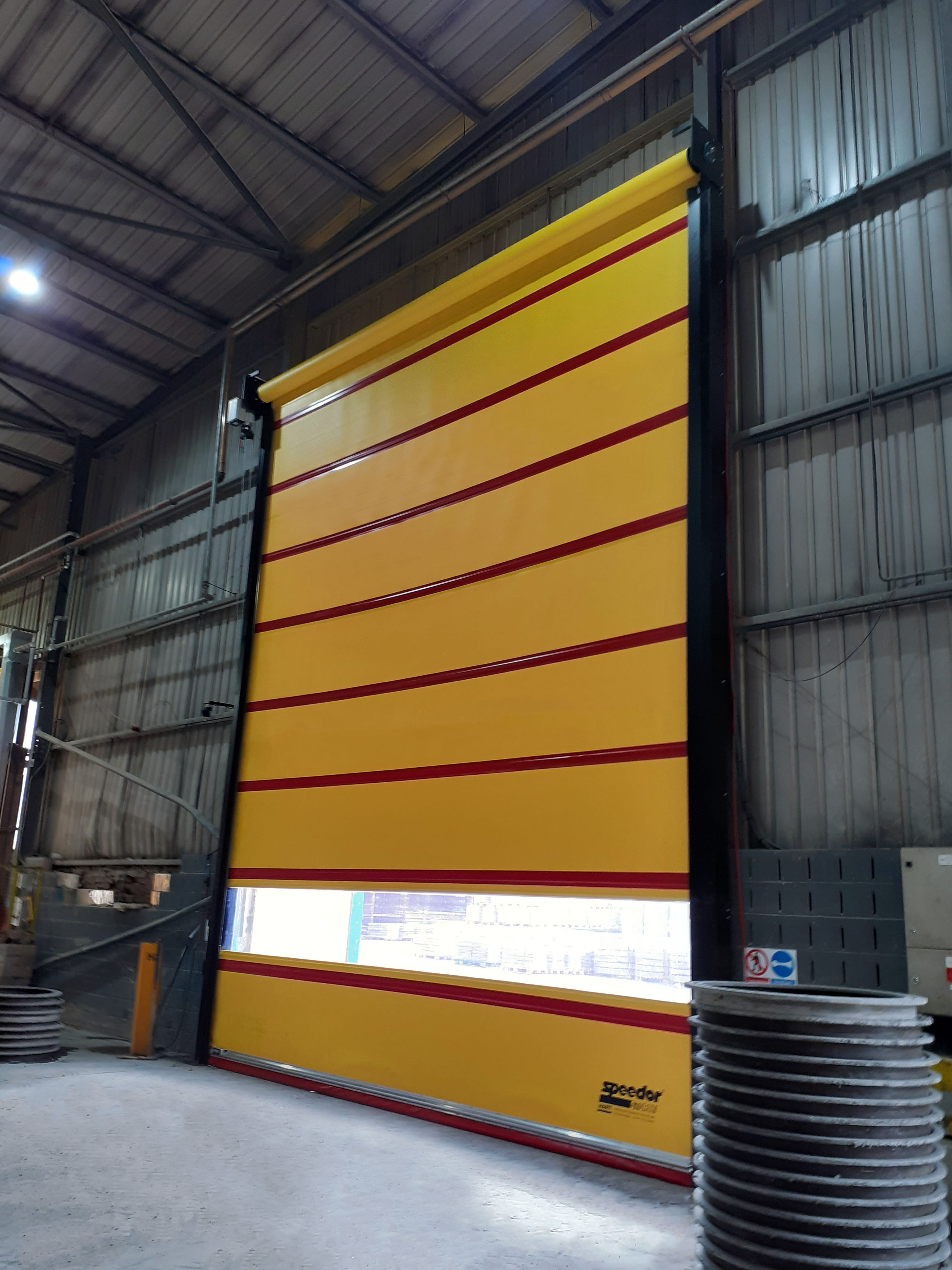
Hart Door Systems has secured its largest order for its Speedor Storm door, the high-performance exterior roller door designed for frequent use in high traffic situations and constructed to withstand harsh environments including 90mph for wind class 5.

Brian Woodcock, Hart’s regional sales manager for the Midlands and South West, says the  rapid roll door, with its robustness, low maintenance and exceptional wind resistance was required for a factory in an exposed part of Lincolnshire.

“With half a dozen major storms so far this year there is a noticeable increase in enquiries for a high speed door which can withstand exceptional weather,” says Mr Woodcock.

The order for 15 ‘Storms’ is for a  pre-World War 1 building which is undergoing phased redevelopment to create new space and streamline production. The high-speed Storms will help to reduce energy consumption, keep the building warmer and more efficient.

Mr Woodcock adds: “While its high-speed opening and closing action improve efficiency, the energy-saving potential of this rapid roll door is high, controlling internal temperatures as well as reducing escaping dirt, odours and noise.”

www.hartdoors.com  t: 0191 214 0404  This email address is being protected from spambots. You need JavaScript enabled to view it.

ATEX Fans in Wind to Hydrogen Renewable Energy Generation

One promising solution to the problem of carbon emissions and Global climate change is the direct use of renewably generated hydrogen in fuel cells or in internal combustion engines for transportation and electricity generation.  Although the most common element in the universe, Hydrogen isn’t found in its purest form and must be either electrolysed from water or stripped out of natural gas by means of steam methane reforming. Both are energy intensive processes that result in greenhouse gas emissions. Using electricity in a process called electrolysis splits water into hydrogen and oxygen. The hydrogen is then removed, compressed, transported and used effectively.

Wind Turbines & Green Hydrogen Production

Green hydrogen starts with wind. Lots of wind. Harvesting wind offshore on a massive scale can produce stable green hydrogen on a large scale quickly. By combining wind turbines to hydrogen production there is a synergy that mitigates the energy intense electrolysis process. A substantial proportion of offshore wind farms could eventually make hydrogen rather than transmit electricity. Safe hydrogen exhaust using effective and suitable ventilation will be a key factor in designing these emerging renewable electrolysis technologies.

For wind to hydrogen generation, the systems work by linking wind turbines to electrolysers which pass the wind generated electricity through water to split the liquid ions into hydrogen (to the cathode) and oxygen (to the anode). The hydrogen can then be stored and used later to generate electricity. The only by-product of producing hydrogen is water. Currently wind turbines produce huge amounts of energy with much of that volume going to waste as the grid cannot use it fast enough. In wind to hydrogen initiatives this energy produced from wind farms would be used efficiently to produce hydrogen, meaning none of the electricity produced would go to waste. Current developments are allowing researchers to work on increasing the efficiency of wind to hydrogen systems. When a wind turbine is co-located with the electrolysis system, more direct connection between the source and the electrolyser stack is possible, this eliminates the need for long distance cables and transportation, resulting in a much more cost effective and efficient system. The technology has the potential to deliver a completely emission free, climate-friendly method of making, storing and using energy in the future and as wind turbines are placed further out to sea, hydrogen production close to source becomes even more attractive.

Key Fact: The Global demand for hydrogen is 75 million tonnes and is likely to rise sharply

Is it an ATEX Application?

Most wind to hydrogen systems will incorporate combustible gas detectors that monitor the air flow from the generation cabinet in addition to the compression building air make up, and will shut the system down if a set % of the lower flammability limit of hydrogen in the air is reached. The lower flammability limit of hydrogen in air is 4% by volume. ATEX fans are required if situated in the gas zone containing hydrogen. Typically, an exhaust fan installed in the production and compression building would run continuously during production to avoid a potential build-up of the combustible hydrogen gas. A differential pressure switch on an exhaust fan that indicates proper airflow can be used to inhibit the operation or the electrolyser and compressor ensuring safe working conditions. One of the largest consumers of ancillary power may very well be the fan that continually forces fresh air through a generation cabinet so choosing the most efficient industrial fan to suit the system is important. Industrial fans are required for cooling system components to prevent overheating and additional fans may be used to continuously purge the building for safety.

www.axair-fans.co.uk

Protecwork Protective Wear By Snickers Workwear

Class 1, 2 and 3-accredited Protective Wear for heat and flame, electrostatic and chemical risk environments from the UK’s leading workwear innovator.

 Protecwork is an advanced range of protective working clothes and accessories from Snickers Workwear.

 Designed for men and women operating in high-risk work environments, all the clothes are ingrained with the Snickers Workwear hallmarks of best-in-class durability, comfort, ergonomics and fit. What’s more, the market-leading risk-protection properties of the clothing are integral to all the Base-, Mid- and Top-Layer garments in the range.

Fully accredited for Class 1, 2 and 3 protection in risk environments such as heat and flame, electric arc, electrostatic, chemical as well as bad weather conditions, all the garments are manufactured from tailor-made fabrics designed to respond to the demands and risks in the conditions in which they’re worn.

With over 60 different garments and accessories to choose from, you can make sure you get the right protection, visibility, flexibility, comfort and durability – wherever you’re working. Check out the new Snickers Protecwork range to fit your workday and well-being on site.  

(ENDS 183 words)

For more information on Snickers Workwear’s Protecwork range and the brand’s sustainability philosophy you can call the Helpline on 01484 854788; check out www.snickersworkwear.co.uk or email This email address is being protected from spambots. You need JavaScript enabled to view it.

Over 80 percent of businesses may be putting employees at risk of lung damage unknowingly’, warns Arco Professional Safety Services

To mark Love Your Lungs (Week 21 – 27 June 2022), Arco Professional Safety Service’s Respiratory Manager, Kevin Williams, urges businesses to better understand Respiratory Protective Equipment (RPE) regulations to ensure workers are protected

Over the past seven years, hospital admissions for lung disease have risen three times the rate of all general admissions, costing the NHS £11 billion a year in the UK.1 In the workplace, employees can develop these often life-threatening illnesses following exposure to harmful dusts, mists, fumes and vapours. It can take years following exposure before any symptoms of ill-health become apparent, despite being preventable through effective control measures. 

RPE is designed to keep workers safe, but research shows that up to 50% of RPE users may still be breathing in harmful substances.2 The main reasons for this are a poor fit, insufficient training, incorrect RPE for the hazard, poor maintenance and inadequate storage. 

The Health & Safety Executive (HSE) RPE at Work document states that employers must ensure reusable RPE undergoes thorough examination and, where appropriate, testing on a monthly basis or every three months if used less frequently. However, many employers are unaware of this legislation, resulting in a lack of compliance and safety. Arco Professional Safety Services estimates that over 80% of businesses are not meeting this legal requirement, leaving employees at risk of lung damage and respiratory illnesses. This issue affects any industry where employees are exposed to harmful substances and are therefore at risk.

As the HSE continues to focus on respiratory health inspections, businesses need to better understand the legal requirements to ensure that workers are protected. In addition to training employees on the steps they need to take to protect their safety, such as selection and routes of exposure, employers must understand how to maintain RPE correctly and using toolbox talks alone does not provide the required knowledge.

Thorough maintenance, examination and tests should be carried out at least once a month. Employers must ensure all staff are taught how to use RPE correctly, how to clean it, how to maintain it to industry standards, how to wear it and when it should be replaced.

Employers should record RPE examinations and tests and, where appropriate, any repairs made and retain them for at least five years. The records will help to keep track of the equipment’s maintenance and ensure businesses can demonstrate compliance with the HSE regulations.

With the right fit, training and maintenance, the risk of workers developing deadly respiratory diseases can be reduced or eliminated. The RPE technicians at Arco Professional Safety Services deliver Fit2Fit accredited services and tailor-made learning packages to provide employees with the knowledge needed to meet regulations, ensuring compliance and the protection of worker health. 

For Arco’s full guidance, visit: https://www.arcoservices.co.uk/services/respiratory-protection-services

Celebrating Women in Engineering

As International Women in Engineering Day is upon us, Siu Ho, Firmware Engineer at Casella, shares the challenges and opportunities for female engineers, her motivation for working in STEM and advice for women entering the field  

What was your motivation for working in STEM? 

Research has shown that children as young as six believe that girls aren’t interested in computer science and engineering, contributing to a self-fulfilling proficiency that girls ‘don’t belong’ in the field and to the gender gap in STEM education. As men tend to dominate the field, this can further discourage girls who have an absence of female role models. I was lucky to witness both my father and mother fixing things growing up, and they gave me hands-on experience too. Having the opportunity and encouragement to participate in less gender-stereotypical activities developed my passion for problem-solving and gave me the chance to imagine what a career in engineering could look like. 

Why did you join Casella? 

Casella is dedicated to cutting environmental and occupational health risks by developing equipment and technology that can improve and save workers’ lives. The company’s key specialisations include noise, vibration, boundary and air sampling monitoring, that can empower people, companies and communities to protect their health. I wanted to work for Casella because in doing so, I know that I’m helping to make the world a safer place. Casella has also invented a series of ‘world firsts’ including the first personal air sampling pump. Being at the forefront of innovation can accelerate the improvement of workers’ lives and I’m proud to be a part of that.  

The sector is aiming for a target of 1.5 million women working in STEM by 2030. This would equate to 30% of the workforce being female. How do you think we can move towards a more gender-balanced sector? 

As a firmware engineer, my focus is on the ‘T’ in STEM. Software is everywhere and having the ability to create and play with it is a superpower. Today’s young girls will be tomorrow’s workforce and they should be given the opportunity to learn programming from an early age, so that they can use science and technology to develop their own solutions and understand what they can achieve. There are programmes available that can teach children coding in bite-sized chunks, helping to instil problem-solving abilities. There needs to be a greater effort to incorporate these types of programmes into the education system, so that more girls can be introduced to the world of STEM from an early age. 

Why do you think there is such a small number of women pursuing STEM subjects and engineering as a career? 

The glass ceiling effect can be a concern, however, the sector is moving in a positive direction, so I think we need to raise awareness of what women can achieve in the field. In the past, we used maps to navigate our journeys. Today, we can find the fastest, smoothest route straight from our smartphones. There needs to a greater effort to highlight the positive aspects of the career because female engineers can change the world, one innovation at a time.  

What are the biggest challenges female engineers face, and what advice would you give to others thinking about entering the field? 

At university, I was one of five women out of a class of 70. In a male-dominated environment, it’s important to remember that your voice matters. Express yourself and don’t be afraid to share your opinions because they are just as important even if you’re the only female voice in the room. 

Can you tell us about any milestone moments in your career or notable mentors? 

Studying at university and within research centres was vital for learning the technical aspects of the field, however, it wasn’t until later in my career that I really developed my commercial awareness. Having an increased understanding of the way that businesses operate helped me to accelerate my career and I think there needs to be a greater focus on developing this within the standard curriculum. 

What future innovations are on your working on at Casella? 

I’m currently working on a new exposure monitoring device that can offer companies a more cost-effective method of making an exposure assessment, helping to identify workers at risk. It is important that the cost of monitoring devices is not a priority over employee health. Developing this new, lower-cost device will help to encourage more companies to protect their workforces and will join Casella’s range of products designed to help combat occupational disorders across the world. 

NOW AVAILABLE: ATEX Zone 1 Tablet iPad mini 6

Atexxo / Products / Ex Proof Tablets / Ex Zone 1 iPad Mini 6

Explosion Proof ATEX / IECEx / UKCA Apple iPad Mini 6 for Zone 1

(Self sim-card installation and functional push buttons)

Explosion Safety

II 2G ; Ex db IIC T4 Gb

All new from Atexxo Manufacturing, the Apple iPad mini 6th generation now suitable for use in Zone 1 hazardous locations. The explosion proof iPads are originally manufactured by Apple than converted and certified according to ATEX and IECEx by Atexxo Manufacturing. This makes the tablets suited for safe use in gas /vapor zone 1 hazardous locations. ATEX Zone 1 is the European equivalent for US, NEC Class 1 Division 1 equipment. (C1D1)

Compliance with ATEX / EX regulations is achieved by modification of the casing together with the safe electrical circuit, which makes the tablets suitable for safe use in Zone 1 hazardous locations. All features of the original product are preserved, except for the fingerprint scanner.

The ATEX iPad mini 6 Zone 1 comes with an aluminum case finish and is available for both the WIFI only model and the WIFI  + Cellular 5G models. Beside safe use as smart tablet, both versions are excellent for use as safe video or photo camera with wifi or Bluetooth connection.

ATEX / IECEx Zone 1 iPad Mini 6 for Zone 1 & 2

Benefits:

  • Self Sim-Card Installation and Change
  • ATEX, IECEx and UKCA certified Zone 1 & 2
  • Patented Design
  • Quick and World Wide Delivery
  • Apple (open) Business Manager

Applications:

  • Petro (chemical) plants
  • Offshore environments
  • Ex safe camera
  • Connected worker / Industry 4.0
  • Digital twins at hazardous locations

Fore more information click the link below.

Ex Zone 1 iPad Mini 6 - Atexxo Manufacturing

Air quality monitoring of volatile organic compounds with PID – National Clean Air Day 2022

On the 16th of June this year, National Clean Air Day is observed. Clean Air Day aims to encourage awareness of air pollution and what everyone can do to improve air quality (both indoor and outdoor) and ways to reduce pollution by making cleaner, greener choices to improve air quality for everyone.


Protecting lives and preserving the environment is the vision of ION Science. To achieve these goals, ION strives to be the global leader in the design and manufacture of the most advanced PID (photoionisation detection) technology in the world.


Breathing poor quality air can have negative effects on both immediate and long-term health. The World Health Organisation (WHO) estimates that up to 99% of the global population breathes polluted air.


Awareness of volatile organic compounds (VOCs), and the role they play in poor air quality in urban environments has seen a significant increase in recent years. There are many projects to monitor and control levels of pollutants such as near schools and hospitals, and schemes to promote alternative methods of transport where traffic pollution may be diverted, or alternative means of transport be encouraged.

Additionally, there has also been an increase in awareness of the importance of indoor air quality and the prevalence of VOCs indoors, where they need to be strictly controlled such as in clean rooms, or where they can rapidly increase to dangerous levels, such as on assembly lines or in paint shops. This requires accurate monitoring to minimise exposure to any compounds that may be immediately dangerous to life or damaging to long-term health.


VOCs have a range of toxicity levels and must be detected accurately and rapidly across a wide dynamic range of concentrations, from highly sensitive sub-part per billion measurements to wide range measurements such as tens of thousands of parts per million.

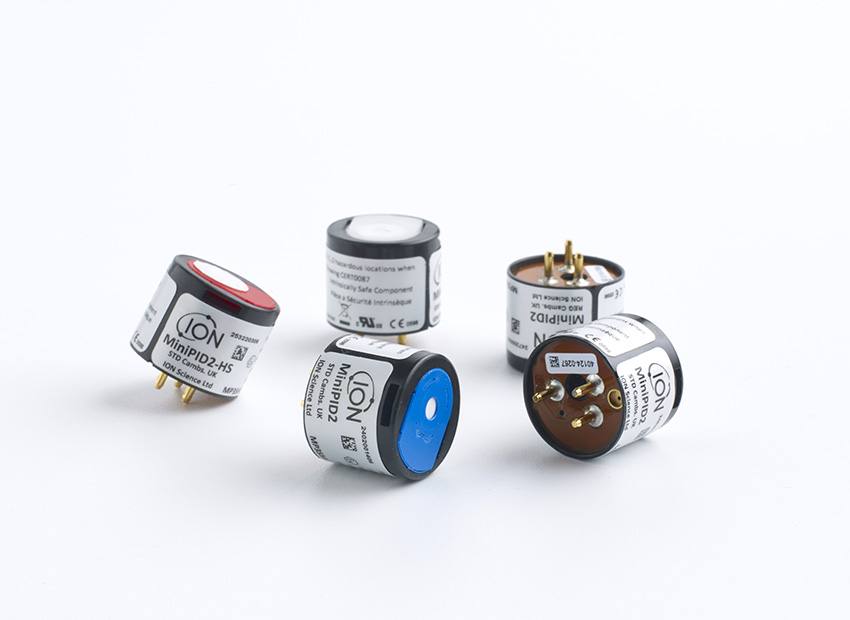
ION Science designs and manufactures industry-leading photoionisation detection sensors (PIDs) that allow targeted measurements for specific applications. This empowers end-users with accurate data to make informed decisions and take the correct action when needed to arrest and reverse increases in VOCs and other pollutants to improve air quality, save lives, and preserve the environment.

ION Science is proud to have over 30 years of experience in the continual research and development, manufacture and distribution of PID sensors. Most recently their work has been recognised with the Queen’s Award for Enterprise in Innovation for their MiniPID sensor range.

For air quality to improve, monitoring and detection is essential to understand the landscape and implement appropriate levels of protection. ION Science is proud that their range of PID sensors can play a part in helping keep people and the environment safe from harmful VOCs and contribute to the protection of health in the long term.

To find out more about ION Science and their range of sensors, please visit:

Protection against Hydrogen Sulfide exposure: Single gas detection monitoring and ARA Dock4

Despite advances in health and safety strategies and personal protective equipment (PPE), hydrogen sulfide was still responsible for 46 worker deaths between 2011 and 2017, according to the USA Bureau of Labour Statistics. Mitigating the risk of hydrogen sulfide exposure is something ION Science is keen to emphasise. The ARA H2S Single Gas Detector is an essential piece of PPE from ION Science that can make a huge difference in protecting workers against hydrogen sulfide exposure.

At both low and high concentrations, . High concentrations can cause ‘knockdown’, where workers are overcome and collapse due to exposure – this can lead to death in some cases. Low concentrations cause respiratory issues, eye irritation, and headaches. The impact of hydrogen sulfide is increased when areas are confined (such as wells, pits, pipes, tankers, tunnels, and service hatches). As a gas commonly present in industries such as oil and gas refining, mining, pulp and paper processing, and sewage and wastewater management, ensuring there is appropriate protection for workers from hydrogen sulfide should form part of a wider occupational safety approach that reduces exposure, risk, and injury.

The ARA H2S Single Gas Detector is a continuous monitoring device that operates for 24 or 36 months from activation (dependent on version). It is maintenance free, intrinsically safe, and offers three alarm notification in the event of H2S exposure exceeding limits: a flashing light, audible alarm, and vibration. These alarms are adjustable to high and low settings for user preferences. Calibration and bump test reminders also ensure that the user’s device is up to date and operating at appropriate levels of safety. Lightweight with a sturdy attachment for wearing within the breathing zone, the ARA H2S Single Gas Detector is designed for workers’ convenience and protection against the risks of hydrogen sulfide exposure.

To accompany the ARA gas detector range, ION Science offers the ARA Dock4 bump test and calibration station. This can simultaneously test up to four ARA gas detectors at once, saving on testing time and gas usage. The ARA Dock4 is ideal for larger plants and operations and the need to keep devices up to date with calibration

and testing. It has a rechargeable internal battery that offers up to five hours of operation when fully charged. The ARA Dock4 is certified electrically safe to UL 61010-1.

With greater monitoring and protection against hydrogen sulfide exposure risks, it is possible to reduce the number of work-related incidents and improve overall worker

safety. Using cost effective and worker-specific devices like the ARA H2S Single Gas Detector is an easy way for businesses to add another layer to the occupational health and safety strategy. Combining this with the ARA Dock4 means all devices can be always kept in peak condition for testing and monitoring.

ION Science continues to support the improvement of worker health and safety through monitoring devices, testing stations, PPE and expert insight for gas detection and instruments.

To find out more about the full range of ARA Single Gas Detectors available from ION Science, including the H2S version, please visit: