Find ATEX, IECEx, Explosion Protection & Hazardous Area Content...

News

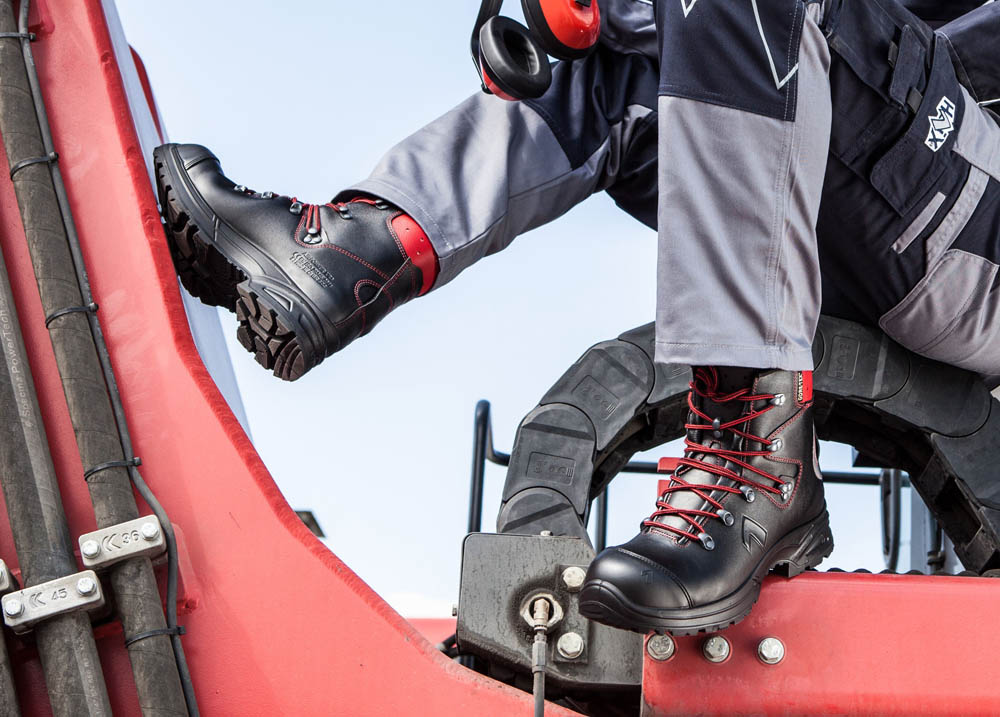
Feet on the ground: Make smarter footwear choices to prevent slips, trips and falls in the workplace

Simon Ash, UK Sales Manager at HAIX, shares how selecting the right safety footwear can help reduce the risk of slips, trips and falls in the workplace 

The Health & Safety Executive (HSE) estimates that slips, trips and falls cost Britain £800 million annually, with the direct cost to employers at around £300 million. Falling victim to such accidents can increase the likelihood of workers developing serious injuries or debilitating longer-term health conditions such as Musculoskeletal Disorders (MSDs) - the leading contributor to disability worldwide.  

The burden slips, trips and falls put on worker health, organisational finances and the UK’s economy is devastating, yet it is preventable in many instances. Employers can take a proactive approach to prevent this kind of injury by ensuring their workforce wear supportive, high-quality, comfortable footwear as advances in safety footwear design have resulted in smarter, lighter and stronger materials that can combat the risks.  

Safety boot sole units are often made from composites like Rubber/Polyurethane mixes that enhance durability and grip, providing stability and reducing chances of slipping even on surfaces covered in oil or petrol. Coupled with advanced ground impact cushioning that reduces strain on joints and muscles, designing safety footwear from ‘the sole up’ will be as integral to future Personal Protective Equipment (PPE) design as it is in today’s products. 

HAIX, specialist manufacturer of functional safety footwear, understands that wellbeing starts from the feet up and investing in quality, compliant protective footwear can prevent accidents in the workplace.  

Selecting the right footwear 

Where floors cannot be kept clean and dry, slip-resistant footwear can help prevent slip accidents. When selecting safety footwear, the wearer should consider the level of slip resistance needed for their specific situation. For example, footwear that performs well in wetter conditions might not be suitable on oily surfaces. This can be determined through a proper risk assessment. Different models provide varying levels of resistance, for example, some models incorporate a special heel cup to offer extra stability.  

Manufacturers should design safety footwear with a variety of surfaces in mind.  HAIX footwear, for example, can help to maintain a secure grip when faced with steep slopes, wet roads or oil-covered floors in workshops because the outsoles are manufactured in a special abrasion-resistant rubber compound with a bold tread. In addition to selecting footwear with the right features, all footwear should be trialled to ensure it meets the need of the environment and the wearer. 

HAIX safety footwear undergoes a series of over one hundred material and quality assurance tests, replicating the day-to-day challenges of its wearers, who spend most of their time on their feet. To ensure footwear is anti-slip, it is tested according to the main safety standard, EN ISO20345:2011, with specific codes for certain conditions: 
    •    SRA – tested on ceramic tile wetted with dilute soap solution 
    •    SRB – tested on smooth steel with glycerol 
    •    SRC – tested under both the above conditions 

Waterproof, breathable materials  
Water-resistance and breathable, insulating materials are key because wet or hot feet may cause concentration levels to drop as the wearer becomes more concerned about their comfort than the job in hand. Distraction at work can lead to an accident, so providing waterproof, breathable footwear can reduce this risk. Waterproof boots adhere to the EN ISO standard: 20345/20347, the minimum European standard manufacturers should achieve. Boots that incorporate a Gore-Tex membrane with microscopic pores that are 20,000 times smaller than a drop of water exceed this standard and ensure footwear is watertight. To keep feet ventilated when working hard, uppers - the part of the shoe covering the top, sides, back and toes of the foot, should be made from appropriate leather or breathable material.  

 
Anti-fatigue properties and comfort 
A recurring complaint from those who wear safety footwear at work is plantar fasciitis, an acute pain in the heel caused by inflammation of the plantar fascia, which is prevalent among people who stand for long periods while at work, such as factory line workers. Damage to the plantar fascia is the leading cause of heel pain in adults and if left untreated, can lead to long-term health effects and pain that can negatively affect work concentration, increasing the likelihood of an accident.  

Using advances in design influenced by biomechanics, footwear manufacturers can address such issues. A support system that supports the natural curvature of the foot, for example, can maintain a more natural foot position. This helps to reduce wearer fatigue, especially when boots are worn over long working periods, ensuring better overall bodily posture and acting to minimise long-term injury risk associated with standing at length. HAIX developed its CONNEXIS footwear range to help prevent plantar fascia damage and help reduce fatigue. The footwear features an innovative strap construction, called fascia tape, that runs around the foot and stimulates the fasciae and muscles in the foot sole to keep them elastic.  Conventional shoes keep the foot rigid, and as a result, fasciae tend to become tight and inflexible because the tissue is not sufficiently stressed, leading to pain. However, the last of the HAIX CONNEXIS range is not curved downwards like conventional shoes but straight, ensuring that the ball of the foot does not sag, and the toes have more space to support the foot. Designed in collaboration with leading health and footwear technology experts, the shoe’s structure takes into account the foot’s natural shape and its need to move freely.  Choosing comfortable, supportive footwear with anti-fatigue properties can not only reduce muscle and ligament stress but also minimise the risk of slips, trips and falls caused by difficulty concentrating or weariness. 

Other issues long-term wearers face, such as lower leg fatigue induced by overall boot weight1, can also be countered by smart material choices; advances in materials like nanocarbon can produce toe caps and reinforced areas that meet the same safety and protection standards as steel caps but remain ultra-lightweight. Puncture-resistance in boot midsoles is often accomplished using metal, but advanced fabrics and textiles can be used to provide levels of puncture resistance while decreasing overall weight and increasing comfort and flexibility.  

Taking safer steps 

Wellbeing starts from the feet up and investing in quality, compliant protective footwear ensures workers are protected and able to perform at their best. The importance of footwear as a core element of protection should never be underestimated, especially as instances of slips and trips remain so high.  

 
As workers look to manage the risk of slips, trips and falls at work, the importance of footwear as a core element of protection should never be underestimated. An investment in reliable, high-quality safety footwear is an investment in wearer health, comfort and safety. 

For more information, go to www.haix.co.uk
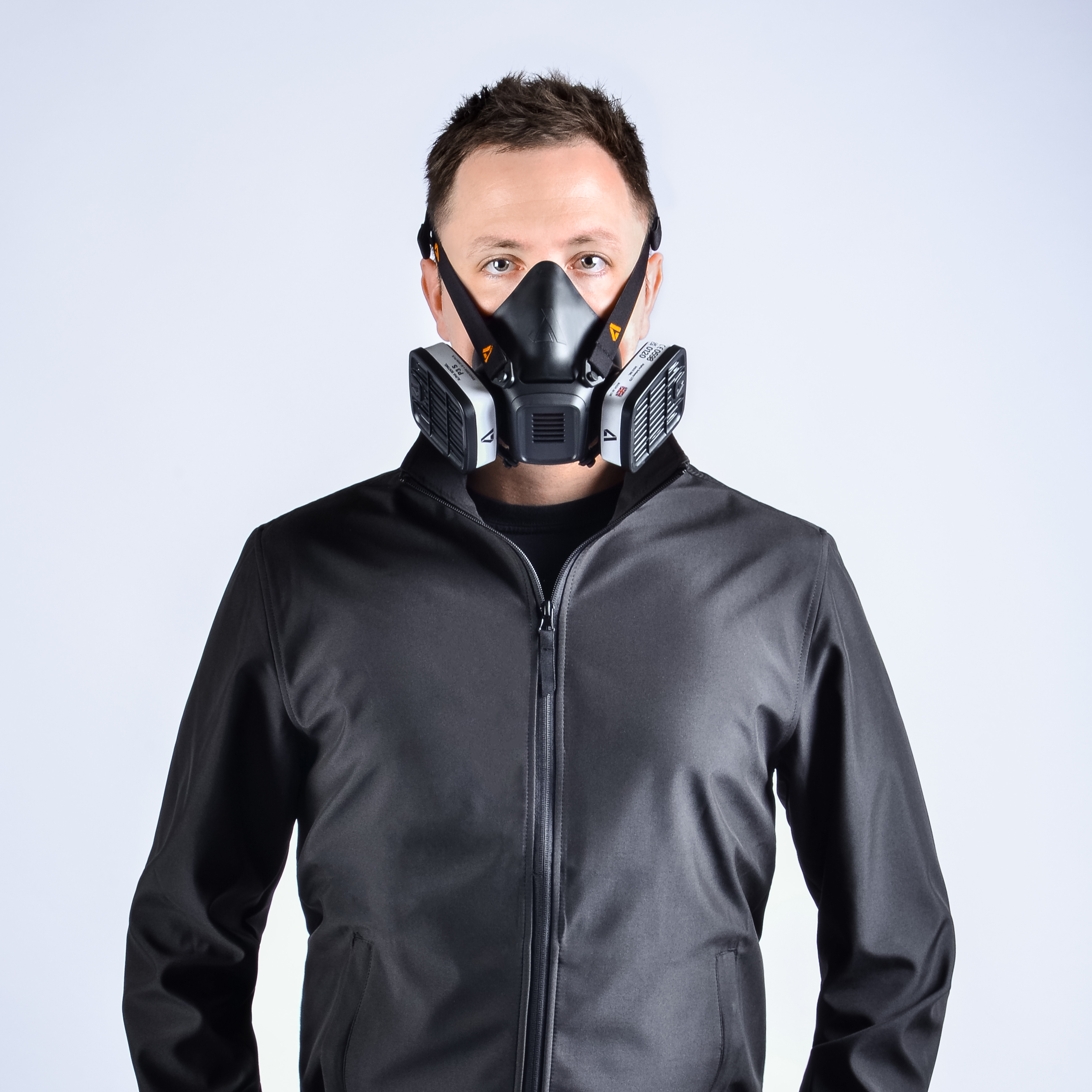
Leading UK PPE manufacturer Globus Group launches new reusable respiratory range for protection against workplace hazards

The new Alpha Sentinel range protects against some of the most dangerous respiratory hazards found in the workplace


The UK’s largest PPE manufacturer, Globus Group, has launched a new range of face masks to protect workers against extremely hazardous substances found in the workplace. The new design provides improved comfort and fit to help encourage good PPE compliance.  

Prolonged exposure to hazardous substances over an extended period is known to be extremely harmful, with workers in the manufacturing industry at particularly high risk. It is estimated that each year an average of 33,000 workers suffer from illness caused or made worse by their current or most recent job in manufacturing[i].

The Alpha Sentinel range has been designed for superior fit and comfort for workers, especially those wearing the masks for long periods of time. Lead Product Designer Josh Moffat said, “When it came to designing the Alpha Sentinel range we really tried to prioritise the end-user. We know that workers are often wearing these masks for long periods of time, and so focusing on comfort and fit means that they are more likely to be worn correctly and workers can be confident that they are getting the right protection.

He continued, “Looking beyond fit and comfort, we know that another big reason for PPE non-compliance is masks getting too hot, so we have designed our unique large exhalation valve to minimise heat and moisture build-up. We really believe that the design innovations we have been able to make with the Alpha Sentinel masks are going to make a huge difference to the workers using these products every day.” 

The Alpha Sentinel range comes with a range of changeable filters to protect against solid particulates, liquid particulates, gases, and vapours, and are suitable for use in a wide variety of industry settings. 

The Alpha Sentinel full and half face masks are the first Globus product range to be designed and manufactured entirely in the UK. Globus has committed to manufacturing as many of its products as possible in the UK.

www.globusgroup.com


Simplicity, speed and confidence: the way forward for temporary horizontal lifelines


How can construction and maintenance workers be sure that their temporary horizontal lifeline will save them in the event of a fall from heightAnd can such equipment be made easier and quicker to deploy, as well as safer? Alfonso Fernandez of MSASafety sums up the risks and challenges in this area and describes a new development which improves both productivity and fall protection.

Use of temporary horizontal lifelines is especially common in construction andindustrial maintenance work. These are notoriously dangerous occupations, as statistics from the UK Health and Safety Executive(HSE)* confirmThe construction sector saw morefatal workplace injuries than any other in 2021/22accounting for24% ofthe totalManufacturing followed at 18%. The most prominentaccident category – representing24% of all deaths at work – was falls from height. 

In industrial environments, temporary horizontal lifelines tend to be used in locations where work at height is needed only occasionally. If there is a frequent need in one place, it makes more sense to install permanent fall protection system. This may be the case, for example, in regular air conditioner maintenance. Temporary horizontal lifeline applications, by contrast, could include a one-off machinery repair or a servicing task required just once every few years. It would be impractical and expensive to build permanent solutions at every high point where work might potentially be required at some time.  

Construction projects, by their very nature, alter in shape and height as they develop. To meet their changing needs, temporary horizontal lifelines can be continually moved into different positions.

Expanded lifeline choice

A temporary horizontal lifeline provides the anchorage for a fall protection system whose other essential components are a body harness and a connecting device. The latter, which is often an SRL (self-retracting lifeline) or a PFL (personal fall limiter), connects the worker’s harness to the horizontal lifeline.

The most basic temporary horizontal lifelines are made from webbing. Others, using rope, offer a step up in quality, while premium-quality systems use steel cable. Durability is an obvious issue. Webbing is the least durable option. It quickly becomes scratched, dirty and stained. These factors contribute to its deterioration and give the lifeline a shabby appearance which can makeusers doubt its reliability. Rope is more durable and therefore safe for longer. Cable is better still.

In developing the new MSA Temporary Horizontal Lifeline, MSA’s design engineers have opted for galvanised steel cable to maximise durability. At the same time, they have addressed several problems typical of traditional cable-based temporary horizontal lifelines. The result is a product which can be considered the first of its kind. 

In particular, the designers havereplaced complex, time-consuming set-up processes – typically requiring more than one pair of hands – with faster, simpler approach. This allows users to spend more time on the workthey are there to doand less on setting up, soproductivity losses are minimised. The MSA lifeline also has features which take the guesswork out of correct locking and tensioning, and it comes with user-friendly charts for quick determination of required clearances. Its innovative, mobility-enhancing design even allows two connected workers to pass each other on the line without temporarily disconnecting.

Time savings in installation

temporary horizontal lifeline must be connected to a firm anchor point at each end. The anchor points are normally beams or other solid structural features of a building. Attachment is usually via anchor straps. 

Once attached, the lifeline needs to be locked and tightened. Until now, these havebeen slow proceduresinvolving use of nuts, bolts and wrenchesWith the MSAsolution, toolless locking and tensioning mechanisms are built into the lifeline. There are no tools or other separate items to carry and potentially drop or lose. In addition, both mechanisms are at the same end of the lifeline, so there is no longer a need to walk back and forth when installing it.

Tests show that installation of the MSA Temporary Horizontal Lifeline is 75% faster compared to traditional cable systems. That saving, multiplied across the many days on which the lifeline is set up in different locations, frees up substantial amounts of productive time.

Confident locking and tensioning

A further issue to address is assurance of firm locking and correct tensioning. If the lifeline is not locked tightly enough, it might slip from the anchors. A loosely tensioned lifeline will deflect more than a sufficiently tight one if a worker falls. This creates potential for impact with the ground or other structures.

In webbing-based systems, locking and tensioning generally involve tightening until the worker can no longer turn the wrench further. Whether the right level of tension has been reached is a matter of judgement. Some rope or cable systems have a drum which is designed to slip when the lifeline becomes tight. 

With the new MSA system there is absolute certainty. Coloured visual indicators on itsinbuilt locking and tensioning devices clearly show whether the system has been set up correctly and is ready for use. This level of simplicity and confidence is very unusual in the market.

Quick decisions on clearance

Another aspect on which users want to be confident is how much clearance height is needed in the set-up for safety in the event of a fall. This needs to allow for lifeline deflection and other variables. To date, it has required calculations combining data from the separate lifeline, connecting device and harness user manuals – adding extra time to the job.

MSA has now solved this difficulty by providing its lifeline with easy-to-use charts for which the calculations have already been made. These take into account factors like the number of users connected (one or two), the distance between the anchor points, the type of connecting device used, and whether the lifeline is at foot, chest or overhead level. They quickly point the user to the required clearance for each set of circumstances.

Improved mobility

When two workers are connected to the same horizontal lifeline, a problem commonly arising is that they may need to pass each other from time to time. To do so, one user must disconnect temporarily from the line – becoming unprotected until connection is restored.

MSA has solved this with its patented bypass shuttles. These maintain 100% tie-off during passes, so mobility is increased without sacrificing safety.

The ease and speed with which temporary horizontal lifelines can be handled, installed, uninstalled and moved between locations is another key consideration. Traditional cable systems can be heavy and difficult to manoeuvre. Their installation is slow, as already mentioned, and may require two workers.

The MSA system uses flexible, lightweight cable and can be easily carried and set up by one person. Its simplicity, flexibility and adaptability to different circumstances make it ideal for constantly changing work sites and intermittent maintenance tasks.

Durability, strength and true value

Web-based and rope-based systems are of course lighter, but the strength and durability of MSA’s galvanised steel cable gives workers and their managers greater assurance. This is especially important when lifelines face abrasive, corrosive, dirty or polluted conditions, like those typical of construction and industrial maintenance applicationsThe MSA lifeline is also tested to a capacity of 140 kg, which exceeds the EU standard of 100 kg. 

Unsurprisingly, the MSA Temporary Horizontal Lifeline ishigher priced than a more basic product,but buyers should always look for true and lasting value when comparing safety equipment. Greater durability, in particular, brings down the whole-life cost of a high-quality system compared to a cheaper alternative. The new MSA lifeline also pays back through higher productivity, with its fast, single-handed installation. 

Ultimately, however, no price can be put on workers’ lives. Employers and managers choosing the safest option can rest assured that they are minimising risks and investing in the wellbeing of their workforce. And given the choice, anyone who actually works at height would surely opt for that assurance too.

As along-established leader in workplace safety solutions, these thoughts have driven MSA’s non-stop search for improvements. Through its new Temporary Horizontal Lifeline, MSA has found yet another way to make sure workers get back to their families at the end of the day.

For further information on the new MSA Temporary Horizontal Lifeline, click here.

Power of three set to boost oil and gas filter performance Critical

Power of three set to boost oil and gas filter performance

Critical filtration processes across the worldwide oil and gas industries are the focus of a trio of innovative product variations designed totransform operational efficiency.

UK-based filter maker Amazon Filters has engineered the changes to strengthen its portfolio of products widely used in upstream, midstream and downstream processes.

Supported by ‘quick and able’ delivery and technical backup, the variations offer the reassurance of retrofit capability meaning they can be readily and flexibly integrated with existing process equipment. 

They are specifically aimed at three of the main process applications at the heart of oil and gas filtration and production: liquid gas coalescing; particulate removal from natural gas; and particle removal in liquids.

Simon Hughes, Business Development Director at Amazon Filters, said: “The variations we have introduced mean we can supply our products directly into more retrofit applications, supporting the essential work of production and maintenance managers on production platforms, in transmission lines and at refineries.

“Extensive performance testing of competitive products and our newly developed retrofits ensures our filters can fit seamlessly into existing systems to provide, at the very least, comparative performance. 

“In many applications, customers will achieve improved performance along with associated economic savings.

“This is all about providing competitively priced products that protect machinery and equipment, offer performance benefits, minimise costly unscheduled downtime and ensure the final purity of output.”  

For liquid gas coalescing, Amazon Filters has introduced a filter based on proprietary melt blown technology. This complements the recently released SupaSep LGP coalescer that is based on pleated glass microfibre media technology.

SupaSep LGM is designed as a cost-effective retrofit solution to enhance efficiency and drainage performance in high-flow filtration and separation processes.

It is ideal for the removal of entrained liquid droplets such as water, condensate, oil, glycols and amines from natural gas in applications within processing plants, power plants and compressor stations. 

Particulate removal from natural gas is the focus of a variation of Amazon Filters’ Contour Gas melt blown cartridge filters.

These help with the removal from gas transmission lines of black powder, a common source of contamination mainly composed of hard particles of iron oxide and iron sulfide in sizes from 100µm down to sub-micron level.

Typically caused by corrosion and erosion in upstream pipework, the particles are swept along at high speed in the gas flow, with accumulations risking harm to downstream equipment and endangering production safety.

For the new variation of Contour Gas, design engineers have reduced the dimensions of the outer diameter so that more installations can enjoy seamless retrofits. 

The graded density of the variation’s melt blown structure ensures efficient removal of fine, sub-micron particles while providing excellent dirt holding capacity. 

And the product is now available in two efficiency grades, with coreless and stainless steel core variants, to optimise matching to process conditions. 

In the third product variation, Amazon Filters has optimised the pleat configuration of its liquid particulate filter SupaPleat 1401 and added advanced, extended-life, polypropylene depth media to ensure low pressure loss and optimised dirt holding.

SupaPleat 1401 is an absolute-rated, high-pressure filter cartridge with a pleated, high surface area designed as a cost-effective alternative to products based on old technology and filtration media. 

Its fluid process applications in the refinery, chemical and petrochemical industries include the filtration of solvents, acids, iron fines and hydrocarbons. 

The three product variations complement Amazon Filters’ expanding reach into global oil and gas, bolstered with the recent hires of industry experts Nizam Mohamed and Silas Kirst.

Based in Kuala Lumpa, Malaysia, and Houston, Texas, the two Business Development Managers are tasked with driving market growth in the Asia-Pacific (APAC) region and North, Central and South America respectively.

As well as welcoming Nizam and Silas, Amazon Filters has appointed new area distributors in Latin America and Asia with a multi-industry focus including oil and gas. 

For more information on the three retrofit product variations, visit www.amazonfilters.com/retrofit-filters.

EEMUA Webinar

EEMUA Webinar – The other side of ageing assets: How to replace legacy monitoring solutions – FREE & Open to All ** This Wednesday 19 October ** –  – focus 1 hour Live online on: *monitoring ageing assets; *repowering plant; *antiquated monitoring hardware– Webinar runs 15:00-16:00 UK time; 16:00-17:00Amsterdam; 09:00-10:00 Houston Please find more details and registration at .

#eemua #ageingassets #industrialengineering #monitoring

ION Science formally receives Queen’s Award for Enterprise

Global gas sensing manufacturer ION Science has been presented with one of the most prestigious business excellence awards in the UK, endorsing the commercial success of ION’s innovative Sensor technology.

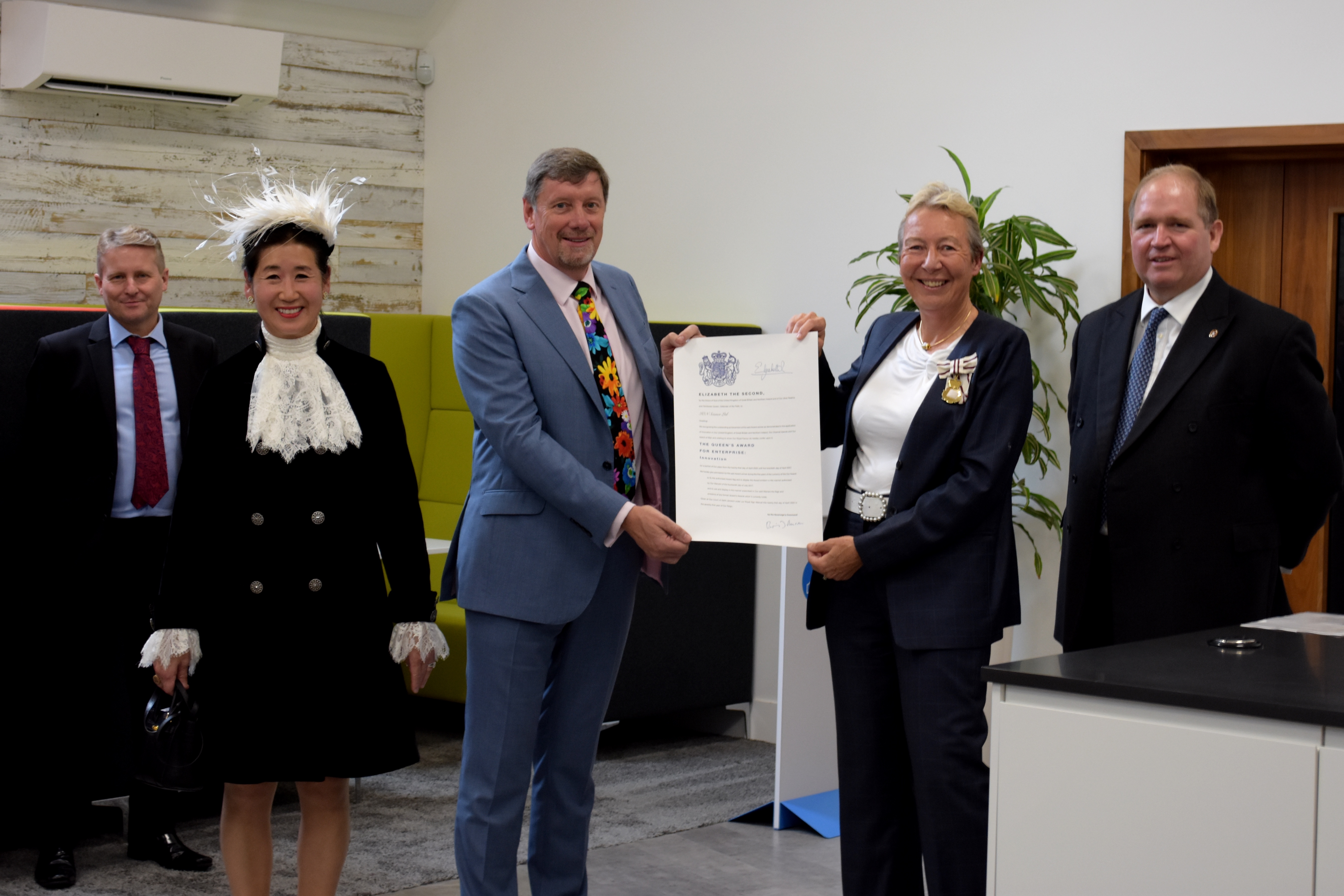
ION Science formally received the Queen’s Award for Enterprise, in the category of Innovation, at a corporate ceremony on Wednesday 5th October involving local dignitaries at its global headquarters in Cambridgeshire.

The accolade was announced back in April before the recent passing of Her Majesty the Queen, recognising the quality, reliability, and success of the MiniPID Sensor and ION’s dedication to developing and producing new technologies that offer unparalleled VOC detection, helping to protect lives and preserve the environment.

VOC sensors are used extensively worldwide in applications where the rapid, accurate detection of hazardous gases is critical to safeguarding workers, the public and the environment. These include oil rigs, gas refineries, pharmaceutical manufacturing plants, semiconductor factories, laboratories, nuclear facilities, and air quality monitoring.

Capable of withstanding relative humidity up to 99% (non-condensing), temperatures of -40 to +65 °C, and with an anti-contamination design, the MiniPID sensor range offers 10,000 hours of reliable detection, making it ideal for long-term monitoring. They also have the widest detection range on the market, from as low as 0.5 ppb (parts per billion) right up to 10,000 ppm (parts per million), making them suitable for virtually any application. ION Science’s sensors can be used to detect over 950 different compounds, many of which can pose a serious threat to human health and life. 

Dignitaries at the event included HM Lord-Lieutenant of Cambridgeshire, Julie Spence OBE QPM; the Deputy Lieutenant, Christopher Walkinshaw DL; the High Sheriff of Cambridgeshire, Jennifer Crompton; Lord-Lieutenant Cadet, Georgia Pescod; and South Cambridgeshire local MP, Anthony Browne.

The visitors took the opportunity to tour the eco-friendly, state-of-the-art facility including its in-progress works of the research & development centre to support company growth and employment where scientific work will continue to drive further innovation across the business. They then presented the Queen’s Award to ION Science managing director Duncan Johns and Steve Newcomb, the company’s operations director and deputy managing director.

Duncan Johns explained: “To receive the Queen’s Award for Enterprise recognises the unrelenting efforts of our team in developing the now award-winning PID gas sensors, offering the market high quality and reliable results. We never stop innovating and our team continues to push the boundaries in sensing technology.

“Our guests were impressed by what they saw when they visited the growing headquarters in Cambridgeshire - as a business we continue to invest in our future and our people.”

To learn more about ION Science, visit https://ionscience.com/en/

Belzona Announces First Chinese Board of Directors

Global designer and manufacturer of polymeric repair and protection systems, Belzona, has announced the appointments of Charli Yu Walton and Fred Lu as Corporate Development Director (China) and Technical Director (China), respectively. The appointments follow the establishment of Belzona Molecular Technology (Nanjing) Ltd in 2019, as a Wholly Foreign Owned Enterprise (WFOE), making the next significant step in the Company’s international expansion strategy.


5A6F0D51-F7F9-44FE-9471-97F6E17DF639.jpeg

Charli Yu Walton, Corporate Development 

Director, Belzona Molecular Technology (Nanjing)


5299644A-7546-413C-8BC5-9B7E8FDD17A4.jpeg

Fred Lu, Technical Director, Belzona Molecular Technology (Nanjing)
 

Mrs Walton originally from Harbin, China, joined the Company’s marketing team in 2011. Prior to this, Mrs Waltonworked as an International Business Coordinator in the Japanese automotive industry, having previously obtained two Masters degrees from UK universities. These include an MA in Communications Studies from the University of Leeds and an MA in Educational Studies from the University of York. 

Mrs Walton has acquired considerable experience in B2B marketing and will be responsible for creating and implementing marketing strategies to consolidate and accelerate Belzona’s growth plans in China. In addition, she will be providing the nexus between the Chinese Company, Chinese Distributors, and Belzona’s various international headquarters. 

Speaking of her new appointment, Mrs Walton said: “I am delighted and proud to be appointed to the first Board of Directors of Belzona’s new Chinese company. China has, for many years, been a significant market for Belzona and the formation of the new company demonstrates Belzona’s commitment to growth in the region.

She continued: “Through our great brands, products, and distributorships, we bring cutting-edge solutions to our customers in China. We have set an exciting growth agenda for our brands, where innovation, digital marketing excellence, sustainability and collaboration play a crucial role. I am looking forward to the new challenges this ambitious agenda will bring, as well as working closely with our Distributors to bring these plans into fruition.”

Mr Lu, meanwhile, has been promoted to Technical Director. He holds an MSc in Applied Chemistry and accumulated engineering experience in top international companies before joining the company 14 years ago as a Technical Service Engineer at its Asia Pacific branch. He will continue to lead Chinese business from the technical perspective and, in light of his new role, will head up the development of Belzona’s training programme and technical service support in the region.

He said: “I am proud to be a member of the Belzona family and am honoured to take on this new role. Belzona has unrivalled experience and expertise globally. Our new Company is a technical hub, providing extensive and customised training programmes to our Distributors and customers in China. I will keep working hard and do my best to ensure that we achieve our goals and fulfil our great potential in the Chinese market.”

Belzona’s Corporate Development Director, Mrs Kimberly Svendsen, welcomed the new appointments. She said: “Belzona is a brand with an incredible heritage and track record for quality and innovation. China is one of our key strategic growth regions. We took the decision to appoint two new Directorsto the board in China to ensure that we continue to deliver the highest level of technical and marketing support to our Distributors, as well as providing the most cost-effective solutions to our clients. With a strong leadership and talented team, I believe our business in China will take a significant leap in the upcoming years.”

Belzona’s technical support centres based in Harrogate (UK), Miami (USA), Chonburi (Thailand), Ontario (Canada), and now Jiangsu, provide a worldwide presence, enabling Belzona to support its vast Customer and Distributor network from almost any location.

Both Mrs Walton and Mr Lu are ‘home grown’ employees who have been promoted internally through the ranks. These promotions are the most recent of several home grown Directorship appointments, and demonstrate Belzona’s ongoing investment in its staff.

Global Polymer Manufacturer Appoints New Application and Training Director

Designers and manufacturers of polymer repair and protection systems, Belzona, has announced the promotion of long-serving employee, Phil Robinson, to its Board of Directors. Mr Robinson, who joined as a Trainee Project Manager in 2007, has now been appointed as Application and Training Director.

BFE5AC22-91C3-404A-8D2A-DB87C37D3EA9.jpeg


Director, Philip Robinson


Mr Robinson will be responsible for identifying opportunities to expand the application of Belzona’s polymer solutions across a wider range of engineering industries such as wind powerhydropowerand waste-to-energy, amongst others. He will also continue to drive the Belzona application and training programme, which aims to provide its Distributor Network with technical and practical training on the use of Belzona systems.

“Belzona is a fantastic place to work,it has provided me with an incredible number of opportunities over the years,andI’mdelighted to be occupying this new role. Belzona is incredibly well placed to help resolve so many of the issues faced in industry worldwide and I’m looking forward to doing my part in ensuring that potential is realised.

Mr Robinson’s new appointment as Application and Training Director is part of the Company’s ongoing investment in its staff members, as well as its commitment to ensuring that Distributors and Contractors have access to excellent training services

Indeed, in order to ensure that training courses are available globally, in addition to its headquarters in Harrogate, Belzona also provides courses at its state-of-the-art training centres in Miami (USA), Chonburi (Thailand), Jiangsu (China) and Ontario (Canada).

For more information about Belzona’s Training Programme, please visit: https://www.belzona.com/en/about/training.aspx

Innovative Thermal Insulation Solution for Oil Dispersant Vessel

A Client who deals with environmental spills was faced with a unique problem when insulating its underslung oil dispersal vessel. The vessel would need to be carried underneath a helicopter over sub-zero temperature conditions todecontaminate the water after potential oil spills. Due to the vessel’s requirements, the insulation material needed to fit very particular specifications.

FEDD73C2-85D9-4CDC-B0B5-4D351A6552B0.jpeg

Belzona insulates and protects the oil dispersal vessel in extreme conditions

Specification of Belzona 5871 and Belzona 3211 (Lagseal)

The job specifications required the insulation material to withstand -25°C temperatures without allowing the dispersant within the vessel to freeze, as well as protecting the vessel against corrosion and damage. 

When the Client considered insulation methods, conventional means proved to be technically not suitable for the operating conditions due to weight restrictions and the potential effects of salt water ingress through standard insulation cladding joints and seams. Also, the proximity of the vessel to salt water in cold temperatures would expose the seams to sea water spray which could cause the insulation to become damp,resulting in CUI problems; a vessel not being adequately sealed leaves the system vulnerable tocorrosion.

Belzona and its licensed Contractor, Grade2, jointly recommended the use of corrosion protection system, Belzona 5871, applied in three layers for maximum insulation and corrosion protection, of a total of 9mm dry film thickness (DFT). This would provide an effective, solvent-free, thermal barrier, while also eliminating condensation, contact damage, anti-icing issues, waterlogging and corrosion. Belzona 5871 is a uniquely placed thermal barrier coating able to also provide long term corrosion protection having been thoroughly tested to ASTM B117 (Salt Spray) for 4500 hours, among other corrosion resistance tests.

The Client chose to overcoat the insulation with acrylic emulsion membrane, Belzona 3211 (Lagseal), for additional waterproofing, UV and fire protection. They also mixed in orange pigment at a ratio of ≤ 5% for high visibility in its working environment, as Belzona was able to adapt to the Customer’s needs.

Simple and Precise Application

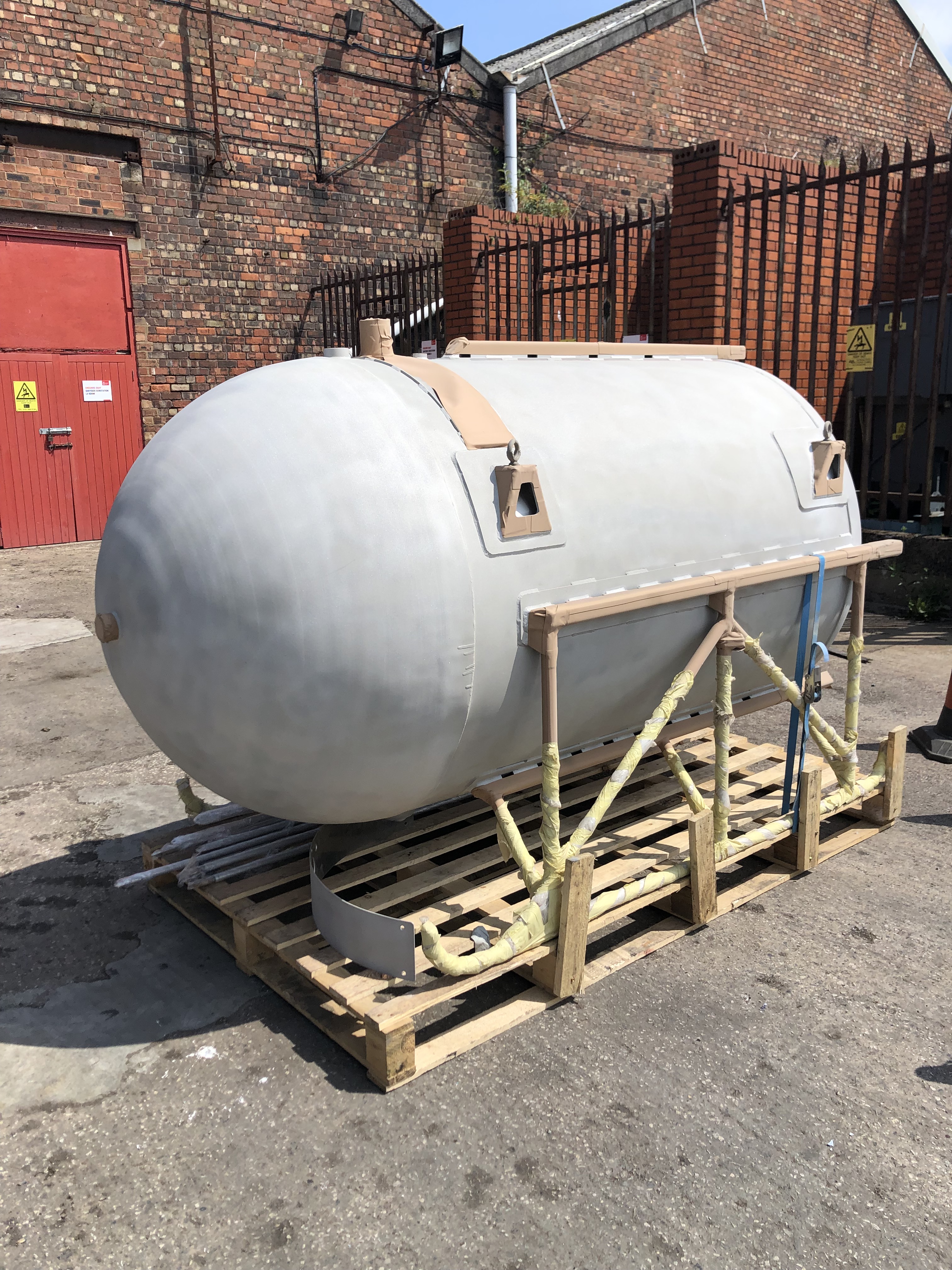
The products were applied in a controlled factory environmentin the North of England, after careful surface preparation to ensure good adhesion to the stainless-steel vessel. The substrate was grit blasted to achieve the standard minimum specification of ≥ 75μm, Sa 2.5 cleanliness vacuumed and clean degreased.

01DBCB37-7653-4E8F-8996-72A910C647F4.jpeg

The vessel after grit blasting to prepare surface

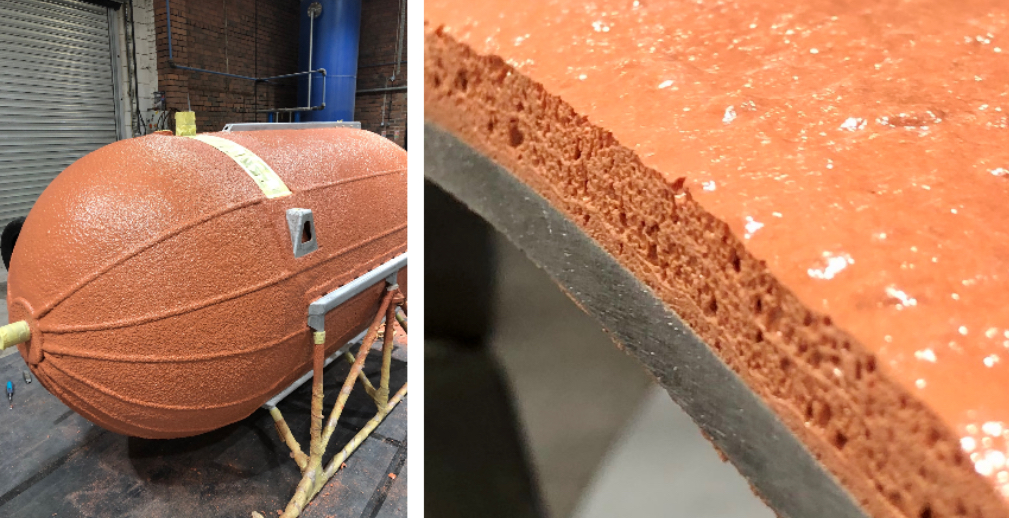
Once the surface preparation was finished, Belzona 5871 was decanted into Belzona-issued cartridges and used in conjunction with a pneumatic cartridge spray gun. This spedup the application, keeping within the working life at ambienttemperature. The product was spray applied at approximately1mm wet film thickness (WFT), which expanded to 3mmDFT once cured. Within the overcoat window, a further twocoats were applied, giving a final DFT ≥ 9mm. This was necessary due to the extreme conditions in which the vessel needed to operate.

Belzona 5871 was able to adhere very well to the vessel shell,giving a uniform DFT across all geometries, ensuring an effective corrosion barrier at the recommended ≥ 9mm total DFT. The Belzona 3211 (Lagseal), mixed with safety orange pigment, was applied by roller, as a final topcoat.

324BA272-C005-42BC-82E1-507343001DEF.jpeg

 The application of the products added just ≤ 10mm thickness onto the vessel dimensions, ensuring that the Client’s weight and protection specifications were met far more effectively than would have been possible using traditional cladding.

The vessel was coated with three layers of Belzona 5871 

The total DFT after three coats was just 9mm


Successful Application Represents Future Insulation Potential

Belzona’s solution has performed extremely well in tests over its first year in service, which shows the effectiveness of the products. The polymer technology enabled the Client to protect the vessel against the extreme conditions in which it operates, while also meeting specifications such as weight and thickness. Belzona proved more effective than traditional cladding, and the successful application demonstrates the potential for its use across multiple industries.

www.belzona.com


Hellberg Safety – Continuous and Effective Noise Protection Against Hearing Loss.

Noise-induced hearing loss is one of the world’s most commonly reported physical diseases – particularly in the workplace. It’s an accumulated ailment that increases at every time of over-exposure to noise. The bad news is that hearing loss can be permanent.


That’s why Hellberg Safety’s new and improved noise protection technology has been developed to deliver the most advanced passive and active protection for a variety of risk environments.

The SECURE series features a choice of basic or multi-functional ear defenders and communication solutions, which are available in 3 protection levels.

The SECURE ACTIVE series with active listening systems, allow you to communicate with your colleagues, hear warning signals and other important information while protected from hazardous noise.

SECURE RELAX products protect your hearing while you enjoy listening to your favourite radio station, while SECURE REACT headsets allow you to listen to AM/FM radio and communicate with your colleagues while still being protected from harmful noise.

Hellberg Safety’s SECURE series are market-leading hearing protection products within a wider range of Eye, Face, Hearing and Communication solutions that have been developed to deliver optimum personal wellbeing and safety at work.


Getting information on the new Hellberg Safety product range is easy - call the Hultafors Group UK Helpline on 01484 854788, checkout the website www.hellbergsafety.com or email This email address is being protected from spambots. You need JavaScript enabled to view it.