
 SBES has recently completed the installation of a diverse lone worker protection system for ExxonMobil Aviation at six airports across the UK. The system, the first of its type anywhere in the World, will protect workers either out on site refuelling aircraft or back at the operational base.
The initiative to install the SBES system has come from Paul Heald, SHE and OIMS adviser for ExxonMobil Aviation in the UK. He recognised that during a 24h period at Manchester Airport personnel were often working alone and that a solution to this
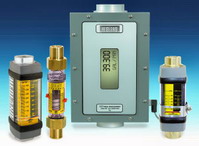 Unexpected pump failure can be costly and time consuming. By installing an affordable Hedland direct-reading flow meter on the pump case drain, the user can monitor changes in efficiency by keeping tabs on any increase in case drain flow. The excess case drain flow shows the pump is beginning to fail. This allows you to schedule preventive maintenance and reduce unexpected down time.
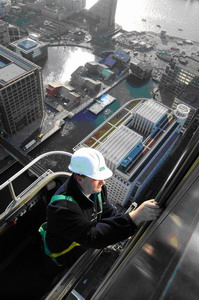 OCS is one of the latest groups of successful companies to join a leading edge scheme, designed to help industry improve its safety record.
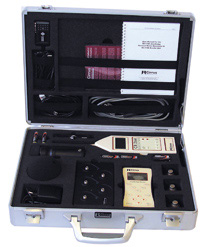 After many requests, Cirrus Research plc have combined their most popular noise measurement instruments into a
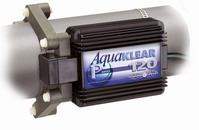 A food processing plant in Maracaibo, Venezuela has seen significant benefits following the installation of Hydropaths patented AquaKlear system. Previously, the plant experienced scale and bio-fouling problems in its cooling towers as it is located in a hard water area. This resulted in the management using costly anti-scale chemicals to eliminate the effects.
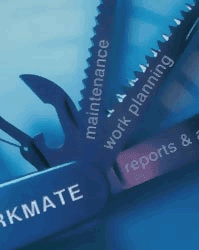 Using Workmate is simplicity itself. We have developed the workflow around logical steps found in typical environments in which its use is envisaged.
 The new Draeger X-plore 6000 range of Full Face Masks combines quality and reliability with comfort and ease of use. As successors to the popular Panorama Nova Standard threaded mask, this economical range is available in five different versions and features an integral bar code and a variety of fresh new colours. Ideal for use in any application requiring reliable respiratory protection and clear vision, the masks are fully compatible with all Rd40 standard thread filters, as well as powered air purifying respirators and normal pressure compressed air breathing apparatus.
 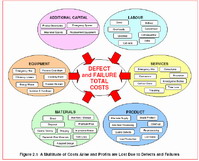 The Huge Instantaneous Impact on Your Business of Defect Cost and Failure Cost. When a failure incident occurs there is a consequential loss of profits and a massing of costs. The cost of failure includes lost profit, the cost of the repair, the fixed and variable operating costs wasted during the downtime and a myriad of consequential costs that reverberate and surge through the business. These are all paid for by the organisation and seen as poor financial performance. The costs of failure cannot be escaped and are counted in millions of dollars of lost profit per year. Total defect and failure true costs are not normally recognised by managers, yet they can send businesses bankrupt. In the instance of a failure all its costs and losses are automatically incurred on the business. These costs can only be prevented by precluding the failure in the first place. This article explains the 'instantaneous cost of failure' (ICOF) and introduces a proactive technique, 'Defect and Failure True Costing', that adds economics to RCM and FMEA to help companies recognise and prevent this tremendous waste of money.
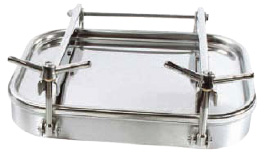 Alfa Laval has introduced a new range of tank man hole covers designed to provide safe and easy access to tanks and vessels used in sanitary applications in the food, wine, beverage and dairy industries. Suitable both for tanks and containers such as bottling and washing machines, the manhole covers are designed to provide a lockable means of access to the interior of a vessel. The rear e models specifically intended for installation above or below the internal liquid level of the tank and the covers can be supplied in oval, circular and rectangular shapes.