
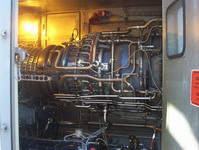
 Predictive maintenance (PdM) techniques are commonly used on motors and drives. But how often is the power to the equipment inspected? Adding basic power quality measurements to equipment maintenance procedures can head off unexpected failures in both the equipment and the power system.
Cost savings
Insurance claims data in the NFPA 70B maintenance standard show that roughly half of the cost associated with electrical failures could be prevented by regular maintenance. A study published in IEEE 493-1997 says that a poorly maintained system can attribute 49 percent of its failures to lack of maintenance.
To determine the cost of a failure, it helps to consider three key categories:
 Communication via Smartphone eliminates geographical boundaries for
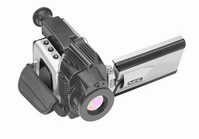 Thermo Tracer TH9260 offers a complete solution to high resolution predictive maintenance diagnostics and scientific research.
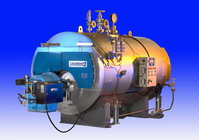 Earlier in 2007, Byworth Boilers announced the launch of their new fuel efficient steam boiler. It was claimed that the Byworth Yorkshireman2 steam boiler is the most fuel efficient boiler of its type due not only to unique XiD boiler tube, but by the quality and integrity of design and engineering. Fuel savings will vary according to the efficiency of the existing boilers, but can be between 2 and 20%.
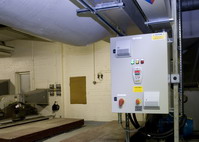 Deritend has completed the commissioning of over 70 individual EFF1 high efficiency electric motors coupled with matched variable speed drives at the Hammersmith Hospital
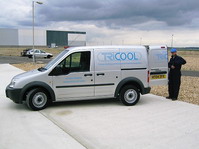 Fawley Power Station has installed a state-of-the-art cooling system designed by Tricool to improve cooling cycle times and address environmental issues. The chiller is an essential part of the infrastructure that enables Fawley to generate extra electricity for the National Grid when demand outstrips supply.
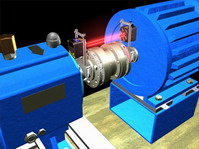 John Crane has responded to the need for a rugged, accurate and reliable measurement and alignment system with the launch of LASE-A-LIGN EX
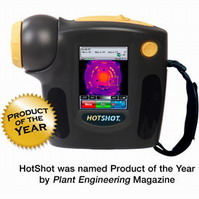 Root to inspection thermal imager