
 In today’s environment, many manufacturers are focusing on total cost of ownership
 Latest Case Studies & White Papers
In today’s environment, many manufacturers are focusing on total cost of ownership Maintenance Has Changed
The world of equipment maintenance changed dramatically during the second half of the 20th century and it continues to do so today.
Several major influences have been responsible for driving these changes:
- An enormous increase in the number of physical assets (such as buildings, factories, public and personal transport) that require maintenance
- Equipment has become extremely complex - for example, it is now rare to find anything that does not contain a computer or some electronics
- Industries (such as manufacturing and mass transport) now put a much greater emphasis on safety and on operating without damaging the environment
- We now have a much better understanding of how equipment behaves, from installation to the point at which it fails.
 Mass unbalance in a rotating system often produces excessive synchronous forces that reduce the life span of various mechanical elements. First of all we will define unbalance case. Unbalance is basically very simple case caused by
 Plant pros often talk about the importance of a maintenance, operations and engineering partnership. In my experience, the discussions commonly center on very general terms such as better communication and understanding. Those issues are important, but we need precise rules and actions to drive that partnership long term.
When IDCON works on reliability improvement projects, we often start by working with operations and maintenance leadership to lay down the law and agree upon the work process and the rules of the partnership. Once we agree, we create a "rulebook" that all employees can keep in their pocket. I want to share some of the rules I think help drive the partnership behavior in an organization.
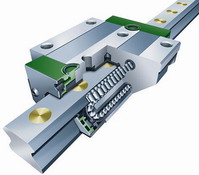 By incorporating special lubricant metering discs on its range of linear recirculating roller bearings and guideway assemblies, Schaeffler has reduced lubricant consumption by more than 25 per cent compared to conventional designs.
A range of linear recirculating roller bearings and guidance systems are now available with special lubricant metering valves, which provide precise doses of lubricant to the linear guides, reducing lubricant consumption by more than 25 per cent compared to standard designs, reducing maintenance and servicing costs and preserving resources for the customer.
 JBJ Techniques has spotted a gap in the market for an effective, simple to use, four-channel process monitor and alarm controller, combined with PC-based visualisation and data logging software. So the company has addressed this requirement by developing its own cost-effective package.
Why is it that, in so many different industries and market sectors, there are a myriad of all-singing-and-dancing high end products, swathes of simple, low end, single-function products, but very little in between. Take, for example, the monitoring of fluid systems in various processes. At one end of the scale, there are simple indicators to show pressure or flow – barely more than a dumb display with an alarm output or two.
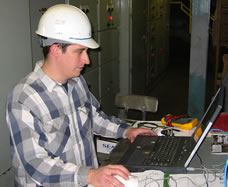 As someone involved in the maintenance of a company’s assets, which may include plant machinery, vehicles, long term hire equipment, stock and spares; you will be aware of the bewildering amount of guidance on the subject. You may well be new to the subject having just been delegated to look at your company’s asset portfolio, or given this task in addition to other operations work.
But what ever the situation this short check guide from MCP will help you look at the macro questions which effect correct maintenance activity and asset management.
1. Are all the assets your computerised maintenance management system identified registered, and recorded, and how many are not being used?
2. Do you know which assets present the greatest risk to your business in terms of:
 In about 50% of organizations spare parts and materials stores reports to the maintenance organization. In about 50 % of organizations spare parts and materials stores is part of the purchasing function.
One of the areas that are first attacked when an organization wants to become lean is the materials and spare parts areas. Through reducing the value of spare parts and material kept in storage you can of course reduce costs. It is true that there are often big opportunities to lower the value in many stores, but it can also become very expensive if it is not done correctly.
 By Paul Dean, CEng, Shire Systems Limited. What
  Recently I received an invitation from a well known exhibition organiser to participate in a maintenance feature and submit editorial with company overview- good opportunity. However, my enthusiasm changed to being perplexed when the invitation turned out to be for