News

What is ATEX and why is it important?​​​​​​TPI Europe

E93C55DA 69AB 4D76 B1B5 6B7021470941

ATEX is an acronym for “Atmospheres Explosives” and refers to a set of European Union (EU) directives for the design of electrical equipment suitable for use in hazardous locations where an explosive atmosphere could exist. Typical hazardous locations include the more obvious places such as flour mills, coal mines, petrochemical plants, fuel transferfacilities etc. However, some not so obvious hazardous locations also include waste water treatment plants, saw mills, tunnels and underground passageways or any location where a build-up of naturally occurring flammable material (such as methane or dust) could occur.

In many of these locations there is a need for condition monitoring, for example by measuring temperature or vibration of rotating machinery. The equipment needed to do the monitoring must therefore be “intrinsically safe”, in other words it must be incapable of igniting an explosive atmosphere, should one exist. This is where ATEX comes in, as in order to be considered “safe”, equipment needs to be certified for use in hazardous locations. 

Definitions of areas subject to explosive atmospheres

The likelihood of an explosive atmosphere existing is dealt with by the definition of various zones, and for IECEx(Worldwide) & ATEX (European) standards the following zones are defined:

Zone 0 - an area in which an explosive atmosphere is present constantly or for long periods or frequently.

Zone 1- an area in which an explosive atmosphere is likely to occur in normal operation occasionally.

Zone 2 - an area in which an explosive atmosphere is not likely to occur in normal operation but, if it does occur, will persist for a short period only.

98BE331B 9136 46CA BF7D 5158B5231AEA


Figure 1 – Examples of IECEx and ATEX zones

Affordable intrinsically safe instruments for condition monitoring

Intrinsically safe instruments can cost many times more than their non-intrinsically safe equivalents. This is partly due to the increased manufacturing costs (e.g. additional safety components and encapsulation) but also due to the high cost of certification. However, Test Products International (TPI) believes it has introduced a real game-changer with the certification of the very affordable TPI 9080Ex.IECEx/ATEX certified for use in Zone 1 and with North American approval for Class I, Zone 1, the TPI 9080Ex is certified for use in hazardous locations anywhere in the world. 

The TPI 9080Ex uses industry standard BNC connected intrinsically safe accelerometers and offers on-meter analysis for detection of machine faults such as unbalance, misalignment, looseness and bearing wear. With full colour OLED display and Bluetooth communications, the TPI 9080Ex features colour coded alarms and zoomable on-screen vibration frequency plots with cursor readout. It can store lists (routes) of up to 1000 machines, each with up to 10 measurement points, with full waveform and frequency spectrum (FFT) capture. 

The included VibTrend PC based trending and reporting software has features normally only found on high-endsoftware such as automatic email notification of alarms and report generation.  The windows based software is totallyintuitive so it can be used easily and effectively by both expert and novice users to implement a full CBM strategy.  In-line with TPI’s philosophy of being the value leader, the TPI 9080Ex comes at the incredibly low list price of only £3,500that includes a full VibTrendsoftware license. 

For more information please contact TPI Europe’s head office on +44 1293 530196 or take a look on the website at www.tpieurope.com or email This email address is being protected from spambots. You need JavaScript enabled to view it.

This article can also be found in the Jan/Feb issue.


New Si124 range improved bandwidth yields big savings for energy-intensive industries

The Si124 range of acoustic cameras now detects air leaks from 2 - 65 kHz - and the small change means big operational improvements for industrial applications across sectors.

5B0A7B55 9763 4696 93AE 212A5CDE4E4D


The Teledyne FLIR range of acoustic imaging cameras, the Si124, Si124-PD and Si124-LD, now offers an improved bandwidth range for detecting compressed air leaks in industrial settings. The change means that the industry-leading range can now detect leaks from anywhere between 2 to 65 kHz and adds crucial functionality to the previous peak bandwidth of 35 kHz.
While it may seem like a minor change, the operational impact of the improvements cannot be overstated: it means marked savings for industrial applications globally, reducing costs and improving reliability.


The improved Si124 range promises easier, more impactful inspections


The range of three cutting-edge Si124 models are now equipped to measure virtually all compressed air leaks in manufacturing settings - regardless of how small and seemingly insignificant. This unique range covering 63 kHz is scientifically the optimal sound spectrum range for detecting leaks, which occur on this measurable threshold. Detecting ranges outside of this spectrum actually detracts from long-term functionality as detecting background noise beyond 65 kHz can interfere with baseline readings and negatively impact leak detection.


Failure to detect air leaks can cost companies thousands of pounds in replacement costs for units that are not operating optimally, and can have a knock-on effect on production when parts are replaced and production lines forced into downtime.
Federico De Lucia, Team Lead of Condition Monitoring Specialists (EMEA Solutions) at Teledyne FLIR explains why this seemingly small change cements the Si124 range as operating across the optimum bandwidth for detecting compressed air leaks in industrial applications.


“Let’s look at, for example, a compressed air leak from a small hole of just 1.5 millimetres and on a network of compressed air at seven bars of pressure. Two years ago, with a price of €0.07 per kilowatt hour, that would have cost a company roughly €1500 (£1300) per year, if we assume an average operating time of 6000 hours.


“Now that the energy situation is more challenging, it means that costs may be three, four, even five times higher in some cases, which could be a cost of up to £7500 a year - which is a shocking amount simply for failing to identify a single small hole in a vital production component. This is staggering when you consider the scale of industrial manufacturing and the scope for leaks to crop up unnoticed.”


6698DA83 28A1 4CB2 84E7 2C2EC3FB22CB


Tightness testing is an outdated model


“The EV industry is a particularly timely example of how acoustic imaging can be used to replace outdated inspection models, given the rising cost of energy on all fronts.


“This is because the batteries for electric vehicles must be hermetically sealed to ensure they hit operational guidelines and safety standards. They must be both airtight and watertight to keep dirt, dust and other external contaminants from penetrating the core components, which could cause the device to short-circuit and become a fire risk.


“Traditionally, these units were probed by mass spectrometers to identify foreign compounds within the casing or through the more rudimentary method of immersing the units in water to identify leaks by looking for air bubbles - which we call tightness testing - but this was incredibly impractical, as well as wasteful.


“Teledyne FLIR’s improved range of acoustic imaging can detect leaks quicker than this outdated model as well as identify much smaller leaks that are not visible to the naked eye, able to be heard by the ear, or even detected on traditional thermography. The improved bandwidth range of the Si124 ensures that operators are only focusing on the exact and specific frequencies that compressed air leaks can be detected on - and not wasting valuable battery power or AI functionality struggling to filter out avoidable background noise on higher frequencies.”


Lighter and more ergonomic than any other acoustic imaging camera for industrial inspections
As well as benefiting from the optimum range of bandwidth for compressed air leak detection, the Si124 range also offers clear advantages for inspectors in industrial applications.


The Si124 range is incredibly lightweight. In fact, it is almost 60% lighter than rival models on the market at just 1.25kg including the battery. This makes sure that they can be used with a single hand, freeing up the operator to carry out harder-to-reach inspections in challenging environments. The lightweight range can be used for up to two hours and can even be operated in a range of challenging industrial settings from between –10°C to 50°C (14°F to 122°F), making it one of the most robust models available.


The acoustic imaging camera range is able to detect problems up to 10 times faster than traditional methods, including detecting air leaks, minimising excess utility costs and making avoidable equipment failures in pneumatic machinery a thing of the past.


The range also has an agile AI which uses projective algorithms to estimate how much a detected compressed air leak will cost by evaluating the air lost in real-time, calculating the spend per kWh and displaying an expected saving per year. Critically, this ensures that inspectors have valuable evidence needed to justify any incurred repair costs across the production line.


The Si124 range also benefits from Thermal Studio: a FLIR-exclusive plug-in which is able to build reports with more than 100 images quickly with fully customizable templates, overlays, and formulas. It streamlines thermal imaging analysis and ensures that inspectors are able to analyse, edit, segment and edit thermal video.


The improved FLIR Si124-PD, Si124-LD, and the original Si124 Industrial Acoustic Imaging Camera models are available for purchase globally from Teledyne FLIR and its authorised dealers. To learn more or to

purchase, visit https://www.flir.com/products/si124.

Ex-d cable gland from PFLITSCH: UL certification granted for the LevelEx

The use of components in potentially explosive atmospheres, such as in the chemical and pharmaceutical industries, agriculture, woodworking and the metal industry, is governed by strict standards. With its LevelEx Ex cable gland, PFLITSCH is breaking new ground in terms of safety and ease of assembly.

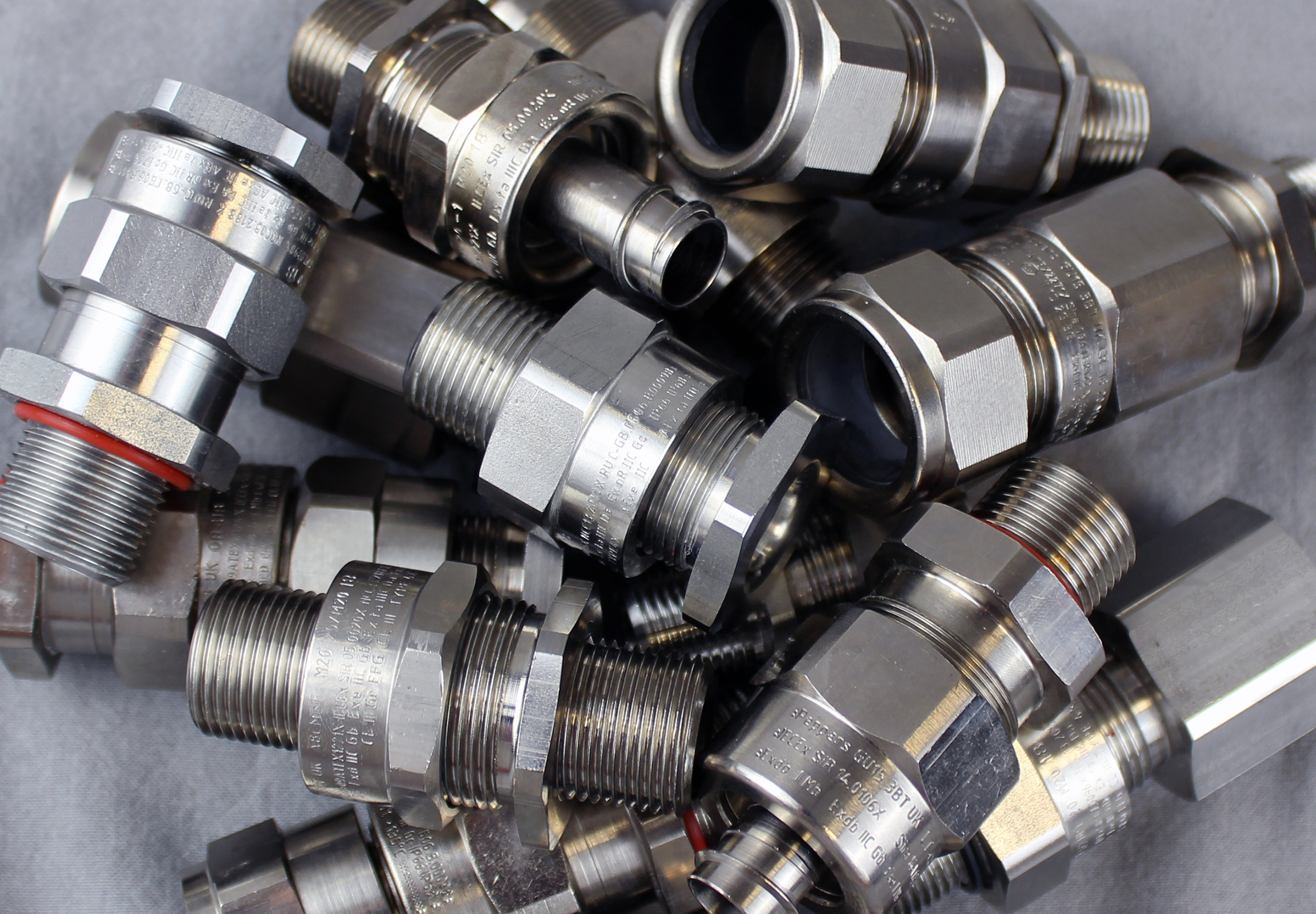
The LevelEx consists of just four parts, which are simple and safe to assemble and take up little space. A special feature of the gland: the sealing elements have a captive design and cannot be lost during assembly. The LevelEx is available in nickel-plated brass and stainless steel, each version in sizes M16 to M75, with NPT threads from 3/8" to 2 ½". Its large sealing range means that cables from 7 mm to 66 mm can be tightly sealed. Thanks to the silicone sealing insert, the glands can be used in applications in the temperature range from –60 °C to +130 °C. 

The compact Ex cable gland complies with protection types “Ex-db” for flameproof enclosure, “Ex-eb” for increased safety and “Ex-ta” for protection by enclosure. It satisfies the demanding requirements of protection ratings IP 66, IP 68 and Type 4X.

The international ATEX, IECEx, VDE, DNV, CCC, KCs and UL Listed certificates – the latter demanding very stringent requirements – granted verify that this PFLITSCH cable gland can be reliably used even under extreme conditions. In an industrial environment, a product can be either UL Recognized or UL Listed. The difference lies in the degree of compliance with UL requirements. In potentially explosive atmospheres, the complete set of requirements must be met.

In order to obtain ATEX and IECEx certification, the cable gland must pass an overpressure test conducted at 30 bar for 10 s, in accordance with EN 60079-1. The LevelEx was tested with a test pressure of 48.6 bar, which corresponds to a reference pressure of 32.4 bar if the gland is used at an operating temperature of –60 °C.

 
PFLITSCH GmbH & Co. KG
Frauke Ulrich/Marketing
Ernst-Pflitsch-Str. 1, 42499 Hückeswagen, Germany
Phone: +49 (0)2192 911 0
E-mail:This email address is being protected from spambots. You need JavaScript enabled to view it.
Web: www.pflitsch.de

Peli™ Safety Lighting

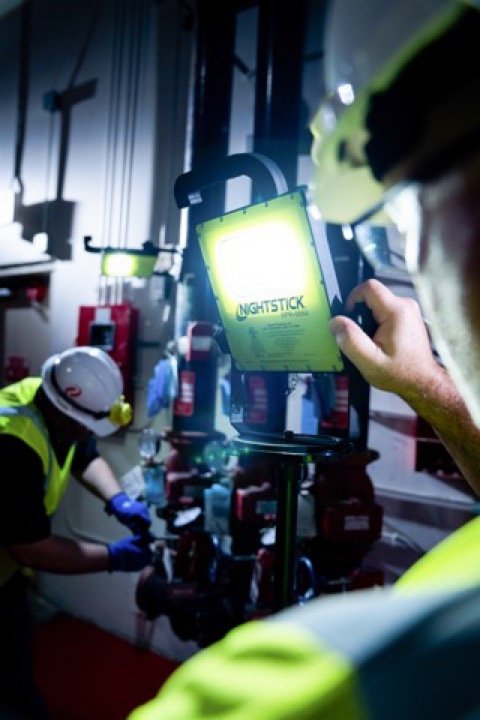
In 2022 Peli Products (UK) Ltd celebrated 30 years in business.  During those years high quality, rugged torches have been a fundamental part of the Peli™ range in the UK.  We now offer a wide choice of safety approved lighting products for professionals working in hazardous areas, all are certified to current ATEX requirements for Zone 0 or Zone 1and are ideal for industrial and offshore use.

The range includes right angled clip on models for hands free use.

The 3765 Zone 0 is a tough rechargeable safety light, ideal for industrial and offshore use.  This rugged torch has a secure clip to attach to clothing and features downcast LEDs to light the path in front. It also has high and low modes and a battery charge level indicator.

The Peli 3415 Zone 0 features a 90° articulating head to angle the light where required.  An integrated clip easily attaches to clothing for hands-free light and also utilises a heavy duty magnet; allowing the torch to be attached to steel surfaces. 

The Peli 2755 Zone 0 is one model in a range of robust headtorches from Peli.  The torch comes with both a rubber and a cloth headstrap, and has three power modes: high, lowand flashing. A hard hat attachment is also included.

Professionals have chosen the Peli brand for many years; trusting in the reliability, performance and durability of the products in the most testing conditions.  

For more details telephone 01457 869999 or go to www.peliproducts.co.uk.

This artice can also be found in the Jan/Feb issue.


Hart sees 2023 as a year of opportunity

Hart Door Systems, the original British manufacturer of the high-speed door concept, is confident that there are considerable prospects for another successful year for the Speedor brand.

“Our management team led by Nick Hart as managing director and David Mason as sales director has just delivered a very good year when there has been many uncertainties in the UK economy and wider afield.

“In that challenging business environment we have had many successes at home and abroad not just through the Speedor range of high-speed doors but through our range of high quality shutters. Both these leading brands have had additional variants introduced such as Speedor ECO and our Typhoon shutters,” says Doug Hart, chairman, Hart Door Systems.

“The breadth of offer created by the choice of solutions for industry and commerce has cemented our presence in the UK market and globally. The fundamentals delivered by Hart are quality throughout manufacture to installation as well as service back-up to comply with changing national and international safety standards.

“We are also cognisant of Climate Change issues and the need to keep both Hart’s and our clients’ carbon footprints to a minimum by using the latest manufacturing technology to streamline the manufacturing process. Where possible we would use recyclable materials.”

Looking more closely at Speedor ECO, this high-speed door complements Hart’s very successful Speedor Storm, Speedor Mini and sub brands such as Speedor Conveyor and Speedor Cleanroom, further strengthening Hart’s overall high-speed door offer.

Speedor ECO is a new mid-range variant suitable for external use up to Class 3 and available up to 5m x 5m size whereas the Speedor Mini is for internal use only to a maximum 4m x 4m size. The  focus with these two Speedor options is on lower price and high-speed doors that can be tailored to meet clients’ budgets.

Mr Hart says: “With the new Speedor ECO being a mid-priced high-speed door variant withstate of the art direct drives and  controls which are BSEN safety compliant, the ECO offers single or variable speed motor, heavy fabric and hand chain operation if necessary.

This adds to ECO’s many other features such as safe operation, reliability and ruggedness.“We have always had quality as our prime driver and our success with new variants, not just in high-speed doors but shutters such as our new Typhoon range, the fundamentals are quality throughout manufacture to installation and service to comply with changing national and international safety standards,” says Mr Hart.

“Without doubt there is demand for a mid-priced high-speed door variant such as ECO and given our considerable experience, we are the ones to deliver it,” he adds. “ECO will appeal to companies requiring a high-speed door solution but within a tight budget. It is for frequent use, high traffic situations where low maintenance is a priority.

“In all cases across our range of brands, we comply with the new code of practice announced by the DHF Door Hardware Federation and we are ever mindful of post installation maintenance costs. So while Mini and ECO cater for less demanding environments, Speedor Storm’s increasing success is based on its improved, rugged, design predominately for external use up to 8m x 6m/6m x 8m) often in robust operating conditions with high wind loads.

“We have always had quality as our prime driver and our success with new variants, not just in high-speed doors but shutters such as our new Typhoon range, the fundamentals are quality throughout manufacture to installation and service to comply with changing national and international safety standards.”

Hart Door Systems, now in its 75th year, is a global business supplying a range of door and shutter systems to sectors such as automotive, agriculture, communications, consumer foods, energy, environment, exports, food, logistics, manufacturing, power, sport, transport and utilities. 

Contact www.hartdoors.com  t: 0191 214 0404   This email address is being protected from spambots. You need JavaScript enabled to view it.

This article can also be found in the Jan/Feb issue .


Concerns grow as HSE records biggest growth in HAVS cases for five years.

The company behind HAVSPRO, the solution for the accurate, real-time measurement and monitoring of workplace vibration, is highlighting the latest Health & Safety Executive (HSE) figures, released in November 2022, which show a 375 percent rise in new Hand Arm Vibration. 

Over 300 new cases of HAVS were reported in 2021, in addition to 165 new cases of Carpal Tunnel Syndrome (up 412 percent) and 255 new instances of Depuytren’s Contracture (a rise of 392 percent). HAVSPRO points out that these conditions are all easily preventable with appropriate measures in places to protect the workforce.

However, in addition to this disturbingly high rise in cases, the HSE report also shines a light on the extensive array of industries (some previously unconsidered) in which workers are exposed to such debilitating conditions.

Whilst the HSE statistics show the construction and mining industries have long been seen as key contributors to risk in this area, a number of new sectors are revealed as being areas of concern, including ‘service’ industries. The reported data sets include repair of motor vehicles, accommodation and food service activities, and transport and storage as part of the Service sectors that are reporting over 50 percent of new cases in 2021.

More than two million people are at risk from developing HAVS and approximately 300,000 people suffer from HAVS in the UK alone, with companies already feeling the impact of successful worker litigation to the tune of £2.5m in fines alone in the last 7 years - and almost £1.4m of these fines have been since 2018.

Russ Langthorne, Managing Director of SIXIS Technology, the company behind HAVSPRO, and a personal HAVS sufferer himself, is concerned at these significant increases; “These statistics are particularly concerning because the number of new cases is at a five-year high, and not just skewed as a result of the recent pandemic. It is clear that companies need to be taking this growing risk factor more seriously, given the significant impact it can have on both their workforce and their bottom line. Action must be taken now.”

HSE regulations stipulate that “An employer who carries out work which is liable to expose any of their employees to risk from vibration shall make a suitable and sufficient assessment of the risk created by that work to the health and safety of those employees, and the risk assessment shall identify the measures that need to be taken to meet the requirements of these Regulations”.

However, the regulations further state that “There is no legal requirement for continual monitoring and recording of vibration exposure and that to do so would probably not be a good use of your or your employees’ time, unless there are very specific circumstances.”

Russ adds: “Clearly, this huge rise in new cases in a number of related HAVS conditions and across a host of industries, indicates that there is now a very real requirement for businesses to prioritise vibration exposure measuring and monitoring, both to protect their workers and to avoid costly litigation and fines.

“The game changing and simple to adopt HAVSPRO system provides continuous measuring and monitoring of vibration exposure, allowing for a proactive, ALARP-focused approach to vibration risk management. There is no longer any excuse for companies not to engage in doing everything possible to manage the risk from vibration exposure, to as low as reasonably practicable, and to #MakeHAVSHistory.”

For more information, visit the  website.

ELCOME BRINGS STARLINK HIGH-SPEED, LOW-LATENCY INTERNET TO THE GLOBAL MARITIME INDUSTRIES

Elcome International, a leading provider of maritime systems and integration solutions, isproviding SpaceX’s Starlink internet services to its global maritime and mobility customers.From merchant vessels to oil rigs to luxury yachts, Starlink enables maritime customers to connect from the most remote waters across the world, just like they would in the office or at home. 

For more than fifty years, Elcome has been providing its maritime customers with communications solutions based on both terrestrial and satellite technology.Starlink is one of the most significant advancements incommunications for the maritime industry in decades.

Powered by the world’s largest constellation of satellites in low Earth orbit, Starlink’s high-speed, low-latency broadband Internet service for all types of maritime and offshore assetsis a revolution in performance and cost. With speeds up to 100 times faster and at a fraction of the cost of traditional satellite internet services, Elcome will equip its customers with cutting-edge technology-led solutions that leverage the unique capabilities of Starlink. 

“We are so excited to bring the benefits of Starlink to our customers,” said Jimmy Grewal, Elcome’s Executive Director. “It’s not just about fast Internet, but the opportunity for us to implement real-time remote monitoring and autonomy solutions for these customers in ways that were not previously possible. Also consider the benefit to crew members who will now be able to better stay in touch with family and friends while out at sea.” 

The company will also provide installation, integration, and field support to customers using Starlink. Elcomehas already implemented multi-antenna Starlink arrays delivering hundreds of megabits of low-latency bandwidth on two superyachts catering to more than 100 crew and guests simultaneously.

Those interested in learning more about Starlink mobility solutions can visit Elcome’s website at https://elcome.com/starlink where they can place orders for delivery to numerous countries around the world.

Orders will be fulfilled from the company’s logistics hubs in Spain, Dubai, and Singapore with a variety of installation and support options available. The company also provides a comprehensive web portal for customers to manage their Starlink subscriptions, including month-to-month billing with no contractual commitments and the option to pause the service.

All eyes on the Moon again

Global interest in space exploration is at a fever pitch as NASA preps its first lunar mission in 50 years. It also brings back memories of Pratley Putty being the only South African manufactured product to have gone to the Moon. Prior to the Apollo 11 mission, the Ranger project of the 1960s was the first US effort to launch probes directly towards the Moon. This laid the groundwork for the successful Apollo 11 mission.

During the 1960s, South African manufacturer Pratley invented the world’s first epoxy putty. Initially it was intended to be used internally for insulating and affixing terminals to cast iron electrical junction boxes. However, the product was subsequently introduced into the local market as ‘Pratley Plastic Putty’, a name that ultimately became Pratley Putty.

An agreement to manufacture the product under licence in the United States was concluded with a US manufacturer, which introduced the product to NASA. However, the product was not yet ready for production in the United States. Subsequently when it was decided to use it on the Ranger programme, it was supplied directly from Pratley’s head office in South Africa. Consequently, Pratley Putty achieved recognition as the only South African manufactured product to ever go to the Moon.

The South African Mint celebrated the 50th anniversary of the first Moon landing in 2019 with its ‘South African inventions’ series, focusing on the ‘proudly South African’ Pratley Putty. In October 2019, Pratley Putty was featured as part of a ‘Destination Moon’ exhibition at the Sci-Bono Discovery Centre in the historic Electric Workshop in the cultural precinct of Newtown, Johannesburg.

“Our roots are in innovation, research and development. It is a cornerstone of what we do at Pratley, and we continue to live and breathe by it,” comments CEO Andrew Pratley. “Pratley branded products not only offer exceptional reliability, but in accordance with our policy statement, their performance must exceed all others on the world market.”

Pull quote

“Our roots are in innovation, research and development. It is a cornerstone of what we do at Pratley, and we continue to live and breathe by it.” – Andrew Pratley, CEO, Pratley


Product safety to come under the spotlight in 2023


BSIF CEO Alan Murray explains why 2023 will see a greater focus on product safety, including increased scrutiny on the safety and compliance of goods sold by third-party sellers on online marketplaces. 

The UK has always had a reputation for stringent product safety standards but with constant innovation and the rise of e-commerce many markets have become increasingly hard to regulate.

PPE is a case in point. The COVID pandemic highlighted how quickly substandard and potentially dangerous products can find their way onto the market with reports suggesting billions of pounds of public money were ultimately wasted on unusable PPE.

Unfortunately substandard PPE isnt just a COVID problem. Unacceptable products have been finding their way on to UK marketplaces prior to COVID and continue to do so today.

This is illustrated by the BSIFs latest analysis. As well as auditing the BSIF membership annually to verify their compliance and competence, we test a selection of PPE from non-BSIF members. Between December 2021 and December 2022, a total of 118 non-member products were tested. Only 15 (13%) of these products passed the test, with the results for five of the products still pending. This means 98 products (83%) failed to meet the test's criteria, many of which are still available and being sold to unsuspecting users.

These findings are in contrast with products supplied by BSIF Registered Safety Suppliers who are committed to only selling certified PPE and trading honestly and ethically

Whats changing?

2023 will see the introduction of a new post-EU Product Safety Framework which will help to strengthen the rules around the sale of products including PPE. Timings for publication of the framework are still to be confirmed, but there will be a strong focus on improving the safety and compliance of goods sold by third-party sellers on online marketplaces. We expect to see stricter responsibilities for online vendors and harsher penalties for those who fail to comply.

At the same time, the Environmental, Social & Corporate Governance (ESG) agenda is having a growing impact. Companies looking to strengthen their ESG performance are closely scrutinising the credentials of their suppliers and choosing only to work with responsible companies. When it comes to buying PPE and safety equipment, many buyers now realise that specifying the BSIFs Registered Safety Supplier Scheme is the easiest way to ensure they are only dealing with suppliers who are compliant, competent and trustworthy.

Its therefore no surprise that we saw a significant number of public and private sector organisations mandate the Registered Safety Supplier Scheme for their supply chains in 2022. As the focus on products safety sharpens in 2023 we expect that number to increase.

For a full list of Registered Safety Suppliers, visit: https://www.registeredsafetysupplierscheme.co.uk/

Product safety to come under the spotlight in 2023

80C38B06 3157 4EA9 B933 6727E695DC74

BSIF CEO Alan Murray explains why 2023 will see a greater focus on product safety, including increased scrutiny on the safety and compliance of goods sold by third-party sellers on online marketplaces. 

The UK has always had a reputation for stringent product safety standards but with constant innovation and the rise of e-commerce many markets have become increasingly hard to regulate.

PPE is a case in point. The COVID pandemic highlighted how quickly substandard and potentially dangerous products can find their way onto the market with reports suggesting billions of pounds of public money were ultimately wasted on unusable PPE.

Unfortunately substandard PPE isnt just a COVID problem. Unacceptable products have been finding their way on to UK marketplaces prior to COVID and continue to do so today.

This is illustrated by the BSIFs latest analysis. As well as auditing the BSIF membership annually to verify their compliance and competence, we test a selection of PPE from non-BSIF members. Between December 2021 and December 2022, a total of 118 non-member products were tested. Only 15 (13%) of these products passed the test, with the results for five of the products still pending. This means 98 products (83%) failed to meet the test's criteria, many of which are still available and being sold to unsuspecting users.

These findings are in contrast with products supplied by BSIF Registered Safety Suppliers who are committed to only selling certified PPE and trading honestly and ethically

Whats changing?

2023 will see the introduction of a new post-EU Product Safety Framework which will help to strengthen the rules around the sale of products including PPE. Timings for publication of the framework are still to be confirmed, but there will be a strong focus on improving the safety and compliance of goods sold by third-party sellers on online marketplaces. We expect to see stricter responsibilities for online vendors and harsher penalties for those who fail to comply.

At the same time, the Environmental, Social & Corporate Governance (ESG) agenda is having a growing impact. Companies looking to strengthen their ESG performance are closely scrutinising the credentials of their suppliers and choosing only to work with responsible companies. When it comes to buying PPE and safety equipment, many buyers now realise that specifying the BSIFs Registered Safety Supplier Scheme is the easiest way to ensure they are only dealing with suppliers who are compliant, competent and trustworthy.

Its therefore no surprise that we saw a significant number of public and private sector organisations mandate the Registered Safety Supplier Scheme for their supply chains in 2022. As the focus on products safety sharpens in 2023 we expect that number to increase.

For a full list of Registered Safety Suppliers, visit: https://www.registeredsafetysupplierscheme.co.uk/