
News
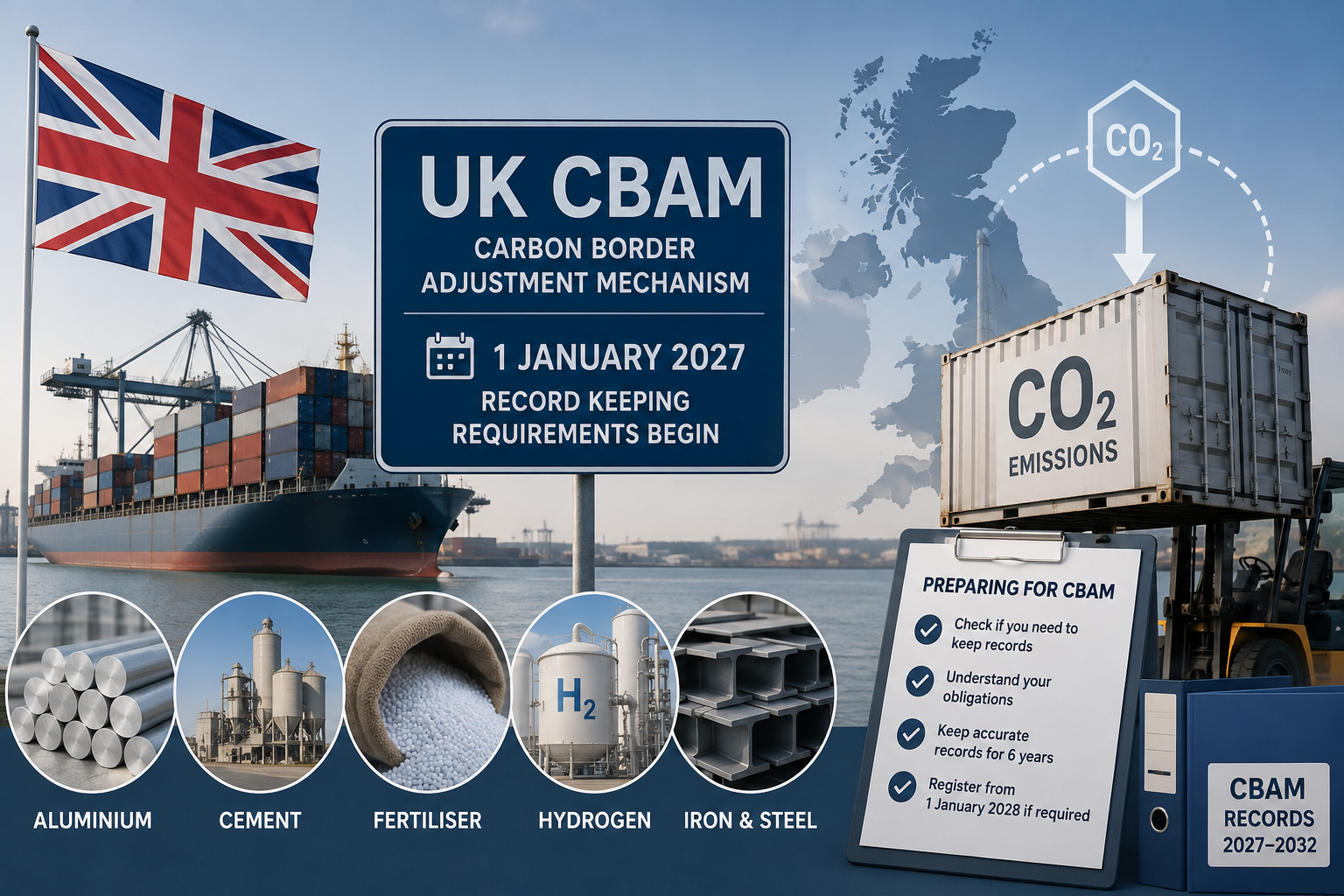
Get ready for new carbon emissions tax rules
From 1 January 2027, businesses importing goods into the UK from the aluminium, cement, fertiliser, hydrogen, and iron and steel sectors will need to keep records to comply with the new UK Carbon Border Adjustment Mechanism (CBAM).
CBAM aims to tackle carbon leakage, helping to achieve net zero by 2050.
HM Revenue and Customs’ Head of CBAM Policy Peter Connell outlines what it means for businesses and what they can do to start preparing for it.
What is CBAM?
CBAM is a new tax designed to address the risk of carbon leakage by ensuring certain highly traded, carbon intensive goods imported into the UK face a comparable carbon price to equivalent goods produced in the UK.
What’s happening from January 2027?
From 1 January 2027, businesses importing into the UK specific goods from the aluminium, cement, fertiliser, hydrogen, and iron and steel sectors will need to begin keeping records.
Businesses can check whether they need to register and what records to keep on GOV.UK.
Keeping records of CBAM imports
From 1 January 2027, businesses importing CBAM goods are required to keep records relating to CBAM goods they have imported. Records must be kept for 6 years.
Businesses that do not keep adequate records relating to CBAM may be liable for penalties, so it’s important to find out what you need to do beforehand and to get it right.
More information about the record-keeping requirements is available on GOV.UK.
I use a carrier when importing, aren’t they responsible?
No. If someone imports CBAM goods or completes the import declaration on your behalf, such as a customs broker, freight forwarder, haulier or tax agent, you may still be classed as the importer and therefore responsible for meeting CBAM obligations.
Find out more about who is classed as the importer on GOV.UK.
I’ve started keeping records for CBAM. What happens next?
Businesses importing CBAM goods into the UK must keep records of those goods from 1 January 2027, regardless of whether they will need to register for CBAM.
Registration for CBAM will open on 1 January 2028. If the value of the goods imported is more than £50,000 for the previous 12 months, or you are expecting to import within the next 30 days, you will need to register with HMRC.
How much do I pay and when?
HMRC will publish further guidance on CBAM rates, default emissions values and monitoring, reporting and verifying emissions in the coming months.
If you are registered for CBAM, you must submit a return – even if there is no tax to pay – and pay any liability for the 1 January to 31 December 2027 accounting period by 31 May 2028.
Find out more about preparing for CBAM on GOV.UK.
