Find ATEX, IECEx, Explosion Protection & Hazardous Area Content...

Editorial

Ex Certification and the problem with parts shortages

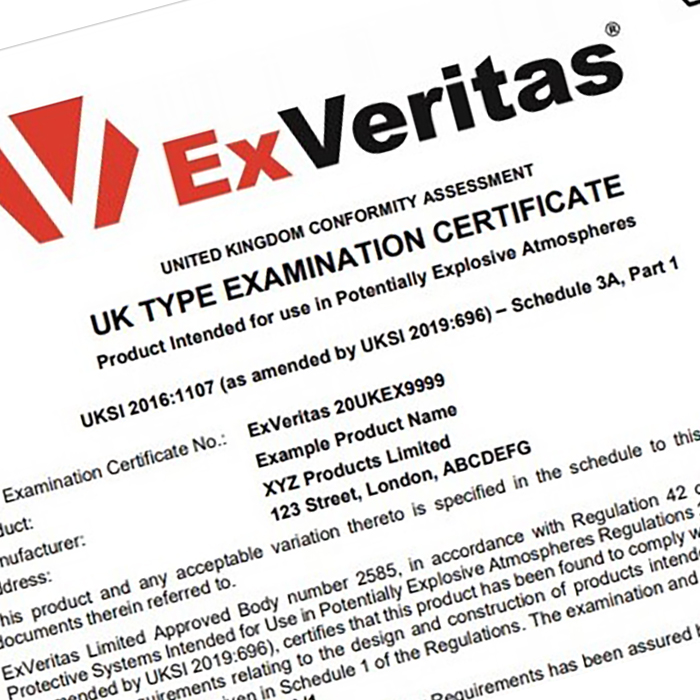
When we certify products ATEX, UKCA or IECEx we test a product to the relevant Standards, and we control the future manufacturing compliance by listing the ‘controlled drawings’ or ‘scheduled drawings’ on the certificate.

Whilst these ‘scheduled’ drawings are only designed to control the safety related aspects of manufacturing, many critical parts may have been individual tested and listed on the drawings by type and part number. This is very often the case with Intrinsic Safety where a specific integrated circuit may have been tested, for example for transient let thorough or temperature.

Given that these parts may become unavailable (which seems to be happening a lot currently), it is highly advised that when seeking certification, a manufacturer lists of ‘alternative’ items in the Bill of Materials. It is both faster and less expensive to consider this at the time of certification and we would always recommend it for certain types of critical parts, for example: batteries, cements, gaskets, and critical intrinsic safety components.

If you have a part on your certication drawings listed by manufacturer/part number and that part is no longer available (or has very long lead times) you will need to get a ‘variation’ to your certication (as the drawings will change to show a new part). This variation may involve retesting parts, for example retesting a gasket or cement may involve thermal conditioning and that can take a month of testing, so don’t leave it until the last minute! Contact ExVeritas via the contact form on our web site if you need any more information on this or require a Certificate Variation to allow more flexible manufacturing (we can take over existing certificates and add new parts at the same time).

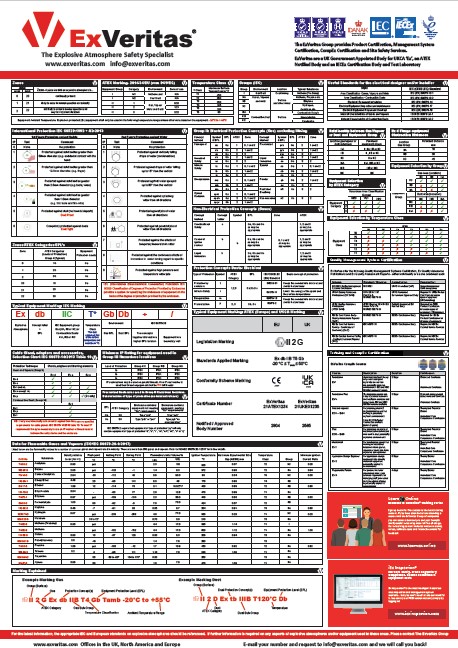
If you are on our web site, why not order out new A1 wall poster full of the very latest IEC, ATEX and UKCA information!

What you need for ATEX and UKCA Explosive Atmosphere Certification for the UK and EU Markets

What you need for ATEX and UKCA Explosive Atmosphere Certification for the UK and EU Markets


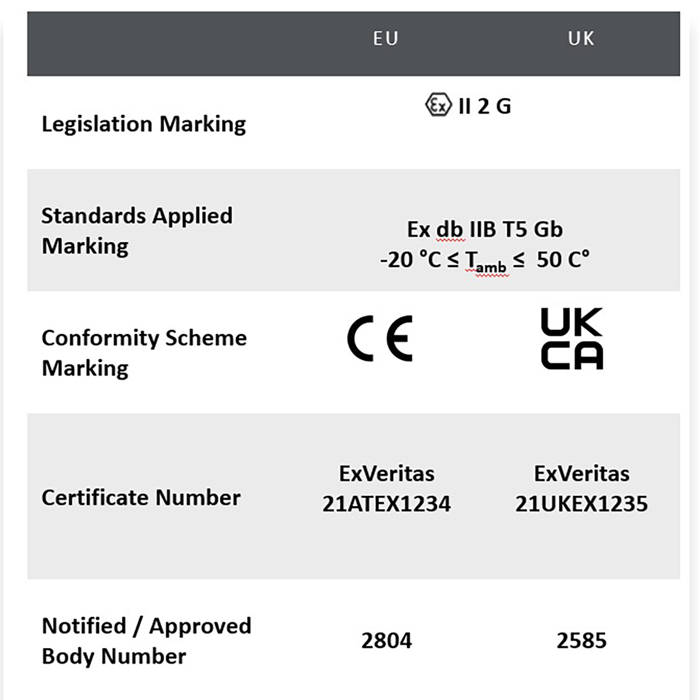
Selling products for use in potentially explosive atmospheres in both the UK and EU will now require 2 marks, not just the ‘ATEX’ and ‘CE’ mark that was accepted when the UK was part of the EU. If your product previously required, an ‘ATEX Notified Body’ you will need to now use a UK Government UKCA Appointed Body that has explosive atmosphere certification (‘Ex’) on its scope.


ATEX Notified Body


ExVeritas ApS is a Notified Body, Number 2804, with full scope for (ATEX) 2014/34/EU Equipment and protective systems intended for use in potentially explosive atmospheres.  Notification can be verified online at the European Commission. ExVeritas ApS are accredited by the National Accreditation Body of Denmark (DANAK) against the EU ATEX Directive, Registration Number 7044.

UK Government UKCA Appointed Body for ‘Ex’

ExVeritas UKCA Approved Body Number 2585. The Approved Body listing can be viewed on the UK Government Website and ExVeritas hold UKAS Product Certification, Quality System Certification & Test Laboratory Registration Number 8613.

As ExVeritas are also an IECEx Certification Body and Test laboratory, we can conduct 1 project (and one manufacturing audit) and you will get all 3 Certificates (ATEX, UKCA an IECEx) for the widest possible market access.

Quality Audit Requirements

If you previously needed an ATEX QAN you will now also need a UKCA Ex QAN, although it is based on the same audit Standard, there are differences for the UKCA Mark (such as use of UK Designated Standards). Companies such as ExVeritas can conduct just one audit to issue a UK QAN, an ATEX QAN and an IECEx QAR. In addition, we are a UKAS Certification Body for ISO9001 we can also combine that audit to further reduce cost and audit times.

For more information visit www.exveritas.com or email This email address is being protected from spambots. You need JavaScript enabled to view it.

2019/1020/EU – New Market Surveillance and Compliance of Products Regulation impact on ATEX

On 16 of July 2021, the new regulation 2019/1020/EU – Market Surveillance and Compliance of Products Regulation came into effect.

It aims to strengthen the requirements for market surveillance by Member States and will lead to far more checking of technical files and self-declarations including ATEX Category 3 (and probably UKCA CAT 3 as the UK will probably follow or reciprocate the more stringent checking requirements).

Identifying UKCA ‘Ex’ equipment has been correctly certified.

As you are probably aware, only UKCA Issued ‘Ex’ Certificates will be accepted from the 1st of January 2022 in the UK for products that previously required ATEX Notified Body Certification.

Electrical products for Zone 0 and 1, non-electrical products for Zone 0 and many types of protective systems will require a certificate from a UK Government Appointed UKCA Body.

UKCA Ex Certification problems and solutions

Now that we have started to issue UKCA ‘Ex’ Certication, some of the problems facing equipment manufacturers are starting to be raised and addressed. One of the first issues that was apparent was the use of ATEX (only) certified parts within or as part of a UKCA Certification, for example, ATEX Ex e terminals within and UKCA Ex e Junction Box. The solution to this is a ‘time limited certification!

Are you ready for UKCA ‘Ex’?

Get ready for a new ‘Ex’ mark with the UKCA Ex Scheme, its MANDATORY after this year. 

Now that the UK has left the EU, we all must come to terms with what that means on a practical level.  In the ‘Ex’ certification world, there are definite challenges as ATEX will not be accepted in the UK next year. If you want to continue to sell Ex equipment in the UK, you will have to make changes, and these changes may involve getting your equipment certified to the new ‘UKCA’ Scheme.

Stargate Hydrogen Opens Electrolyser Factory Amid Industry Hesitation

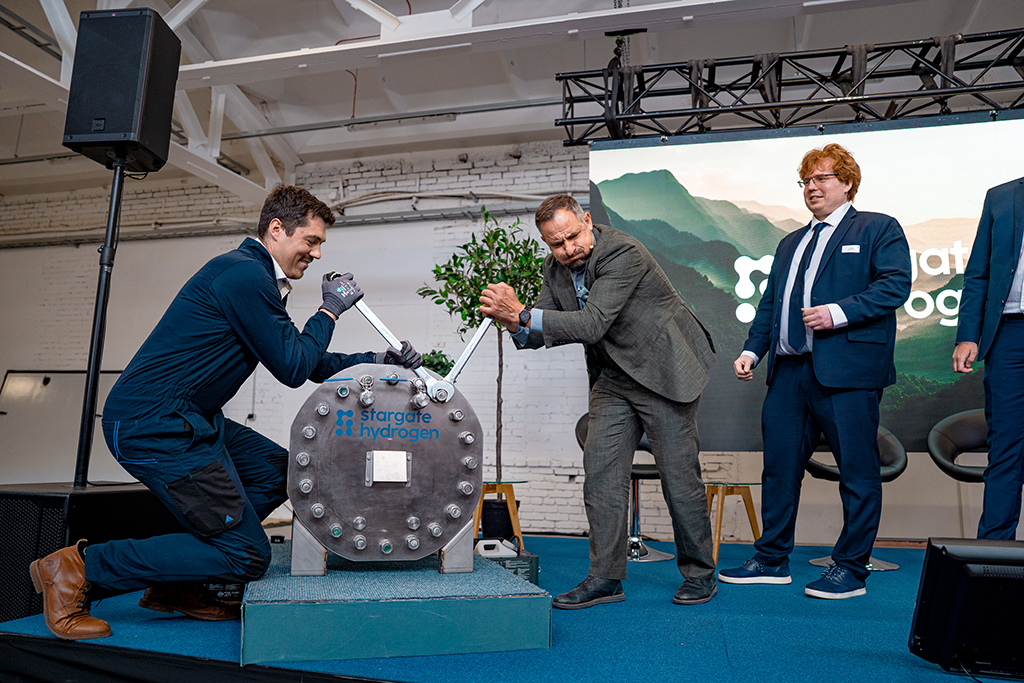
Stargate Hydrogen inaugurates its new factory with an exclusive event, attended by Kristen Michal, the Prime Minister of Estonia and Jorgo Chatzimarkakis, CEO of Hydrogen Europe. The facility, dedicated to the production of innovative alkaline electrolysis stacks and systems, positions Stargate Hydrogen as a major industrial player on the green hydrogen landscape.  
 
In the first phase, the new factory can deliver 140 MW of alkaline electrolysers annually, which can be expanded to 1GW+ with minor additional investments. With robust support from European investors and IPCEI status (Important Projects of Common European Interest), Stargate Hydrogen is now well positioned to bring down the cost of green hydrogen and help decarbonize critical sectors including steel, fertilizers, and chemicals. Deliveries from the new factory have already started to the existing customers of the company in the European, Middle Eastern, Turkish and Indian markets.  
 
Stargate Hydrogen’s IPCEI project stands as an outstanding example of how professionally managed public support can catalyse meaningful industrial innovation. Facilities like this and the material innovation undertaken by Stargate are exactly what we need to build the hydrogen economy in Europe, and stay competitive, sustainable, and sovereign in the clean energy transition.” — Jorgo Chatzimarkakis, CEO of Hydrogen Europe. 
 
According to the CEO of Stargate Hydrogen, Marko Virkebau, the company is not opening an empty factory — instead, they have adopted a smart, future-oriented approach of gradually scaling up production with modularity at its core. Rather than burdening taxpayers and shareholders with the costs of an oversized and underutilized plant, Stargate Hydrogen has chosen a brownfield site with a flexible floor plan to ensure the best use of space and avoid large upfront investments.  
 
Marko Virkebau, CEO of Stargate Hydrogen, said: “There are currently several electrolyser gigafactories out there that are standing idle and burning through incredible amounts of capital. We have chosen a different strategy, scaling up modularly to meet the growing demand as it rises and when our next-generation innovations are launched to the market. Currently, our production is fully booked until the end of 2025, and we see increasing demand from our existing customers in Europe and new customers from the Middle East and Asia. “ 
 
The event brought together prominent policymakers, industry pioneers, and international partners. Held in the company’s production hall, the event’s main stage was surrounded by products in ongoing assembly, for example the turn-key electrolyser system destined for Fortum and several stacks ready for delivery. 
In times when many companies are scaling down, or even ending their operations, Stargate Hydrogen goes against the tide and is expanding its operations via a gradual and financially sustainable scale-up strategy. 
 
About Stargate Hydrogen: Stargate Hydrogen was founded in 2021 to make green hydrogen affordable for hard-to-decarbonise industries like steel, fertilisers, and chemicals. The company’s focus: improve electrolyser efficiency and cut costs using novel ceramic catalysts and patented stack design.  
With €50M+ in funding from strong investors and IPCEI status, Stargate is scaling production to 140 MW annually. Their list of customers includes Fortum, Utilitas, ABB, Rockfin, and others across Europe, Türkiye and India. 

HYDROGEN SAFE IS ACQUIRED BY IACS SETTING THE STANDARDS FOR THE FUTURE

Hydrogen Safe, the training specialist delivering courses, qualifications and bespoke e-modules in hydrogen safety, has announced that it has been acquired by IACS, the leading inspection, engineering, and testing consultancy specialising in pipelines.

Since its launch in 2023, Hydrogen Safe has established its position within the market, working with education providers and private companies that are addressing the skills gap as businesses transition to clean energy.

With a shared ambition to support the UK infrastructure as the country moves towards achieving Net Zero, the acquisition provides Hydrogen Safe with access to the talent, network and credibility that comes with an organisation that has a strong reputation and more than 25 years within the industry.

Director of IACS, Laura Hewitt, comments: “We are very pleased to announce the acquisition of Hydrogen Safe. The company has established itself as a credible supplier of specialist training to both the public and private sector.

“Having worked alongside the business since its launch, it made sense for us to cement the relationship and build stronger alliances as we both work towards setting the infrastructure that will support businesses as we transition to clean energy.

“We very much see this as the next phase in Hydrogen Safe’s journey and look forward to building the relationships we have, while extending our network, allowing us to deliver the training companies need to equip their workforce for the future.”

Director of Partnerships at Hydrogen Safe, Elizabeth Simon, comments: “This is such an exciting time for Hydrogen Safe. Not only are we joining an established and successful business, but we also gain direct access into the hydrogen value chain, backed by a strong and respected industry player. This positions us as a dedicated skills and training provider, to play a leading role in the growing clean energy economy.

“With access to a much wider network, we’ll be able to deliver our specialist training to more businesses and educators than ever before - nationally and internationally. This marks the next phase in our journey, and we’re ready to scale up. We have ambitious plans for growth and innovation, and

we hope our customers, stakeholders, and the wider business community will join us in celebrating this important milestone.”

Members of Hydrogen UK; the Hydrogen Energy Association; Hydrogen South West; and the Net Zero Skills Advisory Board, as well as being a corporate partner of the Greater Manchester Mayors Charity, Hydrogen Safe works with businesses, education providers and individuals to develop and provide tailored solutions that align with their training needs. For more information, please visit: www.hydrogen-safe.org and for regular updates follow: @Hydrogen Safe on LinkedIn.

Cooperation between AMBARtec AG and Rouge H2 Engineering AG - solutions for climate-neutral steelworks

AMBARtec and Rouge H2 Engineering are set to collaborate closely in the future to bring the chemical looping hydrogen process to market maturity. This process can be used to produce clean hydrogen and concentrated carbon dioxide from blast furnace gas and other steel mill gases. It is based on the steam-iron process, which can be used to produce high-purity hydrogen by reducing and oxidising iron oxide or iron nuggets. The highly concentrated CO₂ obtained can be effectively utilised in CCU or CCS processes.

The Chemical Looping Hydrogen process

This two-stage process uses iron oxide (FeOx) to convert carbon-containing gas mixtures into hydrogen (H₂) and carbon dioxide (CO₂). ‘Our collaboration aims to optimise the process for blast furnace gases and implement it in steelworks,’ reports Uwe Pahl, Chief Technology Officer at AMBARtec. Blast furnace gas, coke oven gas and converter gas can thus be processed to generate high-quality hydrogen. The high-purity carbon dioxide produced during this process can be utilised as a material (CCU) or stored (CCS). The precondition for this green transformation of the steel industry is that the CCS Act, which is currently being revised, must authorise the storage of CO2 from the steel industry. 'This gives the steel industry the chance to make its production more climate-friendly without having to invest heavily in converting the entire process chain. This will ensure that steel production in Europe remains competitive despite the stringent climate protection requirements,’ emphasises Uwe Pahl.

Partner from the steel industry

The EU project H2Loop  provides the framework for this cooperation. ‘We are combining our expertise in iron oxide nuggets and our experience in plant operation with the knowledge of our colleagues at Rouge H2 Engineering in the processing of residual gases,’ explains Matthias Rudloff, CEO of AMBARtec.

In addition to Rouge H2 Engineering, the project also involves two partners from the steel industry. “With their input, we will align the process and associated plant technology with real conditions in steelworks from the beginning and demonstrate this at our partner's premises,” emphasises Matthias Rudloff. ‘We look forward to receiving constructive support from other steel companies.’

The role of iron oxide nuggets

Blast furnace gases contain relevant quantities of carbon monoxide (CO) and hydrogen. If these gases are added to iron oxide nuggets under the right conditions, the iron oxide is reduced and carbon dioxide and steam are released.

FeOx + CO/H2 à FeO + CO2/H2O

The carbon dioxide is separated and made available for utilisation or storage, for example via CCS.

In the second step, the reduced iron oxide nuggets are re-oxidised using steam.

This process produces high-purity hydrogen, which can be used as both a material and an energy source.

http://www.ambartec.de/

Rockwell Automation selected by Utility to Automate Its Economic Clean Hydrogen Production Systems Control platform supports scalable, modular H2Gen® systems to accelerate clean hydrogen solution deployments for hard-to-abate industries.

Rockwell Automation logo

Rockwell Automation, Inc. (NYSE: ROK), the world's largest company dedicated to industrial automation and digital transformation, has been selected by Utility Global to provide the control and automation platform for its proprietary H2Gen® systems featuring Utility’s patented zero-electricity hydrogen production technology. 

Utility is transforming industrial hydrogen production with systems designed for modular construction, customized performance, and seamless integration into existing assets and infrastructure. Featuring a breakthrough technology for hydrogen production from water without electricity that operates autonomously, H2Gen systems deliver clean, reliable hydrogen tailored to the steel, mobility, chemical, refining and oil and gas industries. These systems significantly reduce carbon emissions and lower operational and capital costs. This innovation makes the energy transition economically viable for industrial operators worldwide. 

“Rockwell’s automation technology accelerates our ability to execute commercial deployments,” said Parker Meeks, President and CEO of Utility. “Their proven industrial expertise strengthens our mission to deliver economic clean hydrogen to the hard-to-abate sectors.” 

To support this objective, Utility selected Rockwell’s PlantPAx® Distributed Control System along with a suite of software and network hardware including

 FactoryTalk® ViewFactoryTalk® AssetCentreFactoryTalk® Historian and Logix Process Controllers. This suite was selected for its ability to scale from small to large commercial deployments without requiring a shift in control architecture – laying the groundwork for flexible project execution plans.  

“We’re excited to work with Utility Global to support their innovative approach to sustainable hydrogen production,” said Michael Sweet, director, New Energy, Rockwell Automation. “Our integrated control and information platform helps bring new energy technologies to life with the security, reliability and flexibility needed for industrial applications. Rockwell’s integrated solutions are enabling near-term decarbonization by accelerating the deployment of scalable, low-carbon energy solutions like Utility’s H2Gen systems.” 

Click here for more information about Rockwell and its role in enabling cleaner, smarter operations across industries. Industrial Sustainability Solutions | Rockwell Automation | US