Find ATEX, IECEx, Explosion Protection & Hazardous Area Content...

News

ANTI-SLIP COATINGS OUTLAST AND OUTPERFORM SAND-IN-PAINT SYSTEMS AND TAPES

Workforce injuries resulting from slips and falls are one of the leading, longstanding causes of unplanned workplace absence.  The latest statistics from the Health and Safety Executive (HSE) make for a sobering read. https://www.hse.gov.uk/statistics/causinj/index.htm

Of the annual 750,000+ non-fatal injury reports it received in the UK, 29% cited slips, trips and falls, on the same surface level, as the cause.  And this translated into a phenomenal 11.25 million lost working days in just one year. 

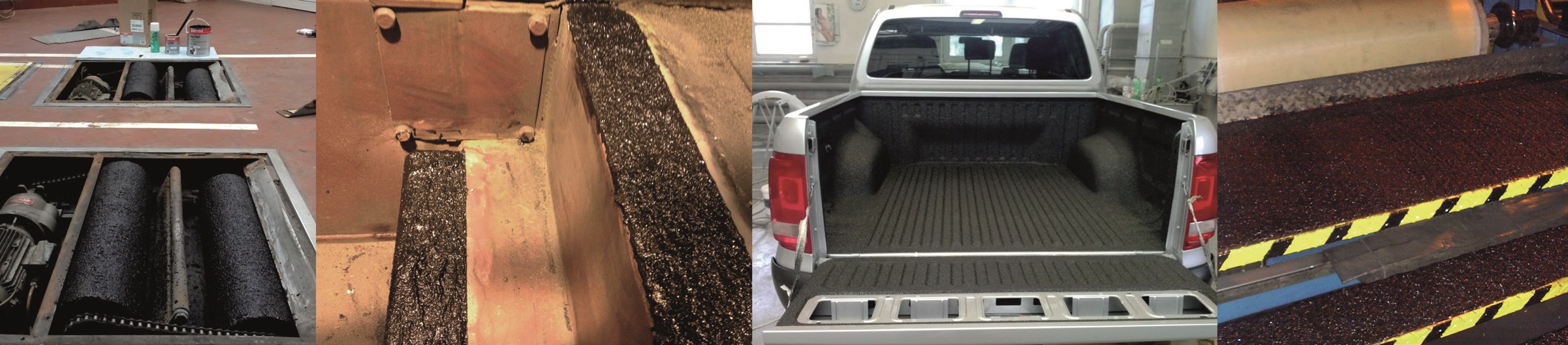
So, the application of anti-slip coatings to all risk areas not only makes sound sense from a health and safety perspective but also from an operational and cost efficiency standpoint too.  Coatings are available with a broad range of characteristics that don’t just create a durable anti-slip finish for people but vehicles as well, ranging from light to heavy traffic.

LOCTITE® is a brand with notable benefits in this field.  Products in the range outlast and outperform typical sand-in-paint systems and tapes and are proven to be the strongest, most aggressive anti-slip methods available.   Typical applications include ramps, walkways, stairs, changing rooms, machine shops, assembly areas, warehouse floors and loading docks. And they are suitable for use on concrete, asphalt, wood, ceramic, fibreglass and metal surfaces with applications across industry, commerce and in the public service, utilities and transport sectors. 

Rhodri Morgan Ex-Protection UK Technical Lead at TÜV SÜD, a global product testing and certification organisation.

UKEX – Practical Consideration and Implementation

UKCA marking (UK Conformity Assessed marking) is the UK product marking requirement that will be needed for all Ex-products being placed on the market in Great Britain (England, Scotland and Wales). This substitutes the European Union (EU) requirements for CE Marking, which continues to be accepted in Northern Ireland.

UKCA Ex (UKEX) approval came into force from 1st January 2021, with a transitional period lasting up until 1st January 2023. However, the UKCA mark will not be recognised in the EU, European Economic Area, or Northern Ireland. For Northern Ireland, either the CE mark or dual UKNI and CE mark may be required.

To allow businesses time to adjust to the new requirements, CE marked ‘existing stock’ can still be accepted up until 1st January 2023. For example, if machinery was fully manufactured and ready to be place on the market before 1 January 2023. With respect to existing products, the rules for the EU and UK are the same, the legislation applies at the point when the individual product is placed on the market. This means that UKCA marking would not be required for products already placed on the market, for example, items which are already imported and sitting with a distributor which was prior to 1st Jan 2023.

Fusion boffins get new shield against COVID contamination

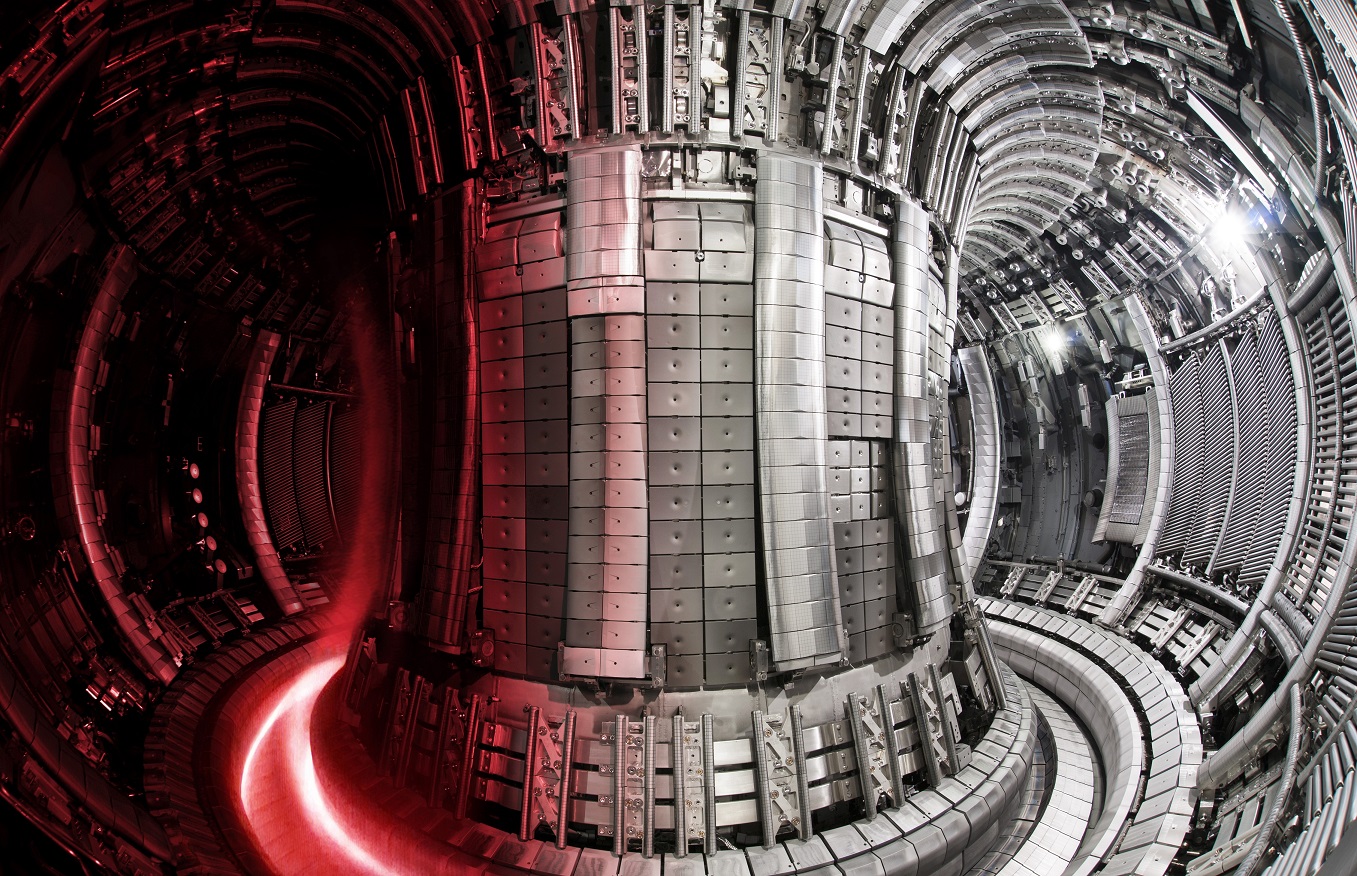
Hundreds of scientists and engineers working on the UK’s race to harness fusion energy are being protected from COVID-19 contamination by new super-tough anti-microbial coating Touchpoint Shield.

The UK Atomic Energy Authority (UKAEA) has commissioned bio-hazard cleaning and decontamination specialist SafeGroup to install Touchpoint Shield in washrooms and toilet areas.

Facilities managers at the authority’s research centre near Abingdon, Oxfordshire, were impressed with trials that proved the coating suppressed the build-up of SARS-Cov-2, the COVID-19 virus.

A team of SafeGroup technicians has now applied the fast-drying and nearly invisible Touchpoint Shield to showers, toilets and taps at multiple locations across the 200-acre fusion energy research site.

When can a Zone 1 rated product be safer than a Zone 0 rated product?

This scenario seems impossible, but it is a real-life or death possibility. This is because Zone ratings are measured independently from temperature codes and gas group types defined within the ATEX and IECEx classifications.

Zone 0 is defined as an area where an explosive atmosphere is always present. Zone 1 is defined as an area in which an explosive atmosphere is likely to occur during regular operations due to scheduled maintenance, accidents, or leakage.

Temperature codes refer to the maximum surface temperature of any device component that can be exposed to a hazardous environment in a fault condition. A T1 rating can be up to 450°C (842° F), but a T4 rating cannot exceed 135°C (275° F). These significant differences between temperature codes often go unnoticed unless examined closely.

Likewise, gas group ratings require careful scrutiny. Group B type gas contains explosive gases like Hydrogen and Etheylene Oxide, while Group D type gas contains less volatile gases like Propane and Gasoline vapors. These differences often go unnoticed by safety professionals who rely solely on a Zone rating for guidance.

These T codes and gas ratings can confuse someone into believing a Zone 0 device with a T1 code, and a rating for group D type gases is safe for use in a Zone 1 environment that requires a T4 code and a rating for group B type gases. In this specific instance, the Zone 1 product rated for this environment is safer than the Zone 0 rated product.

All equipment safety ratings must be based on the potentially hazardous environment it may encounter as the current one may quickly change without you being aware of it. If you are unsure, analyze the work environment, determine the worst-case scenario, and equip your teams accordingly.

Nightstick, a global manufacturer of intrinsically safe, professional, portable LED lighting products that exceed industry standards in performance, quality, and user safety, has over fifty intrinsically safe products. You need to focus on completing your job with confidence, know­ing your equipment was designed and rated for the highest levels of safety when your life depends on light.

Find the certification level you need at www.nightstick.com

McMenon eyes further growth in nuclear and renewables with senior appointment

ENGINEERING specialists McMenon have made a senior appointment as the UK company further expands in the nuclear and renewables markets.

Scott Castlehow has joined McMenon as its new Business Director to help the Workington-based firm achieve further growth in nuclear, renewables, defence and other sectors.

Scott brings to McMenon almost 20 years of experience in a range of industries, including nine years in the nuclear and decommissioning sector, and ten years in the aeronautical industry.

McMenon CEO Anand Puthran said: “We are delighted Scott has joined McMenon at such an exciting time in the company’s development as we expand in the nuclear and renewables markets.

“The timing is perfect to enable our plans to become one of the main Cumbrian SME suppliers to the nuclear industry. McMenon, along with TIS Cumbria, has formed the North West Energy Coast Alliance, to compete for, and deliver, large projects in the nuclear sector.

“Scott’s invaluable experience in this sector will aid us as we look to continue our growth across all markets.”

Scott said: “I will be helping McMenon develop its engineering and manufacturing solutions within new sectors. It’s a great opportunity and I am really looking forward to it.

“I am inspired by the CEO’s passion, and I will feed off Anand’s drive and his vision. McMenon is a key player in the delivery of flow and temperature instrumentation products within the global energy industry. But there are lots of opportunities through engineering and manufacturing to grow McMenon’s offerings in the nuclear, renewables, defence and other sectors.”

Scott will manage McMenon’s technical engineering and supply chain departments and lead business growth in the nuclear, renewables and defence sectors.

McMenon has built a global reputation for design and manufacture of quality, specialist flow and temperature measurement products supplying to more than 50 countries around the world. It also provides complete contract engineering and manufacturing solutions, and fabrication, pipework and welding services.

DSEAR 3 DAY COURSE - Risk Assessment Training

Our “Three Day” DSEAR course is aimed at those who responsible for conducting DSEAR assessments, but are not necessarily fully confident with the process. They may work in a flammable environment, in-addition to being responsible for managing the area, day to day.

The course content:

  • Legal foundations
  • How sources of danger arise.
  • What is the difference between flashpoint, fire point, boiling point and Auto Ignition?
  • The fundamentals on the origin of Explosions, Deflagrations and Fires
  • Risks resulting from improper storage or handling of these substances
  • The meaning of the danger triangle and pentagon.

An overview of the regulations, understanding solvents and their physical properties, explosive dusts, ATEX classifications, gas groups, temperature ratings and BS 60079-10 Ex Zone determination, all giving a greater understanding of how ATEX fits into the DSEAR equation when establishing hazardous zones.

Reference is made to the theoretical understanding of flammable vapours with examples of how the L.E.L can be converted into a meaningful quantity of chemical per cubic metre.


Supported by a full and detailed 200-page, training manual to assist with their learning.

Our “Three Day” DSEAR training course is aimed at those who may be responsible for conducting risk assessments, but are not necessarily fully confident to do so with such a technical subject.


The Course Content :

Legal foundations of DSEAR and COSHH

How Fires and explosions occur,

The fundamentals of understanding the explosive potential - Deflagrations

Understanding the Chemical Properties of a substance

Risks resulting from improper storage or handling of substances

The danger triangle and dust pentagon.

Dust explosion potentials

An overview of the regulations is included along with, explanations and understanding of solvents and their physical properties, explosive dusts, ATEX classifications and coding, gas groups, temperature ratings and BS 60079-10 Ex Zone determination, all giving a greater understanding of how ATEX fits into the DSEAR equation when establishing hazardous zones.

Reference is also drawn to the theoretical understanding of flammable vapours with examples of how the Lower Explosive Limit can be converted into a meaningful quantity or volume of chemical per cubic metre of space.

The course includes:

A detailed 200-page, training manual for all delegates

Working group activities

A “multiple choice” exam

Buffet Lunch Tea Coffee and refreshments. – COVID conditions apply.

Venue and Dates 2022:

Cannock Staffordshire

March 15-17th

Jun 14-16th

Oct 11-14th.

www.dsc-ltd.co.uk

This email address is being protected from spambots. You need JavaScript enabled to view it.

01952 947682

07989 597569

Hoist and Winch Raise Corporate Profile

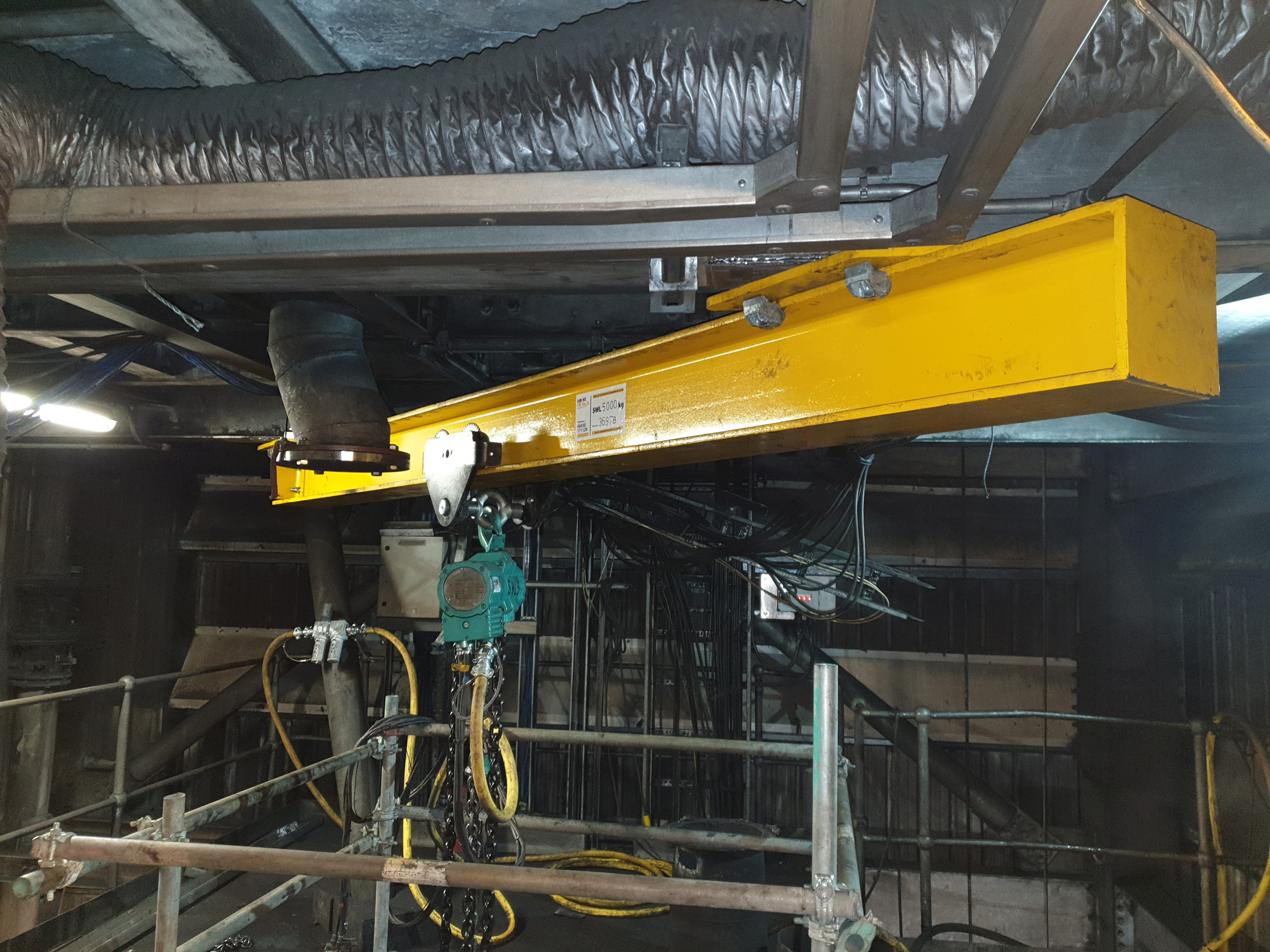
Hoist and Winch Ltd has come a long way in a short space of time. From humble beginnings in 2007, the company today offers a full spectrum of lifting equipment services to the UK and global marketplace. Indeed, the Hoist and Winch portfolio now comprises product sales, installation, service, inspection, repair and hire, with a special emphasis on project work. With increasing demand, the reputation and corporate profile of this ISO9001-accredited business is rising fast.

The company excels in managing the supply and installation of standard and explosion-proof air-powered/electric hoists, while another strong business area is hoist hire, an offer that includes higher capacity air/electric hoists. As one of many market differentiators with its competitors, the company also offers installation services for rental hoists.

Although Hoist and Winch serves a number of sectors, the company is particularly at home supplying demanding industries such as heavy construction, cement production, petrochemical, offshore, marine, mining and tunnelling, many of which require explosion-proof equipment.

Welsh mineral water company chooses Hart again

Radnor Hills Mineral Water has chosen Hart Door Systems to supply a further high-speed door for its Radnor-based mineral water plant.

Brian Woodcock, Hart’s regional sales manager says, “the order continues an excellent working relationship with the company.”

“We have installed several Speedor Minis, so it is good to follow these up with our Speedor Storm variant, designed specifically as an external high-speed door for frequent use in high traffic situations, particularly in exposed areas where exceptional wind resistance is required.”

Mr Woodcock adds: “We had a five-star review from the client for our door quality and speed of installation which underscores the Hart ethos. The continuing performance of Hart’s existing doors on site is a great help I am sure but also our bidding process and the excellence of our engineers on site were pivotal.”

www.hartdoors.com

Hart’s continuing drive for energy efficiency

Glasgow’s COP26 conference did much to remind us of the issue of Climate Change. However well-intentioned the debate over two weeks by the global audience was followed by a real, live, reminder that the Earth is very much on the edge with dramatic storms, flooding, forest fires, continuing rising sea levels and melting ice caps. Will it be more of the same at COP27 to be held later this year at Sharm El Sheikh in Egypt or will the Earth’s rising temperatures finally show signs of moderation asks, freelance journalist Chris Dobson.

Research shows that nearly 40% of carbon emissions coming from the construction of property and about a further 30% coming from the actual use of the building, that is heating, lighting, air-conditioning and so on.

As buildings such as manufacturing facilities and warehousing are essential to any country’s economy what can be done to reduce carbon emissions from property? Building energy efficient properties is the obvious step but how can this be achieved?

New game-changing flameproof cable glands

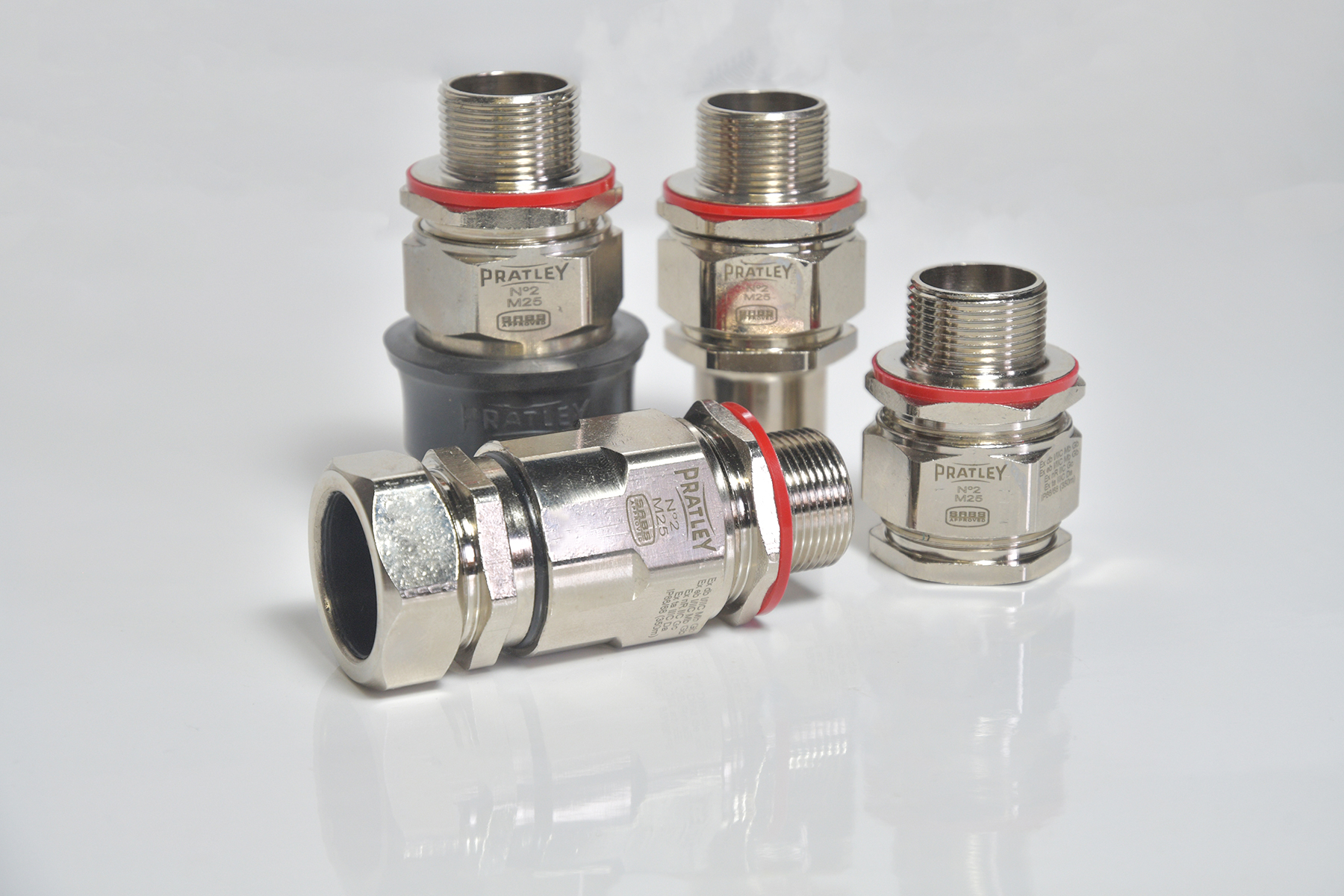
 A new flameproof cable gland range from Pratley  allows for soft-bedding cables like PVC and the like, which are prone to creep, to be fitted to flameproof equipment without any concern regarding cable damage or poor long-term sealing.

The Pratley Taper-Tech® flameproof gland range consists of four separate glands in two unique categories. First is the Pratley Taper-Tech® gland for armoured and braided cable. This is a ‘double compression’ gland, meaning it has both an inner and an outer seal. The second is the Pratley Taper-Tech® single-seal flameproof gland, also for armoured and braided cable, but with a durable rubber shroud.

The range also includes two ‘double compression’ glands for unarmoured cable, one being a hose-tail version that features a spigot on the compression nut. This is intended to be fitted with flexible hosing, for example, where cables are fitted to mining machines, for protecting the cable outer sheath.