

Static Electricity – The Hidden Danger In Hazardous Areas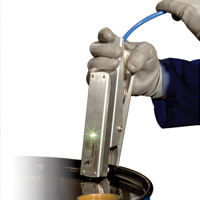 Static electricity is an ever-present and significant hazard for operations taking place in flammable, combustible or potentially explosive atmospheres.
The uncontrolled build up and discharge of electrostatic must be avoided in these environments in order to prevent ignition and protect people, plant, processes and the environment. Every year, hundreds of electrostatic-caused incidents occur across the globe in the process industries, including oil & gas, petrochemicals, pharmaceuticals, paints (Read More) and coatings and food and beverage.
Bond-Rite Self-Testing Grounding Clamp
Newson Gale’s unique range of Static Earthing/Grounding and Bonding systems, equipment and accessories can help eliminate, control or mitigate these risks, creating a safer and more productive workplace. Products range from purpose designed mechanical grounding clamp assemblies through to intrinsically safe static ground monitoring and interlock systems, providing the highest levels of hazardous area safety for critical operations such as road tanker transfers to and from storage tanks, drumming, mixing and general flammable bulk flammable liquid and combustible powder transfer and handling applications.
Customers are supported from technical sales and service centres in the UK, USA and Germany and via an international network of specialist distributors and partners.
Newson Gale also produces a useful “Grounding & Bonding Applications Handbook” which provides a wide range of information on controlling static electricity in hazardous areas.
Information sections include a general introduction to the danger of static electricity and methods of control of industrial hazards, 17 illustrated applications drawings, a guide to hazardous area equipment selection, a comparison of European and North American, and a plant operator’s maintenance guide and safety checklist.
The extensive general introduction to static electricity control includes a review of the source and nature of static electricity, the harmful effects it imposes in the presence of various types of flammable or combustible atmospheres and common means of control. These include relevant technical standards and a discussion of the Newson Gale equipment available for hazardous area applications.
The illustrated arrangements include those involving drums and containers, mobile vessels and equipment, bulk storage containers, tankers, drums in storage, fluidized bed and drying equipment, rotating vessels, pipes/ducting systems and personnel/footwear. One of the new inclusions is the growing area of mobile/field grounding, including vacuum tanker transfers and trans-loading. Each application is described in some detail and clearly illustrated, along with summarized guidance from the main international technical standards.
Request your free handbook now at:
www.newson-gale.com
