
News
Rethinking Device Lifecycles in Hazardous Areas

In hazardous areas, mobile devices are subject to strict certification requirements. This directly affects how equipment is selected and replaced. In practice, there are two common approaches. The first is fully certified Ex tablets. These are intrinsically safe devices where the certification is built into the hardware itself. The second approach uses standard consumer tablets combined with a dedicated explosion-proof enclosure. Despite their differences, both approaches share the same limitation. The device and the explosion protection are effectively locked together. When the hardware becomes outdated, underpowered, or unsupported, the entire solution must be replaced.

For Ex tablets, this is because the certification is tied to that specific device. You cannot upgrade internal components without invalidating certification. For consumer tablets with Ex housings, the enclosure is designed for one specific model. Once that tablet is ready for an upgrade, the enclosure can no longer be reused. In both cases, a hardware refresh results in full replacement, including components that are still mechanically sound.
A More Sustainable Approach A more sustainable model separates the device from the explosion protection. Instead of treating them as a single unit, they become modular components. In this setup, the enclosure remains a long-term asset, while the tablet inside can be upgraded independently. This allows companies to follow standard IT lifecycles without replacing the certified housing each time.
It also removes a common bottleneck. With traditional Ex devices, users often have to wait for new certified models to access updated technology. A modular approach allows immediate use of newer consumer hardware, without being dependent on certification cycles. The result is a system that is both more flexible and more aligned with modern expectations around sustainability and cost control.
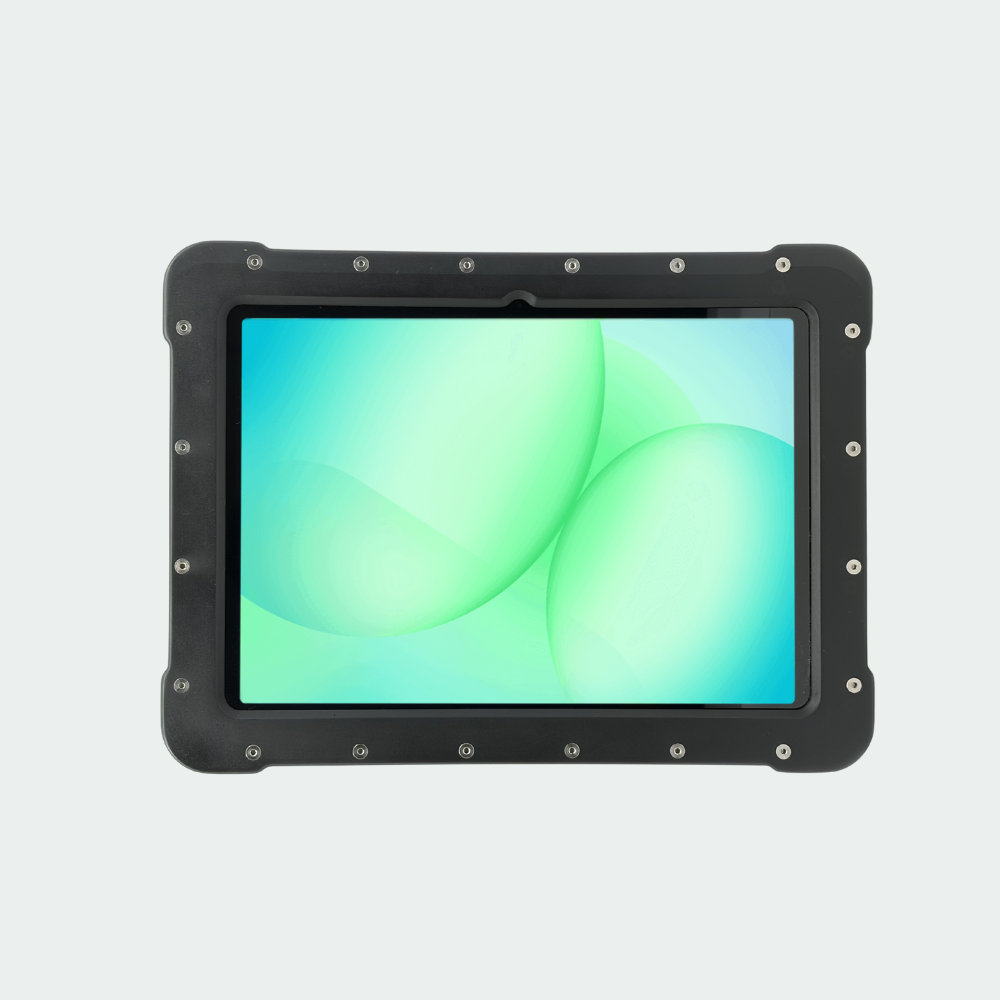
A Universal Modular Solution The UniCase by Armadex is built around this modular principle. Instead of being tied to a single device, the enclosure is designed to work with multiple tablet models through an interchangeable inlay system. The outer housing remains unchanged, while the inlays are tailored to a specific device. Buttons, touchscreen, cameras, and microphones can be used as intended, without compromising usability.
When upgrading to a new tablet, only the inlay and the device are replaced. The enclosure itself is reused. This approach decouples the lifecycle of the ATEX tablet enclosure from that of the device, while maintaining full operational functionality in the field. Looking Ahead As industries place more emphasis on sustainability and efficiency, the way equipment is designed and managed becomes increasingly important.
A modular system allows companies to reduce waste by reusing durable components. It also avoids repeated investment in certified housings, which is the most expensive part of the solution. At the same time, it ensures access to the latest technology. Devices can be upgraded when needed, without waiting for new certified variants or replacing the entire setup. In hazardous environments, where reliability and compliance are essential, this approach provides a more balanced model. It supports long-term use of costly certified equipment while enabling continuous technological improvement.
