
News
Connecting The Global Ocean Technology Community
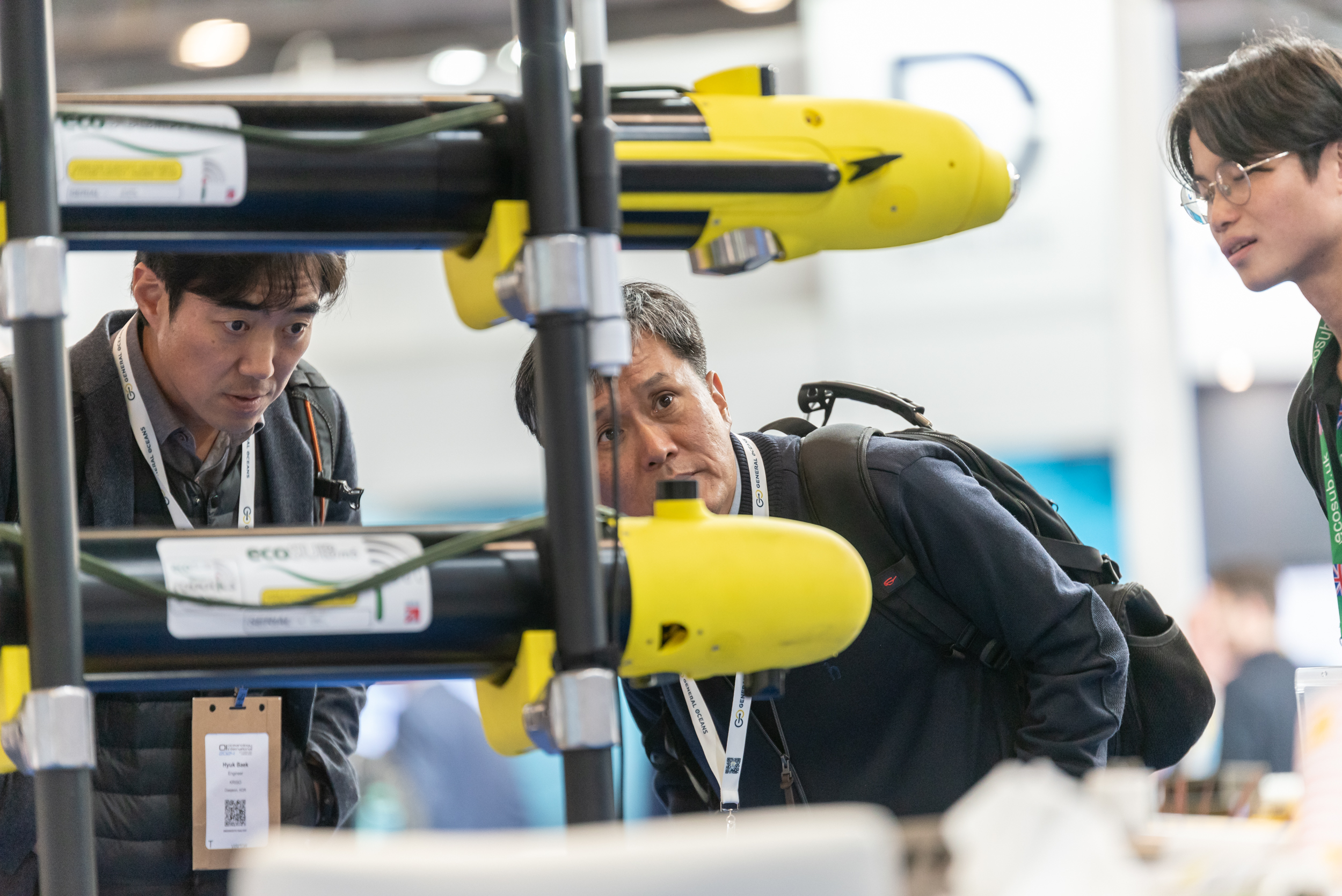
Oceanology International is rapidly becoming a vital fixture in the calendar for engineers responsible for keeping hazardous operations safe, compliant and productive in some of the toughest marine and coastal environments on the planet. For readers of Hazardous Engineering Solutions, it offers a concentrated, three‑day opportunity to see how advances in ocean technology are directly reducing risk, improving situational awareness and supporting safer decision‑making in offshore, coastal, process and defence applications.
Why Ocean tech matters to hazardous sites
Hazardous area engineers are increasingly dealing with assets that sit at, or just beyond, the waterline: coastal terminals, jetties, subsea tie‑backs, offshore platforms, export pipelines, interconnectors and nearshore renewables. At Oceanology International 2026 (Oi26), ExCeL London, 10–12 March, the focus is firmly on technologies that improve reliability and reduce exposure for people working around these critical assets.
From remote and autonomous inspection of subsea infrastructure, to long‑range condition monitoring, leak detection and geohazard assessment, the show floor brings together solutions that allow operators to pull people back from hazardous, confined and explosive atmospheres while still maintaining tight control of safety and environmental performance.[3][2]
Data, autonomy and safer operations
A strong theme for Oi26 is the rise of robotics, AI and autonomous systems as practical tools for safer operations in harsh or hazardous environments. Uncrewed surface vessels, AUVs and ROVs capable of deploying sensors under, on and above the water are showcased alongside integrated GIS, cloud analytics and digital platforms that turn raw data into actionable intelligence for integrity and safety teams.
For hazardous engineering specialists, this translates into better situational awareness around coastal and offshore assets, improved early warning of structural or geotechnical issues, and the ability to validate barrier health without exposing personnel to unnecessary risk. The maritime domain awareness and emergency response sessions, for example, focus on the latest ways to obtain the real‑time picture needed when incidents unfold in complex marine environments.
New coastal focus: COAST
New for 2026, the COAST exhibition zone and conference track push coastal resilience, infrastructure and engineering to the foreground. Engineers working on flood defences, terminals, refineries and chemical plants in exposed coastal locations will find technologies addressing erosion control, shoreline stabilisation, sediment transport analysis and climate adaptation in dynamic, high‑energy littoral zones.
High‑resolution monitoring, real‑time data streams and predictive modelling for storm, surge and flooding scenarios are central to this new feature, directly aligning with the risk‑based approaches familiar to HES readers managing hazardous sites in vulnerable coastal corridors.
Scale, community and knowledge transfer
The 2024 edition of Oceanology International attracted 7,536 unique attendees from 91 countries and 443 exhibiting companies, with 110 product and service launches – the strongest performance in over a decade. That momentum carries into 2026, with thousands of engineers, surveyors, OEMs, regulators and solution providers expected to converge in London to discuss ocean exploration, environmental monitoring, sustainable marine engineering and the wider ocean enterprise.
For hazardous engineering professionals, it is an opportunity to test technologies hands‑on, benchmark approaches with peers from offshore, marine, defence and process sectors, and bring back ideas that enhance safety, resilience and compliance in their own high‑risk environments. With registration now open, Oceanology International 2026 offers a timely, practical forum for anyone responsible for hazardous assets where sea, shore and complex engineering intersect.
Register here for your free badge
