
News
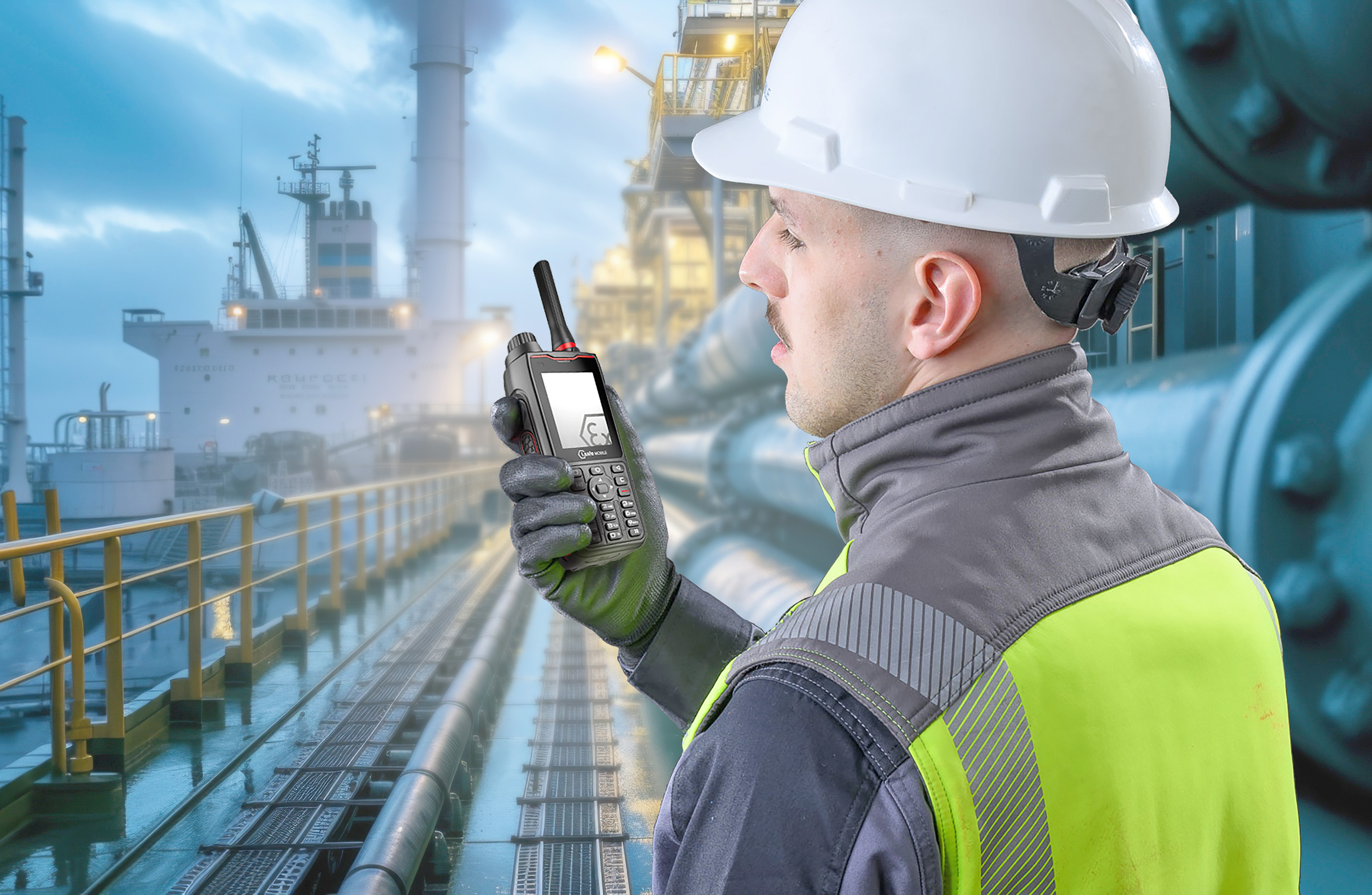
One radio, two worlds: How the IS380.1 keeps hazardous-area teams connected
Ask any plant manager what slows down a digital rollout in a hazardous area, and the answer rarely involves the network. It involves the device in someone's hand. Field crews trust their two-way radios the way a pilot trusts a checklist: instinctively, without looking. Swap that tool for an unfamiliar smartphone and adoption stalls, however capable the new hardware might be.
i.safe MOBILE built the IS380.1 to sidestep that problem entirely. Rather than asking hazardous-area workers to relearn their tools, the company put a full 4G LTE device inside a housing that behaves like the radio they already know. Certified for ATEX and IECEx Zone 1/21, the IS380.1 targets exactly the environments where explosion protection is non-negotiable: refineries, offshore platforms, chemical plants, ports and rail infrastructure.
Ergonomics that need no explanation
Pick up the IS380.1 and every control sits where a radio operator expects it. A large, side-mounted PTT button falls naturally under the thumb. A rotary switch handles channel selection or volume without forcing eyes away from the task at hand. A front-facing, amplified loudspeaker cuts through compressor noise or a busy loading bay, and an SOS button next to the antenna offers a direct route to emergency alerting. Existing headsets and remote speaker microphones connect through the familiar 13-pin ISM interface, so accessory budgets and training materials stay valid.
For safety officers, that continuity carries real weight. Every additional training session is a session where attention drifts from the actual hazard. A device that inherits established muscle memory removes a whole category of rollout risk before it starts.
Where PMR meets broadband PTT
Underneath that familiar shell runs a powerful processor with 8 GB of RAM, 128 GB of storage, and i.safe MOBILE's own ISM-OS 16, based on Android. Connected to a 4G network, the IS380.1 opens up Push-to-Talk over Cellular alongside standard telephony, giving teams nationwide or even global reach that conventional VHF/UHF simply cannot offer.
Crucially, this does not mean abandoning existing radio infrastructure. Through third-party RoIP gateways, the IS380.1 bridges cellular PTT platforms with legacy VHF/UHF networks, so a technician carrying the new device can still reach a colleague on an older handset. Sites can migrate site by site, shift by shift, without a forklift replacement of every radio in circulation, and without a gap in coverage during the transition.
Built for the environments where it works
An IP68 rating and MIL-STD 810H certification confirm what the housing already suggests: this is hardware designed for offshore platforms, petrochemical plants and outdoor industrial sites, not for a controlled office environment. The pre-installed i.safe MOBILE App World, hosted on German servers and updated alongside device firmware, adds a further layer of control. IT and safety teams get a curated channel for validated applications, including lone-worker protection and PTT clients, tested specifically on i.safe MOBILE hardware rather than assumed to work.
A practical first step
For operators in oil and gas, chemicals, ports, rail and heavy industry, the IS380.1 offers something rarer than raw specifications: a migration path that respects how field teams actually work. It extends coverage, adds broadband PTT and telephony, and keeps legacy radio users in the conversation, all inside a form factor nobody needs to be retrained on. That combination turns digital transformation from a disruptive event into a gradual, low-risk transition, exactly the kind hazardous-area operations need.
Picture credits: i.safe MOBILE
