
News
How WayKen Machines Vacuum Components for Semiconductor Equipment
Vacuum components used in semiconductor equipment must do more than meet nominal dimensions. Their cavities, sealing grooves, threaded interfaces, and mating surfaces must preserve geometry under vacuum conditions, where leakage can compromise performance. For CNC metal machining, process planning must consider material removal, deep features, sealing surfaces, finish, and inspection together. Precision CNC machining must maintain repeatable relationships between critical features rather than treating dimensions independently.
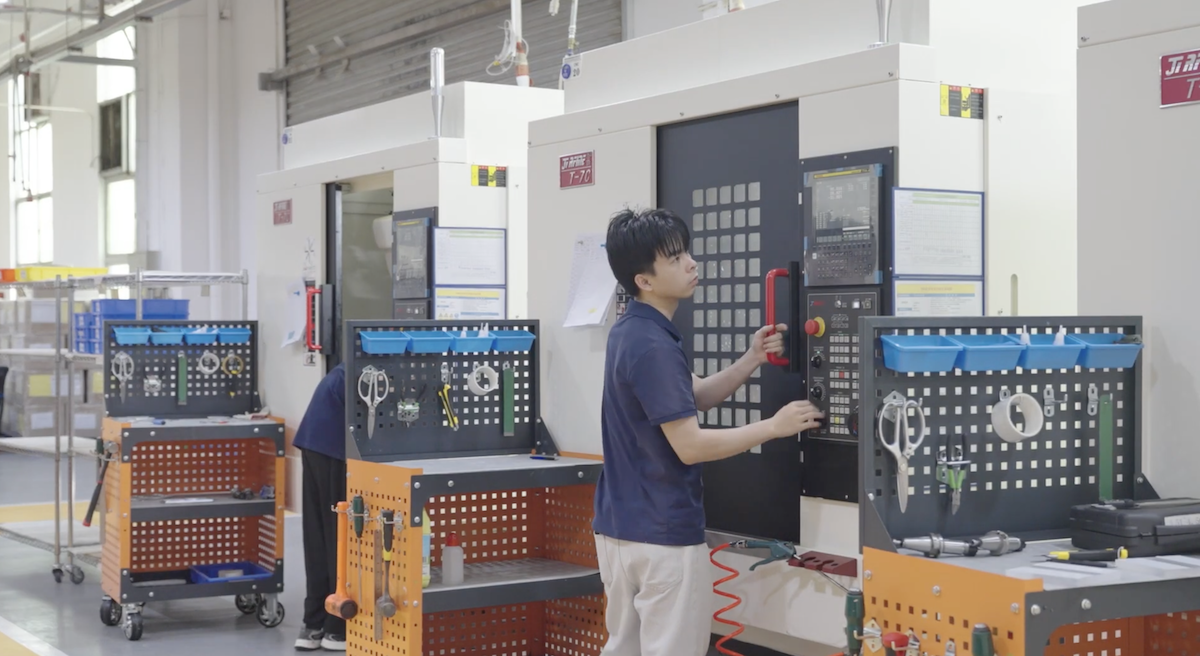
Vacuum Components Require More Than Basic Dimensional Accuracy
Vacuum parts need accurate interfaces. The seal groove should hold the O-ring or some other seal at the right width and depth, whereas bolt holes should keep their positions so that the mating cover clamps properly. Flatness and surface finish may impact sealing especially when two machined surfaces create the vacuum chamber.
The material itself is another complication. Hollow parts of large size may have significant material removal, and so the process sequence and fixturing become critical. Deep cavities may limit tool reach and require special tools or operations.
WayKen’s SEM Vacuum Shell Project needed tolerances of ±0.005 mm made from the AL6061-T651 material. The shell had deep grooves and threaded holes on its four surfaces. WayKen chose machines that had enough cutting power for that material and part, and combined machining operations to deal with the cavities.
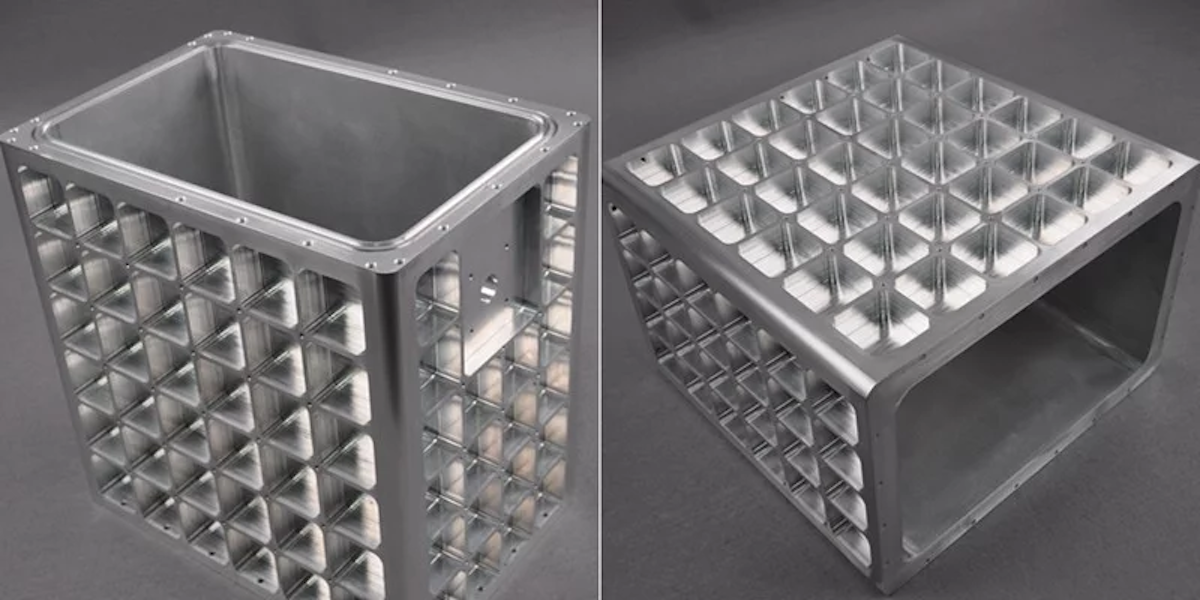
Machining Cavities Sealing Grooves and Critical Assembly Features
To machine deep cavities a compromise must be struck between material removal, tool access, heat generated and remaining allowances for finishing. For example, roughing will typically remove large amounts of material & leave a controlled amount of material for finishing. This is important as it reduces the cutting forces experienced when making the last cuts to stabilize critical features.
The geometry of sealing grooves are very critical as they determine how well the compression and seal on the sealing elements. The outer dovetail groove on the SEM shell had a spiral shield, whereas the inner rectangular groove had an o-ring. Both were machined to precise specifications; dovetail groove = ±0.005mm.
A custom dovetail cutter was made by WayKen which allowed them to create a cutter that would match the angle of the groove. After roughing, the groove was finished with slower passes creating a controlled dimension to ±0.005mm and a surface finish of Ra 3.2 μm. A good example of why some parts requiring high-precision CNC machining can benefit from having specialized tooling made specifically to fit the part or feature.
Similarly, threaded assembly features also require great care. Not only do hole location, diameter, thread form, and depth play a significant role in how covers and other components attach, but also inspection must ensure that not only are each feature correctly sized but that the correct positional relationship exists between features.
How WayKen Combines CNC Machining Wire EDM and Precision Inspection
Complex vacuum shells can benefit from combining processes rather than forcing every feature through one method. Wire EDM can remove material from deep or difficult profiles without conventional cutting forces, while CNC metal machining can refine surfaces and achieve the required finish.
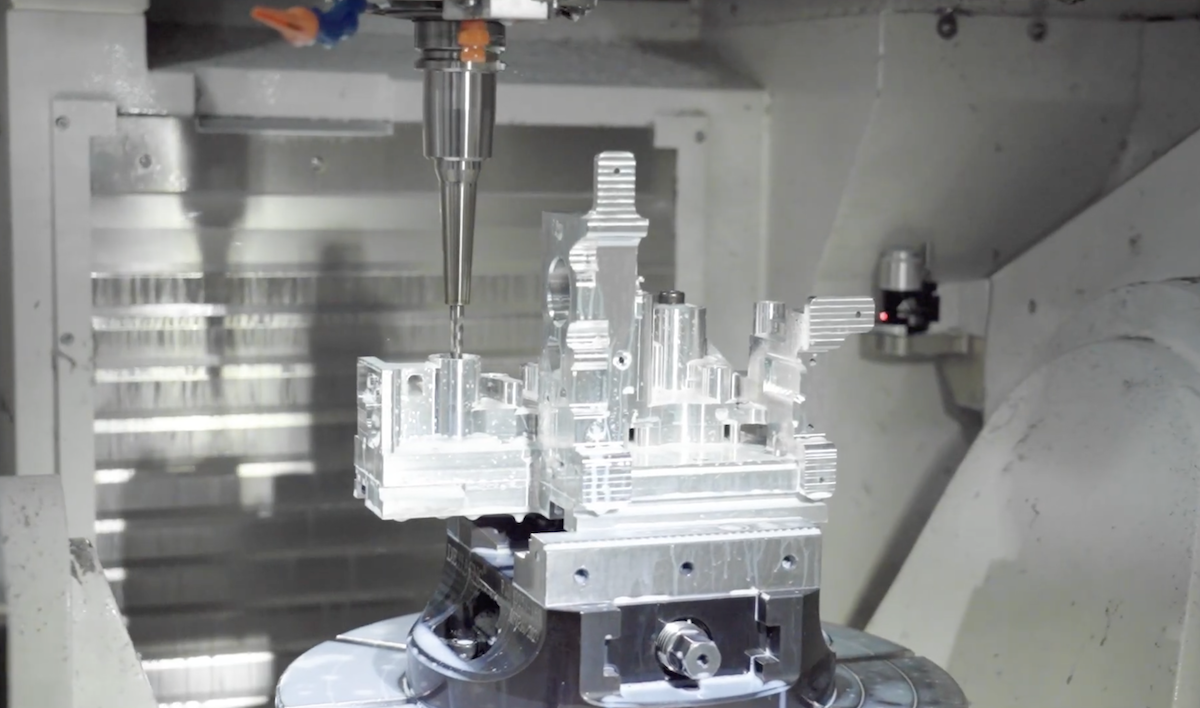
WayKen used Wire EDM to remove intermediate material from deep cavity structures in the SEM shell, leaving a 1 mm machining allowance. CNC machining then removed the remaining material and rough EDM traces. This reduced finishing work while preserving final surface condition.
Inspection closes the process. WayKen used a ZEISS CMM to measure the distances between the shell’s numerous screw holes. Probing points around each hole allowed the system to determine circle centers and verify hole spacing against the ±0.005 mm requirement. Its precision CNC machining inspection capability includes CMM measurement, optical systems, pin gauges, and thread gauges.
For precision CNC machining, inspection should reflect the functional requirements of the vacuum assembly. Sealing grooves, hole positions, surfaces, and threads should be measured using appropriate references and equipment. This connects machining results with assembly and vacuum performance rather than relying on dimensional checks alone.
Conclusion
Vacuum parts involve control of geometries, sealing properties, materials, process flow, and inspection of these factors. Some deep cavities might involve combination methods, but other grooves and holes need exact dimensions and location controls. With the integration of CNC metal machining, Wire EDM, special tooling, and precise inspections, manufacturers will be able to make vacuum parts that retain their original connections and sealing ability. CNC machining of metals is a matter of process control as well as a machining activity.
