
News
Evidence Before Engineering Certainty
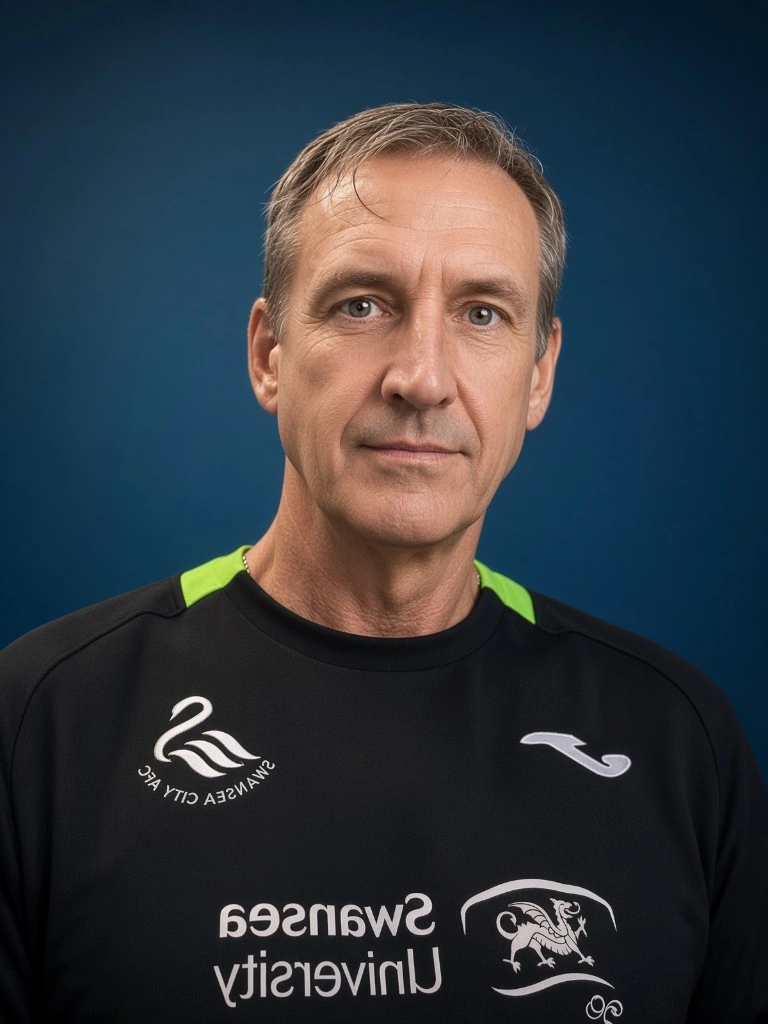
By Martin James
For forty years I’ve worked around electrical, instrumentation and control systems, including hazardous areas, ATEX, process environments and industrial automation. One thing has become increasingly obvious to me: the difficult part of using AI in engineering isn't getting an answer. It's knowing whether the evidence actually supports the answer.
AI is becoming remarkably good at finding patterns, generating explanations and producing apparently convincing technical conclusions. But engineering decisions don't happen in a text box. They happen around real assets, real measurements, real operating conditions and real consequences.
That creates a problem. An AI system can look at a dataset and say that a pump is failing. But what does the evidence actually establish? Is the asset correctly identified? Is the measurement relevant? Do we have a trustworthy baseline? Was the equipment operating under comparable conditions? Could there be another explanation? Is the data complete? Has anything been changed since the evidence was collected?
And perhaps most importantly: does the evidence prove the claim, or merely make the claim plausible? These are not the same thing.
Measurement is not proof
I've spent much of my working life dealing with systems where the difference between an indication and a conclusion matters. A transmitter can indicate a condition. A trend can reveal a pattern. An alarm can tell us that something has crossed a threshold. None of those things, by themselves, necessarily establish causation.
Yet when AI is introduced, there is a temptation to move rapidly from data → pattern → explanation → decision. I believe we need another discipline in between: evidence → challenge → contradiction → provenance → decision.
That is one of the ideas behind a system I have been developing called AVAKIMEXA.
AVAKIMEXA
AVAKIMEXA is being developed around a simple proposition: AI can generate a claim. The evidence must decide whether that claim survives.
The system is deliberately positioned at the boundary between machine intelligence and consequential engineering decisions. It does not replace the engineer. It does not take control of the plant. It does not write to PLCs, SCADA, SIS, DCS or actuators. The human remains the authority.
The purpose is different. AVAKIMEXA asks whether the evidence available is sufficient to support the claim being made. Sometimes the answer may be SUPPORTED. Sometimes CONTRADICTED. Sometimes UNRESOLVED. And sometimes the correct engineering answer is simply: INSUFFICIENT EVIDENCE. STOP.
That last answer is important. In engineering, refusing to manufacture certainty can be more valuable than producing another confident prediction.
The evidence obligation belongs to the claim
One principle has become central to my thinking: the evidence required to pass is determined by the claim — not by how convincing the existing evidence appears.
If someone claims that a pump is failing because of bearing degradation, for example, the question isn't whether the available trend looks like bearing degradation. The question is what evidence is actually required to establish that claim.
Asset identity, relevant measurements, operating conditions, baseline behaviour, time relationship, alternative explanations, data provenance, and whatever other evidence is material to that particular claim.
If a material obligation is missing, the system should not quietly fill the gap with confidence. It should expose the gap. That changes the conversation from “What does the AI think?” to “What can we actually prove?”
This matters particularly in safety-critical environments
In hazardous-area and process environments, evidence quality is not an academic issue. An incorrect assumption can influence maintenance, inspection, operational decisions and ultimately safety. The same applies as AI moves further into industrial environments.
We are likely to see increasingly sophisticated systems recommending actions based on increasingly large quantities of data. More data does not automatically mean more proof, and a more sophisticated model does not automatically make incomplete evidence complete.
That is why I think the next stage of industrial AI needs to be less about making machines sound certain and more about making uncertainty visible.
Human authority still matters
There is another boundary I consider non-negotiable. AI should assist engineering judgement. It should not quietly become engineering authority.
The engineer needs to be able to see what evidence was considered; what evidence was missing; what contradictions were found; where provenance matters; what assumptions were made; and why the system stopped or allowed a claim to proceed.
That creates something different from another predictive AI platform. It creates an evidence-adjudication layer between machine intelligence and consequential decisions.
The question I think industry should be asking
We have spent enormous effort asking whether AI can predict, classify, detect and recommend. I think we now need to ask another question: can the AI prove that the evidence it relied upon actually supports the claim it is making?
Because there is a fundamental difference between finding a pattern and proving what caused it. And there is an even bigger difference between generating a recommendation and having sufficient evidence to act on it.
My work on AVAKIMEXA is an attempt to explore that boundary. I am not claiming that AI should replace engineers. Quite the opposite. I am building around the idea that as machine intelligence becomes more capable, human authority becomes more important, not less.
The future industrial AI system may not be the one that gives the fastest answer. It may be the one that knows when the evidence says: Stop. We don't know yet.
Evidence. Not Guesswork.
