
News
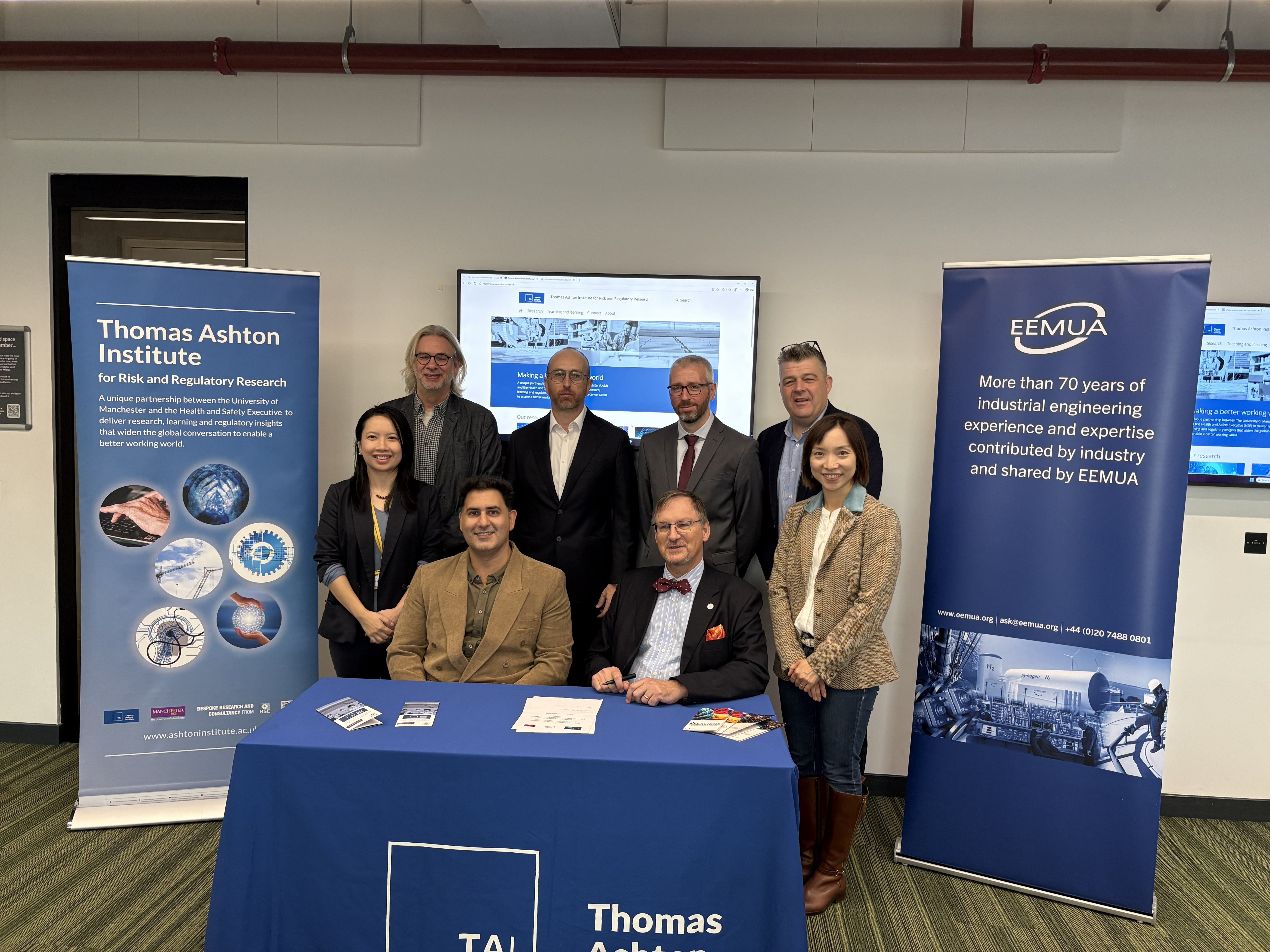
EEMUA, Thomas Ashton Institute, and University of Manchester launch joint research project to strengthen learning from industrial incidents
The Enhanced Learning from Incidents (ELFi) project aims to understand and provide both insight and potential solutions to ensure lessons learned in one sector of society or industry help prevent injuries and accidents in another.
Each year, millions of workers worldwide lose their lives due to occupational accidents and work-related diseases, while millions more experience non-fatal work-related injuries. Despite decades of safety improvements, similar incidents continue to occur across industries, often because vital lessons remain locked in silos, delayed by legal processes or buried in technical reports.
The Thomas Ashton Institute (TAI), the University of Manchester (UoM), and EEMUA (the Engineering Equipment and Materials Users Association) today announce the start of the Enhanced Learning from Incidents (ELFi) project, a research initiative developed with the Hazards Forum and other industry partners to change this.
Considerable work has already been done on incident investigation, root cause analysis and formal safety assessment to enable specific parties to learn from incidents. However, events with common causes still occur. Industry and regulators increasingly recognise that the challenge is not simply identifying lessons, but ensuring that organisations see their relevance, link them to their own sites and operations, act on them effectively and embed the learning sustainably. This is especially true when incidents occur outside an organisation's own sector, or even apparently unrelated activity.
Drawing on TAI's and UoM’s rigorous analysis and specialist expertise, the project will:
- Analyse how incidents are reported, investigated, and shared across sectors
- Identify barriers and enablers to effective learning and cross-sector knowledge transfer, including siloed or inconsistent reporting systems and cultural resistance to disclosure
- Define best practice for incident reporting and sharing
- Develop a practical cross-sector learning framework, toolkit, and adoption roadmap
- Work with regulators, trade associations, industry bodies, and the Hazards Forum to support real-world adoption and a cultural shift towards proactive learning
The aim is to deliver practical guidance and pilot-tested tools that help industry learn faster and apply lessons more effectively, saving lives, protecting assets and reducing environmental harm.
"EEMUA is committed to standards that improve safety and help prevent accidents. Good practice on investigating incidents already exists, but the real challenge is helping operators recognise how a lesson from any industry applies to their own site, and then act on it. We look forward to working with TAI and inviting our members to engage with this project and help shape tools that work in practice."
Dr Stefan Kukula, Chief Executive, EEMUA
"Organisations rarely lack incident reports; what is often missing is a reliable way to recognise when a lesson from another sector applies to them, and to act on it before a similar event happens. By working alongside EEMUA, its members, regulators and safety professionals from the outset, we will build a strong evidence base and then co-design and pilot a framework and toolkit that turn incident data into contextualised, actionable learning across sectors."
Professor Martie van Tongeren, Deputy Director, Thomas Ashton Institute
"Most industries already investigate their incidents carefully, but those lessons rarely travel beyond the sector, or even the site, where they happened. Over the course of this initiative, we'll work with EEMUA members, regulators, and safety professionals to find out why, and co-design a framework and toolkit that are tested on real industry cases rather than on paper. We'd welcome organisations from any sector that want to help shape it."
Dr Saeed Reza Mohandes, Principal Investigator, University of Manchester
