
Assessment Update
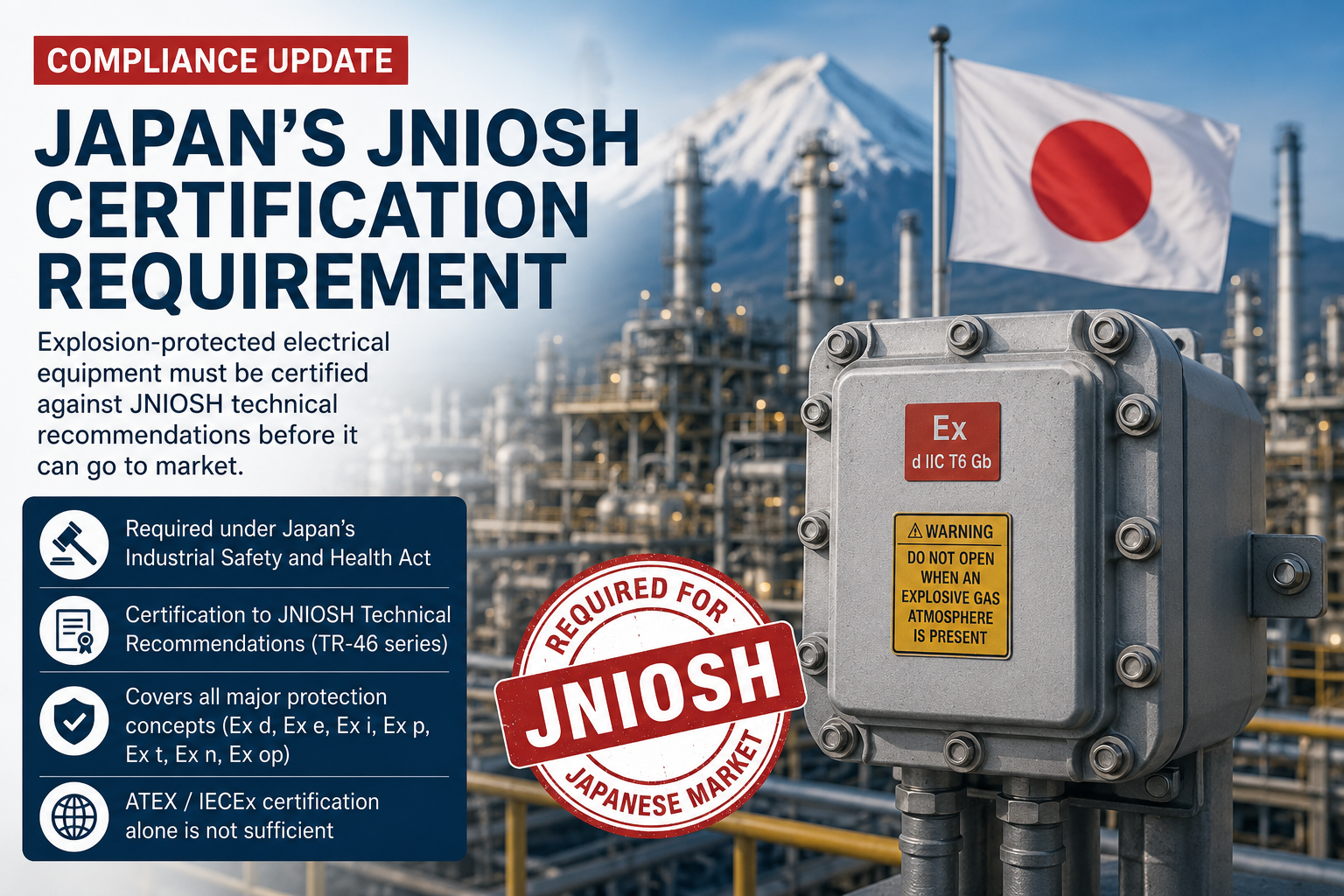
Compliance Update: Understanding Japan's JNIOSH Certification Requirements for Explosion-Protected Equipment
For manufacturers of explosion-protected electrical equipment, obtaining ATEX or IECEx certification is often seen as the key to global market access. However, companies looking to supply hazardous area equipment in Japan face an additional regulatory requirement.
Under Japan's Industrial Safety and Health framework, explosion-protected electrical equipment intended for use in hazardous locations must comply with the country's Technical Recommendations issued by the National Institute of Occupational Safety and Health (JNIOSH). In many cases, products require certification against these recommendations before they can be legally placed on the Japanese market.
A Different Route to Compliance
While Japan's technical requirements are closely aligned with the IEC 60079 series used internationally, manufacturers cannot simply rely on existing ATEX or IECEx approvals alone. Certification must demonstrate compliance with the applicable JNIOSH Technical Recommendations, which form the basis of Japan's national approval process for explosion-protected equipment.
The recommendations cover the various recognised methods of explosion protection, including:
- Flameproof enclosures (Ex d)
- Increased safety (Ex e)
- Intrinsic safety (Ex i)
- Pressurisation (Ex p)
- Dust ignition protection (Ex t)
- Non-sparking equipment (Ex n)
- Optical radiation protection (Ex op)
These guidance documents are regularly updated to reflect developments in international standards while maintaining Japan's specific regulatory requirements.
Why It Matters
Japan remains one of the world's largest industrial economies, with significant investment across:
- Oil & gas
- Petrochemicals
- Chemical processing
- Pharmaceutical manufacturing
- Hydrogen technologies
- Energy generation
- Advanced manufacturing
For overseas manufacturers, understanding the country's certification pathway early in the product development process can prevent costly delays when entering the market.
Planning for Market Entry
Manufacturers intending to export explosion-protected equipment into Japan should review certification requirements at an early stage. Working with certification specialists familiar with both IECEx/ATEX and JNIOSH requirements can help streamline approval and ensure products meet the necessary technical and quality standards expected by Japanese regulators.
Although many technical principles are harmonised with international standards, Japan's certification process remains distinct, making regulatory planning an important part of any successful market entry strategy.
As hazardous industries continue to expand across Asia, understanding regional certification requirements is becoming increasingly important for manufacturers seeking to operate in global markets.
